
Megaspilinae
Genus Guides
4Megaspilinae is a of minute within Megaspilidae, superfamily Ceraphronoidea. Members of this subfamily are extremely small, often less than 2 mm in length, and are characterized by reduced wing venation and distinctive antennal structure. The subfamily includes of agricultural significance, such as Dendrocerus, which have been studied for their molecular characterization and distribution. within Megaspilinae have been documented from multiple regions including India, with recent records extending known distributions.
Pronunciation
How to pronounce Megaspilinae: //ˌmɛɡəˈspaɪlɪniː//
These audio files are automatically generated. While they are not always 100% accurate, they are a good starting point.
Identification
Distinguished from Ceraphroninae (the other of Megaspilidae) by wing venation patterns and antennal structure. Megaspilinae have fewer closed in the forewing and males show more pronounced antennal modifications. Extremely small size combined with reduced wing venation separates Megaspilidae from other Ceraphronoidea . Specimen identification typically requires slide-mounting and microscopic examination due to minute size.
Images
Appearance
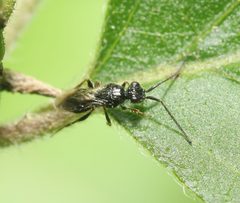
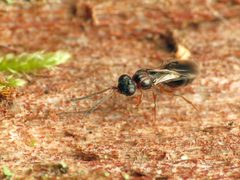
Extremely small , typically under 2 mm in body length. Wings exhibit reduced venation with few closed , a defining feature of the . are distinctive in structure, with males often having branched or modified flagellomeres. Body form is compact with a strongly constricted petiole between and . Coloration is generally dark, often black or brown, without striking patterns.
Distribution
Documented from multiple regions including India (Kerala, Uttarakhand, West Bengal), with distributional records expanding through recent surveys. Global distribution encompasses tropical and temperate regions, though specific range boundaries remain incompletely documented.
Ecological Role
Members function as , though specific relationships for most remain undocumented. The Dendrocerus has been noted as having agricultural importance, suggesting potential roles in .
Human Relevance
Limited direct interaction with humans. Some , particularly Dendrocerus, have been flagged for agricultural significance, implying potential utility in pest management contexts. efforts for Megaspilinae have contributed to reference libraries for biodiversity assessment.
Similar Taxa
- CeraphroninaeThe other within Megaspilidae; differs in wing venation with more closed and less pronounced male antennal modification
- CeraphronidaeSeparate within Ceraphronoidea; distinguished by different wing venation patterns and generally larger body size
More Details
Taxonomic note
Megaspilinae is one of two in Megaspilidae, the other being Ceraphroninae. The subfamily classification has been supported by molecular and morphological studies, though -level remains challenging due to extremely small size and cryptic diversity.
Research significance
Recent studies, including molecular characterization of Dendrocerus istvani, have highlighted the need for expanded taxonomic surveys and in this group to clarify distributions and ecological roles.