
Triepeolus rufithorax
Graenicher, 1928
Florida Longhorn-Cuckoo
Triepeolus rufithorax is a cleptoparasitic cuckoo bee in the Apidae, Nomadinae. As a member of the Triepeolus, it parasitizes nests of long-horned bees (Melissodes and related genera). The is known from North America, with records particularly from Florida and surrounding regions. Like other Triepeolus species, females enter nests to lay in provisioned by the host female.
Pronunciation
How to pronounce Triepeolus rufithorax: /triːˈiːpɪələs ˌruːfɪˈθoʊræks/
These audio files are automatically generated. While they are not always 100% accurate, they are a good starting point.
Identification
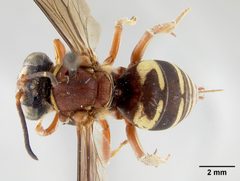
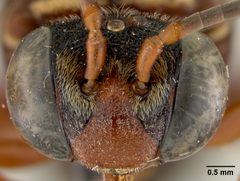
Triepeolus rufithorax can be distinguished from other Triepeolus by the (reddish) coloration of the , as indicated by its specific epithet. Members of Triepeolus typically exhibit banded with pale markings on a dark background and relatively sparse body hair compared to their . Males have long characteristic of the tribe Epeolini. Definitive identification requires examination of specific morphological characters including details of clypeal punctation, mesosomal , and male genitalia.
Images
Distribution
North America. Records indicate presence in the southeastern United States, particularly Florida.
Host Associations
- Melissodes - primary ; females lay in host
Behavior
Females are that enter nests of long-horned bees to deposit . The Triepeolus larva consumes the host larva and its pollen provisions. Males are frequently observed visiting flowers for nectar. Cuckoo bees do not construct nests or gather pollen.
Ecological Role
As a , T. rufithorax contributes to of its bees. The participates in pollination networks indirectly through male flower visitation and potentially through female incidental pollen transfer.
Similar Taxa
- Triepeolus concavussimilar size and general appearance; distinguished by thoracic coloration and specific punctation patterns
- Epeolus speciesconvergent cleptoparasitic lifestyle and abdominal banding; Triepeolus distinguished by longer male and different clypeal structure
- Melissodes hostsfemales may be mistaken for when not actively parasitizing; Triepeolus lacks scopal hairs for pollen collection
Sources and further reading
- BugGuide
- Wikipedia
- GBIF taxonomy match
- iNaturalist taxon
- NCBI Taxonomy
- Catalogue of Life
- The Native Bees in the UC Davis Bee Haven | Bug Squad
- What Native California Plants Are Best for Attracting Pollinators? | Bug Squad
- Primary Type List | Entomology Research Museum
- Researching the Hedgerows | Bug Squad
- California Poppy: No Nectar, Just Pollen | Bug Squad
- Know Your Native Bees: Here's How! | Bug Squad