
Triepeolus kathrynae
Rozen, 1989
cuckoo bee
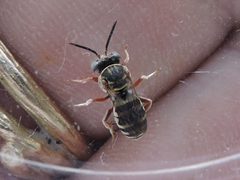
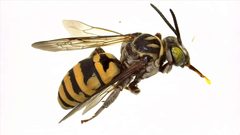
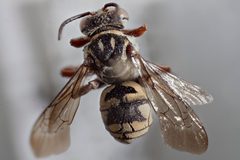
Triepeolus kathrynae is a of cleptoparasitic cuckoo bee in the Apidae, tribe Epeolini. The species was described by Rozen in 1989. Like other members of the Triepeolus, it is a that does not construct nests or gather pollen. It has been recorded from the United States and Mexico.
Pronunciation
How to pronounce Triepeolus kathrynae: /ˌtraɪ.iˈpiːələs ˈkæθrɪneɪ/
These audio files are automatically generated. While they are not always 100% accurate, they are a good starting point.
Images
Distribution
United States and Mexico.
Host Associations
- Triepeolus - Members of this are that lay in the nests of bees, typically in the Apidae.
Similar Taxa
More Details
Taxonomic note
The was described by Jerome G. Rozen, Jr. in 1989. The specific epithet 'kathrynae' appears to honor an individual named Kathryn, though the etymology is not explicitly documented in available sources.
Cleptoparasitic biology
As a member of Nomadinae, T. kathrynae is presumed to be a (cuckoo bee) that invades nests to lay . The larvae consume host provisions and typically kill the host offspring. This lifestyle is characteristic of the entire Nomadinae.
Sources and further reading
- BugGuide
- Wikipedia
- GBIF taxonomy match
- iNaturalist taxon
- NCBI Taxonomy
- Catalogue of Life
- The Native Bees in the UC Davis Bee Haven | Bug Squad
- What Native California Plants Are Best for Attracting Pollinators? | Bug Squad
- Primary Type List | Entomology Research Museum
- Researching the Hedgerows | Bug Squad
- California Poppy: No Nectar, Just Pollen | Bug Squad
- Know Your Native Bees: Here's How! | Bug Squad