
Triepeolus brittaini
Cockerell, 1931
Brittain's Cuckoo Nomad Bee
Triepeolus brittaini is a of cleptoparasitic in the Apidae, first described by Cockerell in 1931. As a member of the cuckoo bee Triepeolus, it is known to lay its in the nests of other bee species rather than constructing its own nests or provisioning . The species is found in North America and is commonly known as Brittain's Cuckoo Nomad Bee.
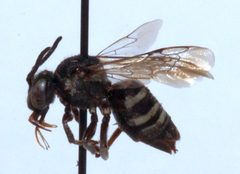
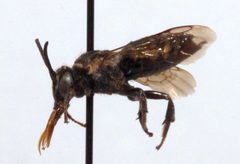
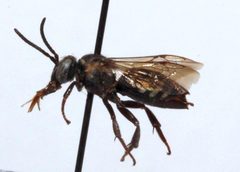
Pronunciation
How to pronounce Triepeolus brittaini: //traɪˈɛpiələs ˈbrɪteɪnaɪ//
These audio files are automatically generated. While they are not always 100% accurate, they are a good starting point.
Images
Distribution
North America. Specific records indicate presence in the United States and Canada, with observations documented through iNaturalist and museum collections.
Host Associations
- Triepeolus sp. - Triepeolus are that lay in nests of other bees, particularly in the Apidae. Specific relationships for T. brittaini are not documented in available sources.
Behavior
As a cleptoparasitic , females are known to lay in the nests of bees. The does not gather pollen or construct . Males have been observed visiting flowers, likely for nectar.
Ecological Role
Acts as a in native . By parasitizing nests of other bee , it influences of bees and contributes to natural regulation of bee community structure.
Similar Taxa
- Triepeolus concavusAnother North American Triepeolus ; both share cleptoparasitic and similar morphological features typical of the . T. brittaini can be distinguished by specific diagnostic characters described by Cockerell (1931).
- Epeolus spp.Related cleptoparasitic bees in the same tribe Epeolini; historically some Triepeolus were classified in Epeolus. Distinguished by subtle morphological differences in wing venation and body sculpturing.
- Sphecodes spp.Cuckoo bees in Halictidae with similar cleptoparasitic . Sphecodes are typically smaller, more slender, and parasitize sweat bees (Halictidae) rather than the larger targeted by Triepeolus.
More Details
Etymology
The specific epithet 'brittaini' likely honors an individual, possibly a collector or colleague of Theodore Dru Alison Cockerell, though the exact namesake is not documented in available sources.
Taxonomic History
Described by T.D.A. Cockerell in 1931, a prolific early 20th century hymenopterist who described numerous from North America.
Sources and further reading
- BugGuide
- Wikipedia
- GBIF taxonomy match
- iNaturalist taxon
- NCBI Taxonomy
- Catalogue of Life
- The Native Bees in the UC Davis Bee Haven | Bug Squad
- What Native California Plants Are Best for Attracting Pollinators? | Bug Squad
- Primary Type List | Entomology Research Museum
- Researching the Hedgerows | Bug Squad
- California Poppy: No Nectar, Just Pollen | Bug Squad
- Know Your Native Bees: Here's How! | Bug Squad