
Epeolus mesillae
(Cockerell, 1895)
Mesilla Cellophane Bee
Epeolus mesillae is a of cuckoo bee in the Apidae, first described by Cockerell in 1895. As a kleptoparasite, it invades the nests of bees to lay its , with its offspring consuming the host's provisions. The species is recorded from North America and Middle America. Like other Epeolus species, it lacks the branched body hairs typical of pollen-collecting bees and instead exhibits color patterns of short black, white, red, and yellow hairs.
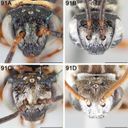
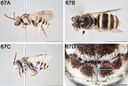
Pronunciation
How to pronounce Epeolus mesillae: /ɛˈpiːoʊləs mɛˈsɪlaɪ/
These audio files are automatically generated. While they are not always 100% accurate, they are a good starting point.
Images
Distribution
Recorded from North America and Middle America. Specific locality details beyond regional presence are not documented in available sources.
Diet
Kleptoparasitic; larvae feed on pollen and nectar stores collected by bees. feed on nectar.
Host Associations
- Colletes - nest Epeolus are known to parasitize nests of polyester bees in the Colletes
Life Cycle
Females lay in nests. Larvae hatch and kill the host egg or larva, then consume the stored pollen. Developmental timing follows that of the host .
Behavior
Females locate nests to deposit . Males and females mate, with males potentially using -related similar to those observed in related cuckoo bee . visit flowers for nectar.
Ecological Role
Kleptoparasite of ground-nesting bees. levels are naturally constrained by availability, following -prey dynamics where remain rarer than hosts.
Similar Taxa
- Other Epeolus speciesShare kleptoparasitic , reduced branched hairs, and similar body size range (5.5–10.0 mm). Distinguishable by specific color pattern arrangements and associations.
- Nomada speciesAlso cuckoo bees in Apidae with similar , but differ in antennal and male mating such as 'antennal grabbing' observed in Nomada but not documented for Epeolus.
More Details
Etymology
The specific epithet 'mesillae' likely refers to Mesilla, New Mexico, where the was collected.
Conservation status
Not formally assessed; rarity relative to is typical for cuckoo bees due to constraints.