
Xenoglossa strenua
(Cresson, 1879)
Nimble Squash Bee
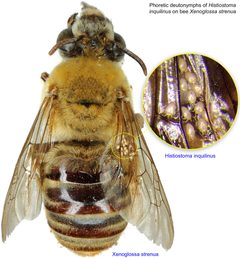
Xenoglossa strenua is a of long-horned bee in the Apidae, native to North and Central America. It is an oligolectic specialized on the cucurbit family (Cucurbitaceae), including pumpkins, squash, gourds, cucumbers, and zucchini. The species is active early in the morning, visiting flowers as soon as they open, before most other species begin foraging.
Pronunciation
How to pronounce Xenoglossa strenua: /zɛnəˈɡlɒsə ˈstrɛnjuə/
These audio files are automatically generated. While they are not always 100% accurate, they are a good starting point.
Identification
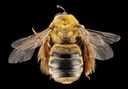
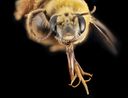
Xenoglossa strenua is a long-horned bee with males exhibiting elongated characteristic of the tribe Eucerini. It can be distinguished from the related Peponapis by subtle morphological differences in facial markings and antennal structure. Both sexes are golden brown with a fuzzy yellow ; males possess a distinct yellow spot on the . The is reliably identified by its strict association with cucurbit flowers and its early morning foraging , which precedes that of honey bees and other .
Images
Distribution
Central America and North America. GBIF records confirm presence in Middle America and North America.
Seasonality
Active during the flowering period of cucurbit crops. emerge in time to pollinate early morning squash blossoms, which typically close around noon. The has a single per year in most of its range, with adults present during summer months when cucurbits are in bloom.
Diet
Oligolectic pollen on Cucurbitaceae (cucurbits), including pumpkins, squash, gourds, cucumbers, and zucchini. feed on nectar and collect pollen exclusively from this plant .
Host Associations
- Cucurbitaceae - pollen (oligolectic)Strict association with cucurbit flowers for pollen collection; includes pumpkins, squash, gourds, cucumbers, and zucchini
Life Cycle
Females are ground-nesters, excavating burrows in soil near cucurbit plantings. Males sleep in the blossoms overnight, awaiting female arrivals. The has a single per year, with emerging in summer to coincide with cucurbit flowering. Larval development occurs in underground provisioned with cucurbit pollen.
Behavior
Early morning forager, beginning pollination activity before sunrise and before flowers of other visit cucurbit blossoms. Males exhibit mate-guarding by sleeping in flowers overnight. The species demonstrates strong fidelity to cucurbit , with limited cross-visitation to other plant .
Ecological Role
of native and cultivated cucurbits. Contributes to fruit set in agricultural systems, particularly for crops where early morning pollination is critical before flower closure. Native to North America, it provided pollination services for cucurbit prior to European and the introduction of honey bees.
Human Relevance
Important of commercially grown cucurbits, including pumpkins, squash, and zucchini. Its early morning activity complements the later foraging of honey bees, potentially improving crop yields. The has been documented in decline in some areas, possibly due to sensitivity and loss.
Similar Taxa
- Peponapis pruinosaAlso a cucurbit in the tribe Eucerini; distinguished by facial markings, antennal structure, and subtle differences in male genitalia
- Xenoglossa kansensisCongeneric with overlapping range; distinguished by morphological characters and geographic distribution patterns
Sources and further reading
- BugGuide
- Wikipedia
- GBIF taxonomy match
- iNaturalist taxon
- Catalogue of Life
- Managing Insect Pests of Texas Sunflowers - AgriLife Extension Entomology
- Publications | Entomology Research Museum
- Happy National Squash Bee Day! | Bug Squad
- Thank the Squash Bee for That Pumpkin Pie | Bug Squad
- Bug Eric: More Insects From Sunflowers