
Melissodes tristis
Cockerell, 1894
Dark-faced Longhorn Bee
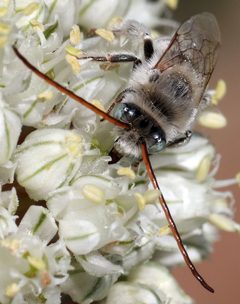
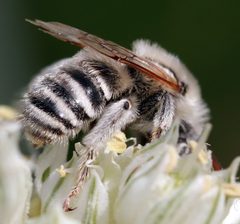
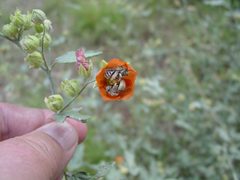
Melissodes tristis is a long-horned bee in the Apidae, tribe Eucerini. It is commonly known as the Dark-faced Longhorn . The species occurs in North America and Central America. Like other Melissodes species, it is a solitary bee with males typically exhibiting elongated .
Pronunciation
How to pronounce Melissodes tristis: /mɛˈlɪsoʊˌdiːz ˈtrɪstɪs/
These audio files are automatically generated. While they are not always 100% accurate, they are a good starting point.
Identification
Distinguished from other Melissodes by darker facial coloration. Males identified by combination of long and dark . Females require closer examination; dark face separates from paler-faced such as Melissodes agilis or M. communis.
Images
Habitat
Open including grasslands, meadows, and agricultural areas where plants occur. Associated with areas supporting Asteraceae, the primary pollen source for the .
Distribution
North America and Central America; records from United States through Mexico to Central America
Seasonality
Summer-active; typical for Melissodes which are with period peaking mid-to-late summer
Diet
Oligolectic on Asteraceae (sunflower ); collects pollen primarily from this plant family. Nectar sources broader, including various flowering plants.
Life Cycle
Solitary with . Females excavate burrows in soil, provision with Asteraceae pollen and nectar, and lay single per cell. Larvae develop through summer, overwinter as or pupae, emerge as following summer.
Behavior
Males patrol territories and vegetation seeking females. Females forage diurnally, visiting Asteraceae flowers for pollen. Both sexes sleep on vegetation, males often in groups on stems.
Ecological Role
Important of native and agricultural Asteraceae, including sunflowers. Contributes to function through pollen transfer and as prey/ for cuckoo bees and other insects.
Human Relevance
of sunflower crops and other Asteraceae. Non-aggressive; does not defend nests. Attracted to gardens with composite flowers.
Similar Taxa
- Melissodes agilisSimilar size and banding pattern; distinguished by paler and different male genitalia
- Melissodes communisOverlapping range; paler facial coloration and different antennal proportions in males
- Melissodes bimaculatusSimilar use; two pale spots on (not bands) and paler
More Details
Nomenclature
Described by Theodore Dru Alison Cockerell in 1894. The specific epithet 'tristis' (Latin: sad, gloomy) likely refers to the dark facial coloration.
Conservation status
Not formally assessed; appears secure based on iNaturalist observation frequency (140+ records) and broad distribution.