
Melissodes agilis
Cresson, 1879
agile long-horned bee, agile longhorn bee
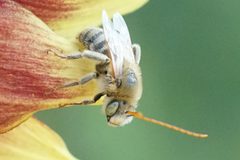
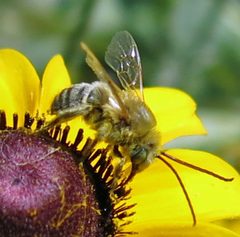
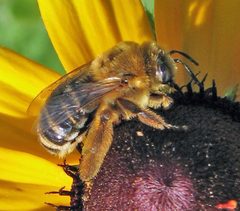
Melissodes agilis is a of long-horned bee in the Apidae, characterized by the notably long of males. The species exhibits striking in : females are solitary ground-nesters, while males form nightly sleeping on flowers and vegetation. Males are highly territorial, aggressively defending floral resources from other including butterflies and bees. The species is native to North and Central America and has been documented in urban pollinator gardens.
Pronunciation
How to pronounce Melissodes agilis: /mɛˈlɪs.oʊˌdiːz əˈdʒɪlɪs/
These audio files are automatically generated. While they are not always 100% accurate, they are a good starting point.
Identification
Males are readily identified by their elongated and distinctive sleeping —clustering on flower or stems at night. Territorial males exhibit aggressive patterns, dive-bombing intruders on flowers. Females may be distinguished from other Melissodes by nest entrance characteristics: round holes approximately pencil-diameter with small soil piles resembling miniature volcanoes. Close examination of morphological features is required to separate from such as Melissodes robustior and from the related Svastra obliqua.
Images
Appearance
Males possess exceptionally long , the namesake trait of the Melissodes. is pronounced: males have modified hind legs lacking pollen-carrying structures, while females possess scopae for pollen transport. Body coloration typically features pale or yellowish markings on a dark background. Size is moderate among native bees.
Habitat
Urban and suburban gardens, open meadows, and areas with abundant flowering plants. Males select elevated, exposed perches for sleeping , including lavender stems, guara, and Mexican sunflower (Tithonia rotundifolia). Females require bare or sparsely vegetated ground for nesting burrows. suitability is determined primarily by floral resource availability rather than proximity to female nesting sites.
Distribution
North America and Central America. Documented observations span from northern to southern California and throughout the western United States. GBIF records confirm presence in Middle America and North America.
Seasonality
Active during warm months when floral resources are abundant. Males begin arriving at sleeping around sunset (approximately 5 p.m.), remaining until morning departure. Activity patterns are influenced by temperature and light conditions; cool or drizzly weather may delay or modify sleeping aggregation .
Diet
floral visitor, documented foraging on Mexican sunflower (Tithonia rotundifolia), lavender, guara, and catmint (Nepeta). Pollen and nectar are collected by females; males visit flowers primarily for nectar and territorial perches.
Life Cycle
Females are solitary ground-nesters, each excavating individual burrows. Nesting holes are approximately pencil-diameter with small soil piles. Males do not participate in nest construction or provisioning. Developmental stages include , larva, pupa, and ; specific details are not documented in available sources.
Behavior
Males exhibit three distinctive : (1) nightly sleeping on elevated vegetation, with jostling for position during settlement; (2) highly territorial defense of floral resources, including dive-bombing attacks on butterflies, honey bees, bumble bees, and other visitors; (3) morning departure from sleeping sites once disturbed by foraging activity of other bees. Sleeping aggregations typically form around 5–7 p.m. and persist until 7–10 a.m. or later. Males cannot sting; females possess stingers but are not aggressive.
Ecological Role
of diverse flowering plants in urban and natural . Male territorial may influence floral resource partitioning among pollinator . Ground-nesting females contribute to soil aeration and nutrient cycling through burrow excavation.
Human Relevance
Valuable native in residential and commercial gardens. Male sleeping provide accessible observation opportunities for naturalists and photographers. Non-stinging males pose no threat to humans. Frequently featured in pollinator garden educational materials and conservation outreach. Misidentification with honey bees occurs among non-.
Similar Taxa
- Melissodes robustiorSimilar male sleeping on Tithonia; requires expert examination for reliable separation
- Svastra obliquaClosely related with males also forming sleeping on flowers; distinguished by morphological details of and leg structure
- Apis melliferaNon-native frequently found in same ; lacks long male and sleeping ; often targeted by territorial M. agilis males
Misconceptions
Non- frequently misidentify this native as a . The 'long-horned bee' refers to , not horns. Male sleeping are sometimes mistaken for swarming or nest activity; they are instead roosting unrelated to or colony formation.
More Details
Sleeping Site Dynamics
Males have been observed shifting sleeping locations from lavender to guara, possibly in response to presence (praying mantids), floral , or improved height advantage for predator avoidance.
Conservation Context
Documented in UC Berkeley Urban Lab research as part of California's 1600+ native bee , highlighting importance of urban gardens for native bee conservation.
Sources and further reading
- BugGuide
- Wikipedia
- GBIF taxonomy match
- iNaturalist taxon
- NCBI Taxonomy
- Catalogue of Life
- About Those Sleepovers... | Bug Squad
- The Year 2017: 'Survival of the Flittest' | Bug Squad
- 2023: These Are a Few of My Favorite Things | Bug Squad
- What's Not to Love About 'Boys' Night Out'? | Bug Squad
- Seen Any Monarchs Lately? | Bug Squad
- Going Native: Do You Know the Native Bees of California? | Bug Squad