
Mesoplia dugesi
(Cockerell, 1917)
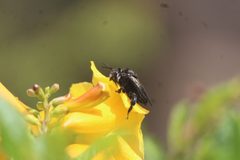
Mesoplia dugesi is a of in the Apidae, tribe Ericrocidini. It was described by Cockerell in 1917. The species has a restricted distribution in the southwestern United States and Mexico, with confirmed records from Arizona and adjacent Mexican states. As a member of the cleptoparasitic tribe Ericrocidini, it is presumed to exhibit nest targeting other bee species, though specific associations remain undocumented.
Pronunciation
How to pronounce Mesoplia dugesi: /mɛˈsɔpliə duˈɡesi/
These audio files are automatically generated. While they are not always 100% accurate, they are a good starting point.
Identification
Mesoplia dugesi can be distinguished from other Mesoplia by its geographic restriction to the Arizona-Mexico border region. The Mesoplia is characterized within Ericrocidini by features of the male genitalia and hind leg . Detailed diagnostic characters for species-level identification require examination of microscopic morphological features not available in published sources.
Images
Habitat
Arid and semi-arid environments of the Sonoran Desert region, including desert scrub and adjacent upland areas where occur.
Distribution
Southwestern United States (Arizona) and Mexico. GBIF records indicate presence in Middle America and North America.
Behavior
As a member of the cleptoparasitic tribe Ericrocidini, Mesoplia dugesi is presumed to exhibit nest , where females enter nests to deposit in provisioned by the host. Specific behavioral observations have not been published.
Ecological Role
Presumed of other , potentially influencing and structure in desert bee .
Similar Taxa
- Other Mesoplia speciesCongeneric in Mesoplia share cleptoparasitic habits and similar body plans; geographic separation is the primary distinguishing feature for M. dugesi
- Ericrocis speciesMembers of the same tribe Ericrocidini with similar cleptoparasitic ; differ in -level morphological characters
More Details
Taxonomic history
Originally described by Cockerell in 1917. The Mesoplia is placed in the tribe Ericrocidini, a group of cleptoparasitic bees within the Apinae.
Data limitations
This is poorly represented in collections and literature. Only 2 observations are recorded in iNaturalist, and no detailed morphological redescriptions or ecological studies have been published since the original description.