
Ericrocidini
cuckoo bees
Genus Guides
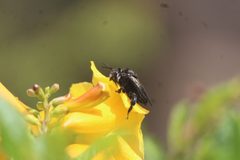
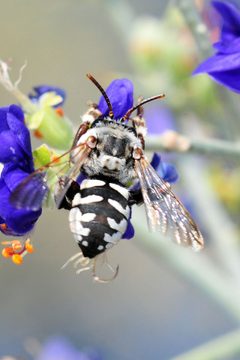
2Ericrocidini is a tribe of cleptoparasitic (cuckoo) bees within the Apidae, containing 11 and approximately 42 distributed throughout the Neotropics. These bees are obligate of oil-collecting bees, primarily attacking nests of Centris (Centridini) and, in one derived case, Epicharis. Females do not construct nests or collect pollen; instead, they invade nests, kill host or larvae, and deposit their eggs in provisioned . The tribe diverged from related lineages approximately 74 million years ago in the Cretaceous, with host specialization evolving synchronously with their Centris and Epicharis hosts during the Eocene.
Pronunciation
How to pronounce Ericrocidini: //ˌɛrɪˌkroʊsɪˈdaɪnaɪ//
These audio files are automatically generated. While they are not always 100% accurate, they are a good starting point.
Identification
Ericrocidini bees can be distinguished from other cleptoparasitic Apidae by their association with oil-collecting (Centridini) and specific morphological features of the first instar larvae, which possess strong adapted for killing host offspring. generally lack the pollen-collecting structures found in non-parasitic bees. Generic identification requires examination of specific morphological characters: Ericrocis represents the basal lineage; Epiclopus is restricted to Chile and western Argentina; Mesoplia is the most diverse ranging from Arizona to northern Argentina; Mesonychium occurs from Venezuela and Brazil to central Chile and Argentina. -level identification typically requires detailed examination of male genitalia and other microscopic features.
Images
Habitat
Found in diverse Neotropical where bees nest, including tropical forests, Caatinga, and subtropical regions. Specific records include Brazilian Amazonian understory sites with trap-nests in forest reserves, and Caatinga areas of Pernambuco state. Host nests occur in preexisting cavities such as wood blocks with drilled tunnels, cardboard tubes, and natural hollows.
Distribution
Neotropical region. Mesoplia ranges from southern United States (Arizona) through Mexico and Central America to northern Argentina, including the Antilles. Mesonychium occurs from Venezuela and Brazil to central Chile and Argentina. Epiclopus is restricted to Chile and western Argentina. Ericrocis is found in northern Mexico and the southern United States. Aglaomelissa duckei is known from Rica, Colombia, Venezuela, Trinidad, and Pará in northern Brazil.
Diet
Cleptoparasitic; larvae feed on floral oil and pollen provisions stored in by Centris and Epicharis females. do not collect pollen or nectar for their own offspring.
Host Associations
- Centris (Heterocentris) analis - confirmed Aglaomelissa duckei emerged from trap-nests with 80-100% ratios
- Centris (Heterocentris) terminata - confirmed Aglaomelissa duckei with 50% observed
- Centris xanthomelaena - confirmed Mesonychium asteria observed attacking nests and emerging from nests in Caatinga, Brazil
- Centris flavofasciata - confirmed of Mesoplia sapphirina
- Centris conspersa - potential associationCyphomelissa diabolica potentially associated
- Epicharis albofasciata - confirmed Mesoplia rufipes; derived shift from Centris
- Epicharis nigrita - indirect evidenceMesoplia rufipes association
- Epicharis bicolor - indirect evidenceMesoplia rufipes association
Life Cycle
Females invade nests and use their sting or to kill host or early-stage larvae. They deposit eggs in provisioned . First instar larvae possess strong, well-developed mandibles adapted to kill host offspring. Larvae complete development feeding on the floral oil and pollen provisions originally collected by the host female. High rates have been observed, with complete parasitism of entire nests documented.
Behavior
Females exhibit nest-searching , flying over nesting to locate active nests. Observed attacking nests of Centris xanthomelaena in Caatinga . Host specificity is relatively high, with non-random associations between and host subgenera suggesting possible coevolutionary relationships. Mesoplia rufipes shows a derived behavior in exploiting Epicharis hosts in addition to Centris, unique within the tribe.
Ecological Role
Obligate of solitary oil-collecting bees (Centridini), potentially influencing and nesting success. High ratios (up to 100% of in individual nests) suggest significant impact on host . Possible coevolutionary relationship with Centris subgenera indicated by non-random host- associations.
Similar Taxa
- RhathyminiSister tribe within the Ericrocidini+Rhathymini clade; both are cleptoparasitic lineages attacking oil-collecting bees, but distinguished by striking differences in first instar larval adapted to distinct nesting
- ProtepeoliniRelated tribe within the ericrocidine line; differs in associations and geographic distribution
- IsepeoliniRelated tribe within the ericrocidine line; differs in associations and geographic distribution
- CoelioxoidiniRelated tribe within the ericrocidine line; differs in associations and geographic distribution
- NomadaUnrelated cleptoparasitic bees (Nomadinae) that attack different groups (primarily Andrenidae and Apidae other than Centridini); distinguished by different host associations and morphological features
Sources and further reading
- BugGuide
- Wikipedia
- iNaturalist taxon
- NCBI Taxonomy
- Catalogue of Life
- Paleocene origin of the Neotropical lineage of cleptoparasitc bees Ericrocidini-Rhathymini (Hymenoptera, Apidae)
- Taxonomic revision of the cleptoparasitic bee genus Epiclopus Spinola, 1851 (Hymenoptera: Apidae: Ericrocidini)
- New host records of Aglaomelissa duckei and a compilation of host associations of Ericrocidini bees (Hymenoptera: Apidae)
- Taxonomic revision and distribution of the cleptoparasitic bee genus Mesoplia (Apidae: Ericrocidini) from Mexico and Central America
- Biology of the Cleptoparasitic BeeMesoplia sapphirina(Ericrocidini) and Its HostCentris flavofasciata(Centridini) (Apidae: Apinae)
- Host records and cleptoparasitic behavior of the cuckoo bee Mesonychium asteria (Smith) (Apidae, Ericrocidini) in nests of Centris xanthomelaena Moure & Castro, (Apidae, Centridini)
- Nesting ecology of the oil-collecting bee Centris (Melacentris) conspersa Mocsáry and its potential association with the cleptoparasite Cyphomelissa diabolica Friese (Apidae: Centridini, Ericrocidini)