
Diadasia rinconis
Cockerell, 1897
Cactus Bee
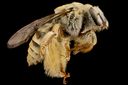
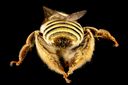
Diadasia rinconis is a solitary ground-nesting in the Apidae, commonly known as the cactus bee. In the Sonoran Desert, it feeds almost exclusively on native cactus , with its closely tied to cactus flowering . Males form large mating where hundreds or thousands patrol nesting areas and compete in "mating balls" for access to emerging females. The species exhibits pronounced , with females possessing specialized pollen-collecting structures and males showing elongated hind legs.
Pronunciation
How to pronounce Diadasia rinconis: /daɪəˈdeɪziə rɪŋˈkoʊnɪs/
These audio files are automatically generated. While they are not always 100% accurate, they are a good starting point.
Identification
Distinguished from other Diadasia by its strong association with cactus in the Sonoran Desert. Females can be recognized by the combination of bushy hind leg scopae and foreleg hair brushes. Males in are identifiable by their elongated hind legs and of patrolling nesting areas. Separation from D. enavata and other requires examination of subtle morphological characters not reliably visible in field observations.
Images
Habitat
Sonoran Desert environments where cacti occur. Nests in burrows excavated in soil, often in with many females nesting in close proximity. Requires bare or sparsely vegetated ground for nesting access.
Distribution
North America and Central America. Core range in the Sonoran Desert of southwestern United States and northwestern Mexico.
Seasonality
Active during spring and early summer, coinciding with flowering periods of native cactus . Mating occur in May.
Diet
feed on nectar; females collect pollen almost exclusively from Sonoran Desert cactus ( oligolecty). Specific cactus not detailed in available sources.
Host Associations
- Sonoran Desert cactus species - pollen sourceprimary forage; revolves around cactus flowering
Life Cycle
Solitary ground-nesting . Females excavate individual burrows in soil, provision with cactus pollen and nectar, and deposit . Developmental stages include egg, larva, pupa, and . timed to cactus flowering period. No evidence of social or multiple per year in available sources.
Behavior
Males form large mating where hundreds to thousands patrol nesting areas at low heights above soil. Males compete intensely for emerging females, forming "mating balls" in which multiple males grapple simultaneously. Mating involves stereotyped sequences of pulsing sounds and movements including raising, wing flicking, leg stroking, and lateral rocking. Larger males achieve greater mating success but spend less time per mating than smaller males.
Ecological Role
Primary of Sonoran Desert cactus . As a pollen , likely contributes to reproductive success of cacti through efficient pollen transfer. Ground-nesting activity may contribute to soil aeration in local areas.
Human Relevance
Important native in desert . Research subject for studies on solitary mating systems and agricultural impacts on ground-nesting bees. No documented direct economic use.
Similar Taxa
- Diadasia enavataAlso called "cactus " and occurs in similar range; distinguished by associations and subtle morphological differences
- Diadasia bituberculataCongeneric bindweed with similar nesting but different plant (morning glory vs. cactus)
More Details
Mating system research
High-speed videography has revealed previously unobservable courtship including acoustic signaling and precise movement patterns. Research by Russell et al. (2018) demonstrated size-dependent mating success and potential trade-offs between mating frequency and duration.
Agricultural sensitivity
Related research on ground-nesting bees suggests tillage and irrigation can attract nesting while residues may create ecological traps; specific studies on D. rinconis agricultural exposure not documented.
Sources and further reading
- BugGuide
- Wikipedia
- GBIF taxonomy match
- iNaturalist taxon
- NCBI Taxonomy
- Catalogue of Life
- The Glory of the Bindweed Turret Bees | Bug Squad
- Congratulations, Rei! | Bug Squad
- UC Davis: All A'Buzz With Bee Nests and Art | Bug Squad
- Busy Bees: An Up-Close Look at One Bee Species' Scramble to Mate
- Bug Eric: World Bee Day....A Little "Bee"hind
- Bug Eric: A Beautiful Place to "Bee"