
Bombus distinguendus
Morawitz, 1869
Great Yellow Bumble Bee, great yellow bumblebee
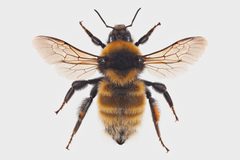
Bombus distinguendus, the great yellow bumblebee, is a bumblebee with a Palearctic distribution spanning northern and central Europe, northern Russia, and Alaska. The species has experienced significant declines across much of its European range, with critically low numbers or local extinction in several regions. In Ireland, it is classified as Endangered and restricted to a single remaining population in the northwest. The species exhibits late-season compared to other bumblebees and shows strong foraging preferences for specific plant species, particularly Common Knapweed (Centaurea nigra) in Irish populations.
Pronunciation
How to pronounce Bombus distinguendus: //ˈbɒm.bʊs dɪˌstɪŋˈɡwɛn.dəs//
These audio files are automatically generated. While they are not always 100% accurate, they are a good starting point.
Images
Habitat
Primarily associated with grass-forb meadows and -rich grassland . In Ireland, highest abundances occur within designated nature reserves, with limited presence in smaller habitat patches including urban areas and roadside verges. In Russia, found across various habitat types with consistent association to grass-forb meadows. Coastal grassland habitats also support in parts of the range.
Distribution
Europe: Austria, Belgium, Czech Republic, Denmark, Finland, France, Germany, Great Britain, Hungary, Ireland, Lithuania, Poland, Romania, Slovakia, Switzerland. Northern Russia: widespread in Arkhangelsk Oblast. North America: Alaska. In Great Britain, restricted to far north Highlands coast, Orkney, and the Western Isles.
Seasonality
Late-emerging with late-season ; in Ireland, numbers peak when forage availability is lowest. Late-developing relative to other bumblebee species in regional .
Diet
Forages on entomophilous plants. In North-West Ireland, shows specific foraging preference for Common Knapweed (Centaurea nigra). Russian forage on a broad spectrum of entomophilous plants.
Life Cycle
Late-developing with late timing. In Ireland, temporal mismatch observed between peak abundance and minimum forage availability, potentially limiting colony survival and persistence.
Behavior
Not found in smaller suitable in urban areas and roadside verges in Ireland, suggesting sensitivity to habitat patch size, connectivity, or availability of nesting and hibernation sites.
Ecological Role
within bumblebee . In Irish survey sites, co-occurred with eight other true bumblebee (Bombus spp.), indicating integration into wider bumblebee .
Human Relevance
Subject to conservation concern due to declines. Classified as Endangered on the Irish Red List and Vulnerable at European level. In Ireland, conservation recommendations include delayed grassland cutting until late September, winter grazing, reduced and fertilizer use, and maintenance of connectivity.
More Details
Conservation status variation
status varies dramatically across range: critically low or locally extinct in parts of Europe, stable in Arkhangelsk Oblast, Russia, and Endangered with single remaining population in Ireland.
Habitat management recommendations
Based on Irish research, delayed mowing until late September and winter grazing practices support persistence by maintaining forage availability through the ' late-season activity period.
Sources and further reading
- BugGuide
- Wikipedia
- GBIF taxonomy match
- iNaturalist taxon
- NCBI Taxonomy
- Catalogue of Life
- Celebrating Bumble Bees on World Bee Day | Bug Squad
- Bumble Bee Mellowing Out on the Mallow | Bug Squad
- The Buzz: Protecting Our Bumble Bees | Bug Squad
- California Has No State Bee--Yet! | Bug Squad
- Saving California's Bumble Bees: Become a Citizen Scientist | Bug Squad
- Bumble Bees: Feeling Impact of Climate Change | Bug Squad
- Bombus distinguendus Morawitz, 1869 (Hymenoptera: Apidae) in Arkhangelsk Oblast, Russia: Distribution, ecology and conservation
- Investigating the ecology of the Great Yellow Bumblebee (Bombus distinguendus) within the wider bumblebee community in North-West Ireland