
Perdita calochorti
Timberlake, 1956
Perdita calochorti is a of mining bee in the Andrenidae, described by Timberlake in 1956. The specific epithet 'calochorti' suggests an association with Calochortus, a of flowering plants commonly known as mariposa lilies or cat's ears. Like other members of the genus Perdita, it is a solitary native to North America. The species is represented by minimal observation records, with only one documented iNaturalist observation.
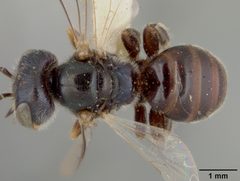
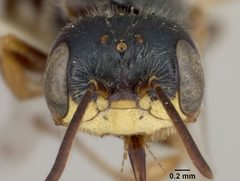
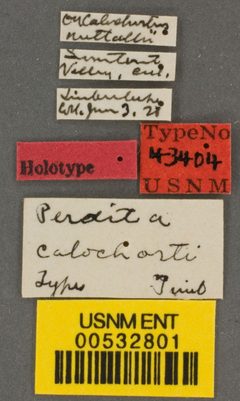
Pronunciation
How to pronounce Perdita calochorti: //pərˈdiːtə kæloʊˈkɔːrtaɪ//
These audio files are automatically generated. While they are not always 100% accurate, they are a good starting point.
Images
Distribution
North America. Distribution records are sparse, with GBIF and other sources confirming presence in North America without specific locality details beyond this broad region.
Host Associations
- Calochortus - probable pollen/nectar sourceSpecific epithet 'calochorti' strongly suggests association with this plant , though direct observation records are lacking. Calochortus are monocots in Liliaceae with showy flowers visited by various bees.
Similar Taxa
- Perdita meconisBoth are Perdita with plant-derived specific epithets indicating associations; P. meconis is well-documented as a specialist on Arctomecon poppies, suggesting P. calochorti may have similar narrow specialization on Calochortus
- Other Perdita species Perdita contains over 800 small, often mining bees; most are distinguished by subtle morphological features and plant associations rather than general appearance
More Details
Etymology and nomenclature
The specific epithet 'calochorti' is a Latinized genitive form indicating association with Calochortus. This follows a common pattern in Perdita where are named after their plants. The is catalogued in the UCR Entomology Research Museum (UCRC ENT collection), though specific details are not provided in available sources.
Data limitations
This is extremely poorly documented in public sources. Only one iNaturalist observation exists, and no published ecological studies, records, or detailed morphological descriptions were found in the provided sources. Most biological attributes remain unknown.
Sources and further reading
- BugGuide
- Wikipedia
- GBIF taxonomy match
- iNaturalist taxon
- Catalogue of Life
- Primary Type List | Entomology Research Museum
- You, Too, Can Plant a Pollinator Garden | Bug Squad
- 'Am I Even a Bee?' Identity Crisis Unfolds in This Charming Book | Bug Squad
- Researchers Develop Genome Map for Mojave Poppy Bee
- Bug Eric: World Bee Day....A Little "Bee"hind
- The best species name ever! | Beetles In The Bush