
Panurgini
mining bees
Tribe Guides
2- Panurginina
- Perditina(Fairy Bees)
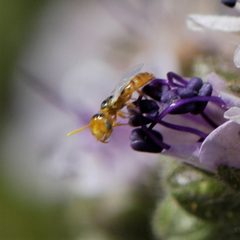
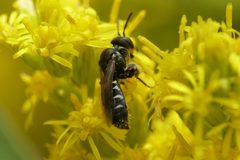
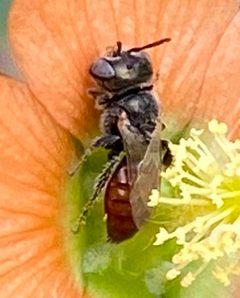
Panurgini is a tribe of mining bees in the Andrenidae. The tribe contains approximately 9 and more than 830 described , with members distributed across various regions. These bees are solitary ground-nesters that excavate burrows in soil. The genus Perdita, included in this tribe, is particularly species-rich and diverse in North America.
Pronunciation
How to pronounce Panurgini: /pænˈɜːrdʒəniː/
These audio files are automatically generated. While they are not always 100% accurate, they are a good starting point.
Identification
Panurgini can be distinguished from other Andrenidae tribes by a combination of morphological characters including reduced or modified scopal hairs on the hind legs, and specific wing venation patterns. Many are small to medium-sized bees with relatively sparse body hair compared to other Andrenidae. Males often have distinctive facial markings or modified . Identification to level requires examination of specific characters: Perdita species are often very small with reduced wing venation; Macrotera males have modified hind legs; Panurgus species typically have elongated mouthparts.
Images
Habitat
in Panurgini occupy diverse terrestrial including grasslands, deserts, scrublands, and open woodlands. They require access to bare or sparsely vegetated ground for nesting. Many Perdita species are associated with sandy soils. Habitat specificity varies by , with some species restricted to particular soil types or vegetation .
Distribution
The tribe has a wide geographic distribution including North America, Europe, Asia, and parts of Africa. The Perdita is predominantly Nearctic, with exceptional diversity in the southwestern United States and Mexico. Panurgus and Panurginus are primarily Palearctic. Macrotera occurs in both North and South America. Several genera (Avpanurgus, Clavipanurgus, Flavipanurgus) have more restricted distributions in the Palearctic region.
Seasonality
Activity periods vary by and latitude. Many temperate species are active in spring and early summer, with some having or multivoltine patterns in warmer regions. Desert-dwelling Perdita species often exhibit activity patterns tied to ephemeral flowering of plants, with some active during summer monsoon periods.
Diet
feed on nectar and pollen. Larval diet consists of pollen and nectar provisions stored in nest . Many Perdita are oligolectic, specializing on pollen from particular plant or , including Asteraceae, Polygonaceae, and Hydrophyllaceae. The degree of plant specialization varies among genera.
Life Cycle
Solitary bees with complete . Females excavate burrows in soil, creating individual provisioned with pollen and nectar. are laid on provisions, and larvae develop within sealed cells. Most are , with emerging the following season. Some desert species may have multiple per year when conditions permit.
Behavior
Females are solitary nesters, each excavating and provisioning her own burrow without cooperation. Nesting may occur where suitable is limited. Males patrol nesting areas or vegetation to locate receptive females. Many Perdita exhibit strong fidelity to specific plants for pollen collection.
Ecological Role
Important , particularly of native wildflowers. Oligolectic maintain specialized relationships with particular plant lineages. Their ground-nesting activity contributes to soil aeration and nutrient cycling in arid and semi-arid .
Human Relevance
Some pollinate crop plants and native plants used in restoration. They are not aggressive and rarely sting. The tribe includes no known significant agricultural pests or .
Similar Taxa
- AndreniniAnother tribe in Andrenidae; Andrenini typically have denser scopal hairs on hind legs and different wing venation, with generally larger body size in many
- ProtandreniniTribe in Andrenidae with different facial in males and distinct nesting ; many Protandrenini nest in pre-existing cavities rather than excavating burrows
- CalliopsiniTribe in Andrenidae distinguished by different male genitalia structure and often more robust body form
More Details
Taxonomic Note
counts vary considerably between sources, with Wikipedia citing over 830 species and iNaturalist citing at least 160. This discrepancy likely reflects different taxonomic treatments and ongoing revisions, particularly within the large Perdita.
Fossil Record
The extinct †Simpanurgus is known from fossils, indicating the tribe has an ancient evolutionary history.