
Psylla carpinicola
Crawford, 1914
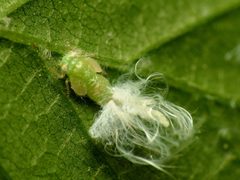
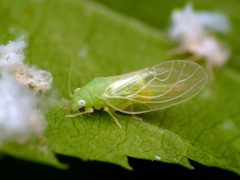
Psylla carpinicola is a plant-parasitic hemipteran in the Psyllidae, first described by Crawford in 1914. The is associated with hornbeam (Carpinus) plants, as indicated by its specific epithet 'carpinicola' meaning 'dwelling on hornbeam'. It is one of numerous species that feed on phloem sap and may induce gall formation on host plants. Like other psyllids, it has and undergoes with distinct , nymph, and stages.
Pronunciation
How to pronounce Psylla carpinicola: //ˈsɪlə ˌkɑːrpɪˈnɪkələ//
These audio files are automatically generated. While they are not always 100% accurate, they are a good starting point.
Identification
Identification of Psylla carpinicola requires examination of morphological features typical of the Psylla, including wing venation patterns, genitalia structure, and body proportions. The is distinguished from by association with Carpinus species and subtle morphological differences in , forewing shape, and male parameres. Accurate identification typically requires slide-mounted specimens and comparison with type material or authoritative keys.
Images
Habitat
Associated with hornbeam (Carpinus) trees, occurring in deciduous woodlands, forest edges, and urban areas where hornbeam is cultivated as an ornamental. The exploits both natural stands and planted specimens of its plant.
Distribution
North America: documented from Alabama, Arkansas, Connecticut, Colorado, and Florida based on distribution records. The likely occurs more broadly throughout the native and introduced range of hornbeam in eastern and central North America.
Diet
Phloem sap feeder, specializing on hornbeam (Carpinus ). Nymphs and pierce plant tissue to access nutrient-rich sap flowing through the phloem.
Host Associations
- Carpinus - Hornbeam trees; specific epithet indicates this as primary
Life Cycle
with three developmental stages: , nymph (five instars), and . Females deposit eggs on plant foliage, typically timing oviposition with leaf unfolding. Nymphs feed on phloem sap and may induce localized gall formation. Developmental duration varies with temperature and host plant .
Behavior
Nymphs are , remaining attached to plant tissue while feeding. are capable of jumping to escape disturbance and disperse to new host plants. strategy not documented for this but likely involves adults seeking sheltered locations.
Ecological Role
Primary consumer in , converting plant phloem nutrients into insect available to and . Serves as for specialized parasitic in Encyrtidae and Torymidae. Gall-inducing activity creates microhabitats that may be exploited by other arthropods.
Human Relevance
Minor nuisance pest when abundant on ornamental hornbeams; may enter buildings seeking sites. Not known to plant of economic importance. Potential for monitoring health of hornbeam .
Similar Taxa
- Pachypsylla speciesOther associated with hackberry and related ; differ in host plant association and gall
- Other Psylla species often share similar but differ in plant specificity; accurate identification requires examination of genitalia and host records
More Details
Taxonomic Note
The specific epithet 'carpinicola' is derived from Carpinus (hornbeam) + -cola (dweller), directly indicating the plant association. This follows a common naming convention in Psyllidae where epithets often reflect host plant .
Research Needs
Detailed studies of , seasonal , and precise range remain unpublished for this . Most biological information is inferred from better-studied and the general of gall-inducing psyllids.
Sources and further reading
- BugGuide
- Wikipedia
- GBIF taxonomy match
- iNaturalist taxon
- Catalogue of Life
- Encyrtid Holdings | Entomology Research Museum
- Publications | Entomology Research Museum
- Targeting the Light Brown Apple Moth | Bug Squad
- A Victory for the Bees | Bug Squad
- Psyllid Movements Revealed Via Gut Content Analysis
- Bug Eric: Hackberry Psyllids: A Fixture of Fall