
Pseudococcus maritimus
(Ehrhorn, 1900)
grape mealybug, vine mealybug
Pseudococcus maritimus, commonly known as the grape mealybug or , is a insect in the Pseudococcidae that primarily infests grapevines (Vitis vinifera). It has been documented as a of Grapevine leafroll-associated virus 3 and, more recently, was confirmed to transmit Little cherry virus 2 to sweet cherry, making it an economically significant pest in tree fruit and vineyard systems. The is part of a that includes morphologically similar such as Pseudococcus meridionalis. Research indicates limited natural capacity, with first instars rarely between plants and wind dispersal declining sharply with distance from source plants.
Pronunciation
How to pronounce Pseudococcus maritimus: /ˌsjuːdəˈkɒkəs ˌmærɪˈtaɪməs/
These audio files are automatically generated. While they are not always 100% accurate, they are a good starting point.
Identification
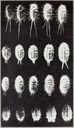
-level identification of Pseudococcus maritimus requires slide-mounting of females, as is standard for mealybugs in the Pseudococcidae. The species belongs to the "Pseudococcus maritimus" complex, which includes closely related such as P. meridionalis from Chile that are morphologically and molecularly similar. Accurate discrimination from other Pseudococcus species and mealybug typically requires examination of taxonomic characters on mounted specimens under compound microscopy.
Images
Habitat
Associated with cultivated and wild grapevines; found in vineyard agroecosystems and orchards. plants include multiple across diverse plant .
Distribution
Documented from North America (United States, Mexico, Canada), Central America (Guatemala), South America (Argentina, Brazil, Chile, French Guiana, Peru), Europe (including Gibraltar), Asia (Iran, Sri Lanka, Indonesia), Africa (Canary Islands, Egypt, South Africa), and Australasia/Pacific Islands (Hawaii, New Zealand, Bermuda). Records span temperate, subtropical, and tropical regions.
Diet
Feeds on plant phloem sap; documented plants include grapevines (Vitis vinifera), sweet cherry (Prunus avium), Japanese pear, persimmon, pomegranate, pear, apricot, citrus, gladiolus, lentils, peach, potato, quince, tea, walnut, and Aglaonema .
Host Associations
- Vitis vinifera - primary wine grapes, primary economic
- Prunus avium - sweet cherry, confirmed virus transmission
- Prunus cerasifera - Myrobalan plum, used in laboratory colony maintenance
- Pyrus pyrifolia - Japanese pear
- Diospyros kaki - persimmon
- Punica granatum - pomegranate
- Pyrus communis - pear
- Prunus armeniaca - apricot
- Citrus - citrus
- Gladiolus - gladiolus
- Lens culinaris - lentils
- Prunus persica - peach
- Solanum tuberosum - potato
- Cydonia oblonga - quince
- Camellia sinensis - tea
- Juglans - walnut
- Aglaonema - three used in division studies
Behavior
First instar exhibit limited ; field and shade-house studies indicate they rarely reach adjacent plants by walking alone. and immatures can be dispersed by wind, with trap captures showing marked decline in numbers with increasing distance from source plants. This limited dispersal capacity has implications for field spread of vectored viruses.
Ecological Role
Herbivore and virus ; transmits Grapevine leafroll-associated virus 3 in grapevines and Little cherry virus 2 to sweet cherry. Serves as for natural enemies including the Coccidiphila gerasimovi, whose larvae feed on mealybug . agents have been investigated and deployed for management.
Human Relevance
Major economic pest of viticulture and tree fruit production. Virus transmission capability makes it a significant concern for programs. Increasing in Washington State cherry orchards have raised management challenges, particularly where established orchards serve as for both the pest and vectored viruses. Subject of research including introductions.
Similar Taxa
- Pseudococcus meridionalisBelongs to the same 'Pseudococcus maritimus' ; morphologically and molecularly similar, requiring careful taxonomic analysis for discrimination
- Pseudococcus viburniAnother Pseudococcus mealybug with overlapping ranges in agricultural systems
- Planococcus ficus with similar and agricultural impact, causing confusion in pest management contexts
- Phenacoccus acerisApple mealybug, also documented as a of Little cherry virus 2, creating management complexity in shared orchard environments
More Details
Virus vector capability
Confirmed of Grapevine leafroll-associated virus 3 (Ampelovirus, Closteroviridae) in grapevines. First report of transmission of Little cherry virus 2 (LChV2, Ampelovirus) to sweet cherry published in 2013, with 18 of 21 experimentally exposed trees testing positive for the virus.
Cellular effects on host plants
Has been observed to suppress plate formation specifically in dividing cells of female flowers without interfering with nuclear division, resulting in multinucleated cells. This effect was documented on Aglaonema (Araceae).
Dispersal and epidemiology
Limited natural capacity constrains its role in virus . Wind dispersal occurs but effectiveness declines with distance; dispersal by is minimal. This pattern suggests that management of established and orchards is critical for virus control.
Sources and further reading
- BugGuide
- Wikipedia
- GBIF taxonomy match
- iNaturalist taxon
- NCBI Taxonomy
- Catalogue of Life
- Publications | Entomology Research Museum
- New methods needed to boost success of Classical Biological Control to fight insect pests | Blog #
- Sustainable Entomology: How Insect Scientists Can Protect Our Planet
- Green Light: New ID Test Ready for Invasive Mealybug Pest
- a citizen scientist’s journey into botany
- Pseudococcus maritimus . [Distribution map].
- Einfluß von Pseudococcus maritimus Ehrh. auf die Zellteilung
- A new species of Pseudococcus (Hemiptera: Pseudococcidae) belonging to the “Pseudococcus maritimus” complex from Chile: molecular and morphological description
- Movement of grape mealybug, Pseudococcus maritimus, on and between host plants
- Reproductive Biology of <I>Pseudococcus maritimus</I> (Hemiptera: Pseudococcidae)
- Life History, Sex Attraction, Mating, and Natural Enemies of the Grape Mealybug, Pseudococcus maritimus (Homoptera: Pseudococcidae)
- First Report of Transmission of Little cherry virus 2 to Sweet Cherry by Pseudococcus maritimus (Ehrhorn) (Hemiptera: Pseudococcidae)