
Cerataphis
Lichtenstein, 1883
witch hazel aphid, palm aphid
Species Guides
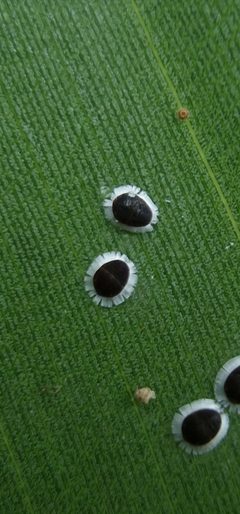
1- Cerataphis orchidearum(Fringed Orchid Aphid)
Cerataphis is a of aphids in the Aphididae, tribe Cerataphidini. The genus comprises approximately 10–12 described distributed across tropical and subtropical regions worldwide. Species in this genus are associated with plants in the families Styracaceae (witch hazels), Arecaceae (palms), and Orchidaceae. Several species exhibit host alternation between primary hosts (Styrax species) and secondary hosts (palms or orchids). Some species are economically significant as pests of coconut, oil palm, and ornamental palms.
Pronunciation
How to pronounce Cerataphis: /sɛˈræ.tə.fɪs/
These audio files are automatically generated. While they are not always 100% accurate, they are a good starting point.
Identification
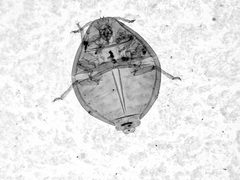
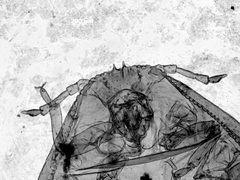
First instar nymphs of some possess well-developed, sharp horns projecting from the , a distinctive trait within the . These horns may function in defense against . are small, soft-bodied aphids typical of the , with . Species identification requires examination of morphological characters including cornicle structure, cauda shape, and antennal segmentation, often necessitating taxonomic keys.
Images
Habitat
Tropical and subtropical environments. Primary plants include of Styrax (Styracaceae). Secondary hosts include palms (Arecaceae: Cocos nucifera, Raphia hookeri, Butia odorata, and numerous other palm species) and orchids (Orchidaceae). Colonies are frequently found on rachillae, fruits, and young tissue of host plants.
Distribution
Pantropical distribution spanning Europe (France, Portugal, Spain, Canary Islands, Germany, Italy, UK, Belgium, Finland, Hungary, Russia, Sweden), Asia (China including Hainan and Hong Kong, India, Indonesia, Japan, Malaysia, Myanmar, Philippines, Singapore, Sri Lanka, Taiwan, Thailand), Africa (Angola, Botswana, Burundi, Congo Democratic Republic, Côte d'Ivoire, Ghana, Kenya, Madagascar, Mauritius, Mozambique, Nigeria, Réunion, Rwanda, Seychelles, Sierra Leone, South Africa, Tanzania, Uganda, Zimbabwe), North America (USA: California, Colorado, Florida, Hawaii, Indiana, New York, Ohio, South Dakota), Central America and Caribbean (Belize, Bermuda, Cayman Islands, Cuba, Dominica, Dominican Republic, Guadeloupe, Guatemala, Haiti, Jamaica, Martinique, Montserrat, Puerto Rico, St. Lucia, Trinidad and Tobago), South America (Brazil, Colombia, Ecuador, French Guiana, Guyana, Suriname, Venezuela), and Oceania (Australia: New South Wales and Queensland, Fiji, French Polynesia, Guam, Micronesia, Northern Mariana Islands, Papua New Guinea, Solomon Islands, Vanuatu).
Diet
Phloem sap of plants. Specific associations documented include Styrax benzoin and Styrax suberifolia (primary hosts), and numerous palm including Cocos nucifera, Raphia hookeri, Butia odorata, and Calamus quinquesstinervis, as well as orchids (Orchidaceae).
Host Associations
- Styrax benzoin - primary
- Styrax suberifolia - primary gall-forming
- Cocos nucifera - secondary
- Raphia hookeri - secondary
- Butia odorata - secondary rachillae and fruits preferred
- Calamus quinquesstinervis - secondary rattan palm
- Orchidaceae - secondary -level association
Life Cycle
alternation occurs between primary woody hosts (Styrax , where galls may be formed) and secondary herbaceous or palm hosts. In Cerataphis variabilis (as Cerataphis palmae), nymphal development comprises four instars with total developmental period of approximately 11–15 days depending on temperature and humidity. First instar lasts approximately 5 days; second and third instars each last approximately 2.5 days; fourth instar lasts approximately 2.4 days. Developmental rate is negatively correlated with temperature and relative humidity. produce 54–60 progeny over a reproductive period of 28–31 days. Adult longevity ranges from 31–34 days.
Behavior
Colonies are frequently attended by ants, which tend the aphids for honeydew. A mutualistic interaction with Camponotus crassus has been documented for C. brasiliensis on Butia odorata. First instar nymphs with well-developed horns may use these structures defensively against .
Ecological Role
Phloem-feeding herbivore. Honeydew production supports mutualisms. Gall formation on primary (Styrax) creates specialized microhabitats. Acts as pest of economically important palm crops in tropical regions.
Human Relevance
Several are significant agricultural pests. Cerataphis lataniae and C. brasiliensis are pests of coconut and oil palm, causing direct damage through sap feeding and indirect damage through growth on honeydew deposits. Cerataphis orchidearum (fringed orchid aphid) is a pest of cultivated orchids. Management is complicated by attendance, which protects colonies from natural enemies.
Similar Taxa
- HormaphisAlso in tribe Cerataphidini with similar gall-forming on primary and palm secondary hosts; distinguished by morphological details of gall structure and nymphal armature
- other AphididaeCerataphis with well-developed nymphal horns and documented alternation between Styracaceae and palms/orchids; most aphids lack this specific host association pattern and defensive
Sources and further reading
- BugGuide
- Wikipedia
- GBIF taxonomy match
- iNaturalist taxon
- NCBI Taxonomy
- Catalogue of Life
- Cerataphis lataniae . [Distribution map].
- Cerataphis brasiliensis . [Distribution map].
- Cerataphis orchidearum . [Distribution map].
- Studies on the Biology of the Palm Aphid, Cerataphis palmae (Ghesquierei) ( = Cerataphis variabilis Hille Ris Lambers) (Homoptera:Pemphigidae) on Raphia hookeri—II
- Life History of Cerataphis palmae Ghesquire (Pemphigidae, Homoptera) on Coconut
- Secondary host generation of the gall aphid Cerataphis jamuritsu (Homoptera)
- Occurrence and Distribution of Cerataphis Palmae (Ghesquierei) (Homoptera: Pemphigidae) on Raphia Palms in Southern Nigeria
- Studies on the biology of the palm aphid, Cerataphis variabilis (Homoptera: Pemphigidae), on Raphia hookeri–1: Developmental period of the immatures, fecundity and longevity of the apterous adults
- The life cycle and natural history of the tropical aphidCerataphis fransseni(Homoptera: Aphididae: Hormaphidinae), with reference to the evolution of host alternation in aphids
- So close and unnoted: a new host plant of Cerataphis brasiliensis (Hempel) (Hemiptera: Aphididae)