Pemphigus populiramulorum
Riley, 1879
Poplar Twig Gall Aphid
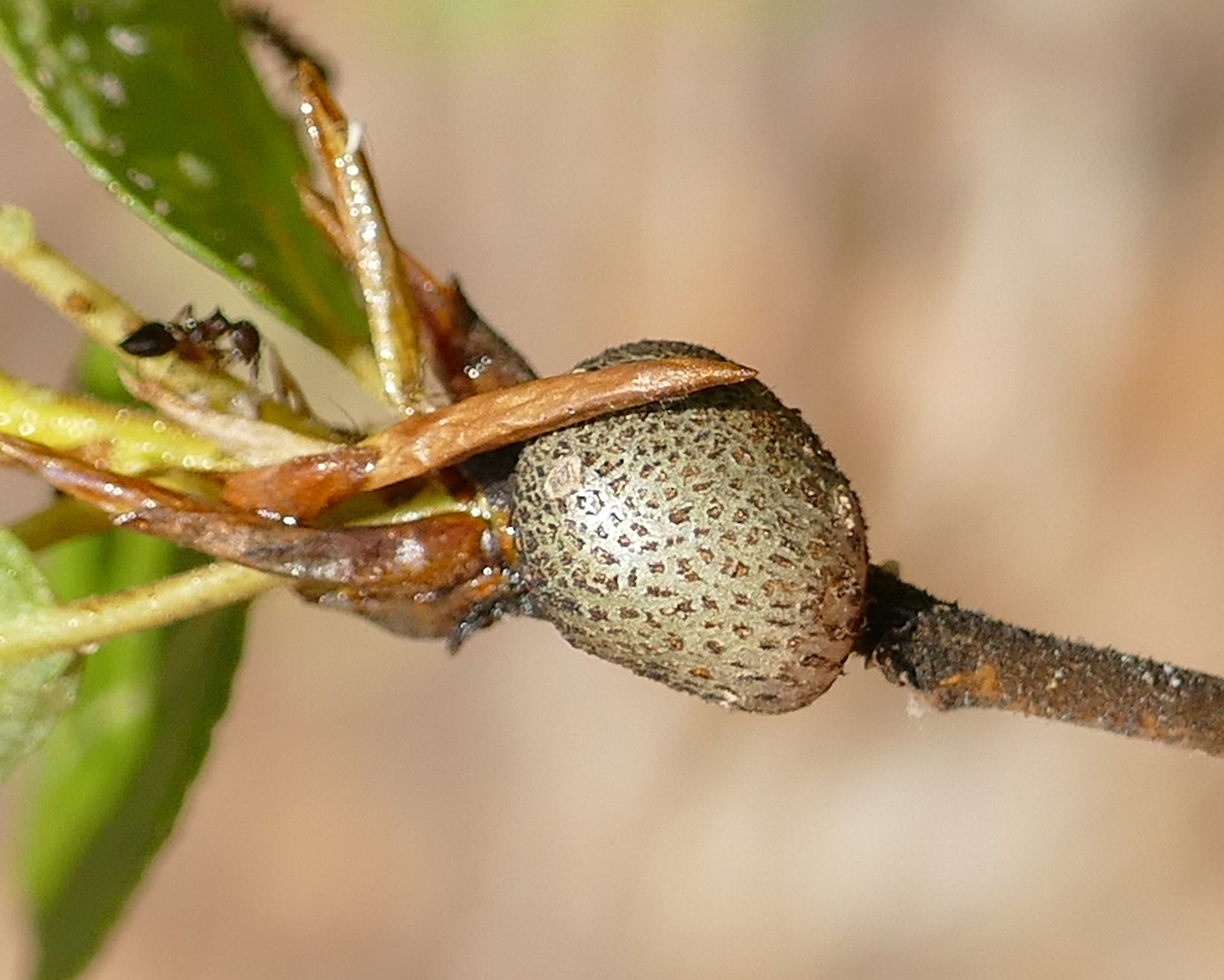
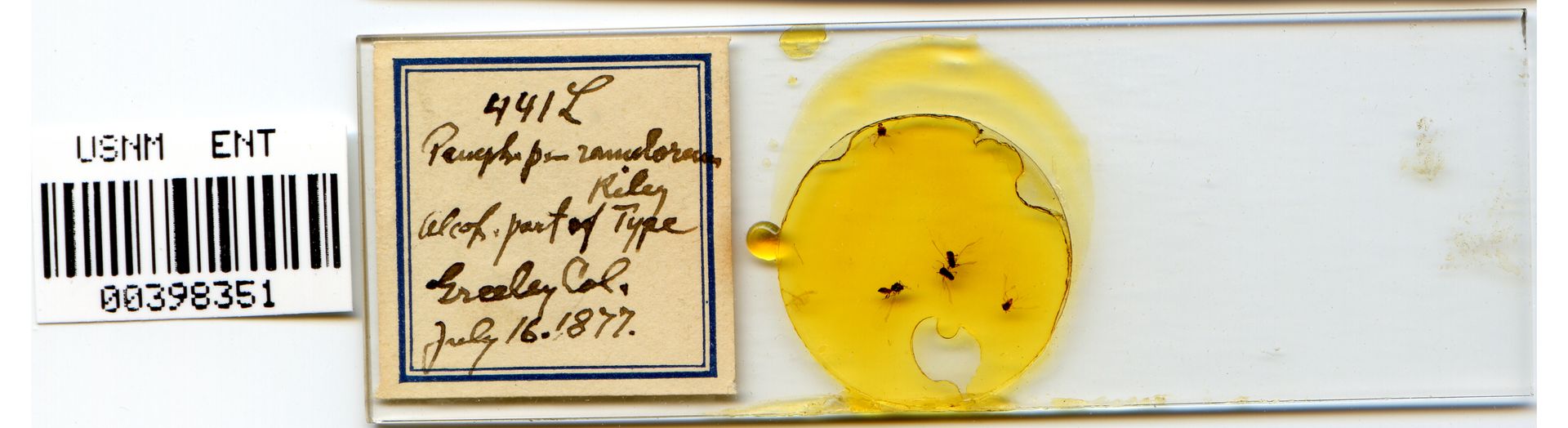
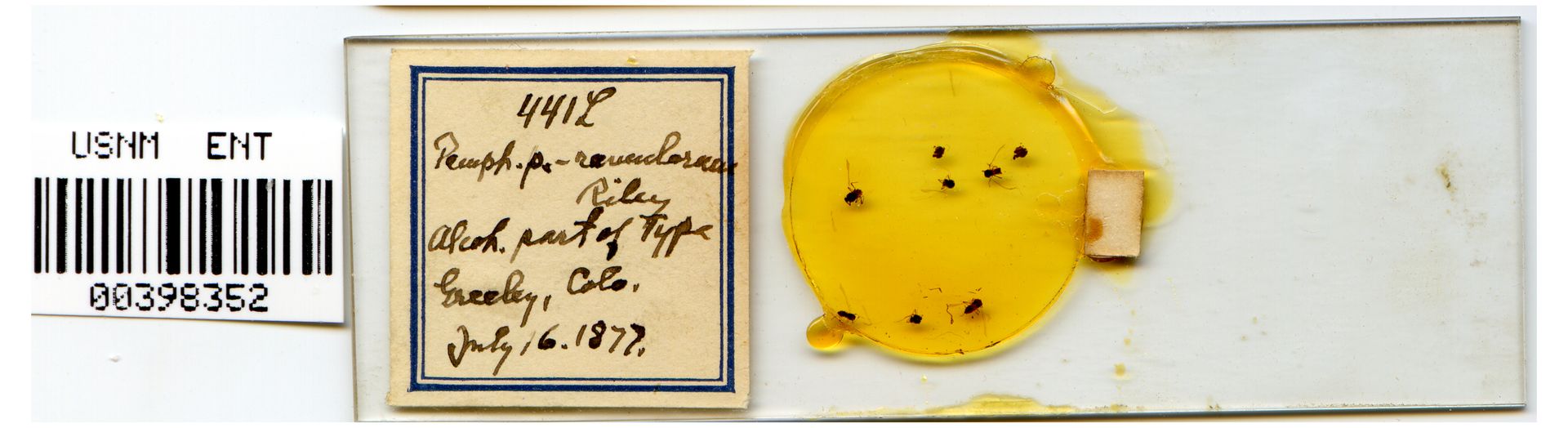
Pemphigus populiramulorum is a gall-forming in the Aphididae, known from poplar (Populus) . It induces distinctive twig galls on its primary host. The has a complex involving host alternation, though specific secondary host details are not well documented in available sources. It has been confused with other root-feeding Pemphigus species in informal literature.
Pronunciation
How to pronounce Pemphigus populiramulorum: /ˈpɛmfɪɡəs ˌpɒpjʊˌlaɪrəˈmjʊlɔːrəm/
These audio files are automatically generated. While they are not always 100% accurate, they are a good starting point.
Identification
Distinguished from other Pemphigus by its association with poplar twig galls rather than leaf petiole galls or root galls. The species name 'populiramulorum' (poplar twig) reflects this relationship. Separation from Pemphigus populitransversus, which forms leaf petiole galls on poplar, requires examination of gall location and . morphs would require microscopic examination of diagnostic wing venation and antennal characteristics for definitive identification.
Images
Habitat
Associated with poplar (Populus ) as the primary , specifically forming galls on twigs. The specific secondary host grass or sedge species has not been clearly established in available sources.
Distribution
North America; specific range details beyond this continental distribution are not well documented in available sources.
Diet
Phloem-feeding on poplar (Populus) twigs during the gall-forming phase of its . Secondary plant associations remain unclear in available sources.
Host Associations
- Populus - primary forms twig galls
Life Cycle
Has a involving alternation between a woody primary (poplar) and an unknown secondary host, likely a grass or sedge as in related Pemphigus . Produces galls on poplar twigs that house the fundatrix and subsequent . occurs on the primary host in autumn, with .
Human Relevance
Has been erroneously associated with cannabis root problems in informal online sources, which conflated this with unrelated root-feeding aphids including Rhopalosiphum rufiabdominale (rice root aphid). This misidentification has caused confusion in agricultural pest management contexts.
Similar Taxa
- Rhopalosiphum rufiabdominaleBoth have been confused in informal literature regarding 'root ' , particularly on cannabis. R. rufiabdominale is a true root-feeding aphid with distribution on grasses and sedges, while P. populiramulorum forms above-ground twig galls on poplar.
- Pemphigus populitransversusBoth form galls on Populus , but P. populitransversus produces galls at leaf petioles rather than on twigs, allowing field separation.
- Pemphigus species (various root-feeding forms)Other Pemphigus feed on roots of grasses and sedges and have been confused with P. populiramulorum in non-technical sources, though they differ in gall location and associations.
Misconceptions
Frequently misidentified in online forums and non-technical sources as a root-feeding pest of cannabis and other crops. This error appears to stem from confusion between 'root ' as a descriptive term and actual identification. Technical sources confirm this species forms above-ground twig galls on poplar, not root .
More Details
Nomenclatural note
Catalogue of Life lists this as a synonym, while GBIF and NCBI treat it as accepted. This discrepancy reflects ongoing taxonomic evaluation within the Pemphigus.
Gall morphology
Twig galls are integral to identification; however, detailed morphological descriptions of these galls are not available in the provided sources.