
Macrosiphum albifrons
Essig, 1911
Lupin Aphid, Lupine Aphid
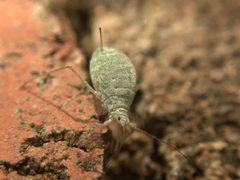
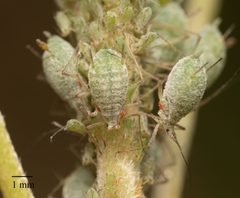
Macrosiphum albifrons, the lupin , is a large grey-green aphid native to North America that has become an established pest in Europe. First recorded in the UK in 1981 and West Germany in 1983, it now occurs widely across Europe. The is specialized on lupins (Lupinus spp.) and can cause severe that lead to plant wilting and collapse. It transmits Cucumber Mosaic Virus to lupins and has been observed to have narcotizing effects on when feeding on alkaloid-rich plants.

Pronunciation
How to pronounce Macrosiphum albifrons: /ˌmakrəʊˈsɪfəm ˌælbɪˈfrɒnz/
These audio files are automatically generated. While they are not always 100% accurate, they are a good starting point.
Images
Habitat
Agricultural fields and cultivated areas where lupin crops (Lupinus spp.) are grown; associated with the above-ground parts of plants
Distribution
Native to North America; introduced and established in Europe including the UK (first reported 1981), West Germany (first recorded 1983), and Austria; present in British Columbia, Canada
Diet
Phloem sap of lupin plants (Lupinus spp.)
Host Associations
- Lupinus spp. - primary Specialized ; requires certain alkaloid content and specific alkaloid composition in host plant
Ecological Role
Agricultural pest of cultivated lupins; prey for natural enemies including Coccinella septempunctata, Chrysoperla carnea, cecidomyiid larvae, and the fungus Erynia neoaphidis; for hymenopterous ; virus transmitting Cucumber Mosaic Virus to lupins
Human Relevance
Significant pest of lupin crops causing economic damage through direct feeding and virus transmission; can cause plants to wilt and collapse; management complicated by lack of natural in introduced range and potential resistance
Sources and further reading
- BugGuide
- Wikipedia
- GBIF taxonomy match
- iNaturalist taxon
- NCBI Taxonomy
- Catalogue of Life
- A Summit to Save the Butterflies | Bug Squad
- Encyrtid Holdings | Entomology Research Museum
- Aboveground Pests - AgriLife Extension Entomology
- The Brilliance of Brownfields - Buglife Blog - Buglife
- Sustainable Entomology: How Insect Scientists Can Protect Our Planet
- Uncategorized | Blog - Part 54
- Lupine Aphid, Macrosiphum albifrons (Homoptera: Aphididae): Distribution and Hymenopterous Parasites in British Columbia
- Die Lupinenblattlaus Macrosiphum albifrons Essig, ein neuer Schaderreger und Virusvektor in Deutschland
- The Lupin Aphid (Macrosiphum albifrons Essig, 1911) (Hom., Aphididae) in West Germany: its occurrence, host plants and natural enemies