
Macrosiphoniella ludovicianae
(Oestlund, 1886)
White Sage Aphid
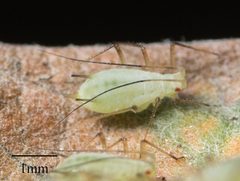
Macrosiphoniella ludovicianae, known as the White Sage , is a aphid in the Aphididae. It is documented from a limited number of observations and appears to be associated with white sage (Salvia apiana) and related Salvia species. The species was described by Oestlund in 1886.
Pronunciation
How to pronounce Macrosiphoniella ludovicianae: /ˌmæ.kroʊˌsɪf.oʊˈni.ə.lə luˌdɒ.vɪˈsi.e.ni/
These audio files are automatically generated. While they are not always 100% accurate, they are a good starting point.
Identification
Small, soft-bodied with paired cornicles (siphunculi) on the . As a member of Macrosiphoniella, it likely possesses relatively long, cylindrical cornicles compared to some other aphid . Specific distinguishing features from require examination of slide-mounted specimens; accurate identification generally depends on association and microscopic morphological analysis.
Images
Habitat
Associated with white sage (Salvia apiana) and potentially other Salvia in arid and semi-arid shrubland environments.
Distribution
Documented from western North America, with observations from California. The specific range remains poorly documented due to limited sampling.
Diet
Feeds on phloem sap of Salvia apiana (white sage) and potentially related Salvia .
Host Associations
- Salvia apiana - primary white sage
Ecological Role
As a herbivore, it may influence white sage plant physiology and serves as a food source for and .
Human Relevance
Of potential interest in native plant conservation and restoration contexts involving white sage. No significant economic or agricultural impact documented.
Similar Taxa
- Macrosiphoniella sanborniCongeneric with similar ; distinguished by preference (chrysanthemums vs. Salvia) and subtle morphological differences in cornicle length and
- Other Macrosiphoniella species on ArtemisiaSeveral specialize on Artemisia; plant association is the primary distinguishing characteristic