
Aphis varians
Patch, 1914
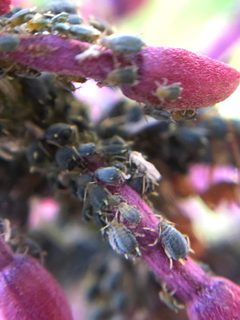
Aphis varians is an described by Patch in 1914. Research has demonstrated that this species employs as an effective anti- strategy, with individuals benefiting from reduced per capita risk when grouped together. The species serves as prey for the convergent lady beetle Hippodamia convergens, with which it has been studied in predator-prey interaction research.
Pronunciation
How to pronounce Aphis varians: /ˈeɪfɪs ˈvɛəriənz/
These audio files are automatically generated. While they are not always 100% accurate, they are a good starting point.
Images
Behavior
Forms as an effective anti- strategy. Aggregated aphids experience reduced individual risk through three mechanisms: predator confusion effects, dilution of risk among colony members, and enhanced predator detection. movement is congregative, with individuals tending to remain within clumps of conspecifics. The benefit of clumping is predator-dependent; aggregation provides survival advantages only when predators are present.
Ecological Role
Serves as prey for the convergent lady beetle Hippodamia convergens. The -prey interaction between Aphis varians and H. convergens has been used as a model system to study how prey affects risk and .
Sources and further reading
- BugGuide
- GBIF taxonomy match
- iNaturalist taxon
- NCBI Taxonomy
- Catalogue of Life
- Incredible Work, and Timely, on 22 Species of Hornets | Bug Squad
- It Takes a Village: Our Continued Efforts to Manage Invasive Species in the U.S.
- Holiday meals served by an alien plant and its cosmopolitan guest: Peach-clematis aphid, Myzus varians — Bug of the Week
- Orange and Black II: Milkweed leaf beetle, Labidomera clivicollis; Oleander aphid, Aphis nerii; Milkweed Bug, Oncopeltus fasciatus; Monarch, Danaus plexippus — Bug of the Week
- Orange and Black Bugs- Milkweed leaf beetle, Labidomera clivicollis; Oleander aphid, Aphis nerii; Milkweed Bug - Oncopeltus fasciatus; Monarch butterfly, Danaus plexippus — Bug of the Week
- A tortoise beetle gift | Beetles In The Bush
- Aggregation in Aphis Varians: An Effective Strategy for Reducing Predation Risk