
Anoecia
Koch, 1857
Species Guides
1- Anoecia corni(dogwood aphid)
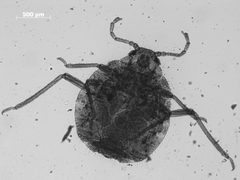
Anoecia is a of root-feeding aphids in the Anoeciinae. are primarily subterranean, spending much of their underground on grass and sedge roots. The genus includes approximately 30 described species distributed across the Holarctic region. Several species exhibit complex life cycles involving between woody spring (notably dogwood, Cornus) and herbaceous summer hosts.
Pronunciation
How to pronounce Anoecia: /əˈniːʃə/
These audio files are automatically generated. While they are not always 100% accurate, they are a good starting point.
Identification
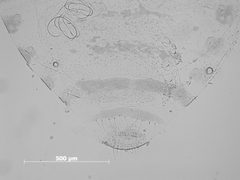
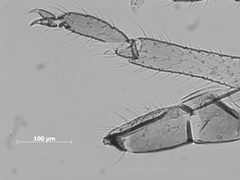
Members of Anoecia can be distinguished from other by their association with the Anoeciinae, which is characterized by root-feeding habits and specific morphological features of the siphunculi and cauda. Definitive identification to level requires examination of microscopic characters including antennal segmentation, distribution, and abdominal patterns. The genus is most readily recognized in the field by its subterranean on grass roots and presence of attending ants.
Images
Habitat
Subterranean environments on roots of grasses (Poaceae) and sedges (Cyperaceae). Summer occur underground on root systems. Some overwinter as on woody , particularly dogwood (Cornus sanguinea). Frequently attended by ants.
Distribution
Holarctic distribution, with recorded from Eurasia and North America. Specific records from Morocco, across Europe, and temperate regions of Asia and North America.
Seasonality
hatch on spring in spring. to root-feeding summer hosts occurs during summer months. Exact timing varies by and geographic location.
Diet
Phloem feeder; some have been observed accessing xylem tissues of roots.
Host Associations
- Triticum sp. (wheat) - summer , roots
- Cornus sanguinea (dogwood) - spring ,
- Poaceae (grasses) - summer , roots
- Cyperaceae (sedges) - summer , roots
Life Cycle
Holocyclic dioecious documented in at least some . hatch on woody spring , producing fundatrices. migrate to roots of grasses and sedges for summer . Exact details vary among species; some may exhibit abbreviated or modified cycles.
Behavior
Subterranean lifestyle with close contact to rhizosphere microbial . between above-ground spring and underground summer hosts. attendance is common.
Ecological Role
Member of root-feeding in grassland and agricultural . Association with bacterial endosymbionts including Buchnera aphidicola, Serratia symbiotica, and . Potential role in soil microbial dynamics through root feeding activities.
Human Relevance
Anoecia corni and related are occasional pests of cereal crops, feeding on wheat roots. attendance may increase local densities. Generally of minor economic importance compared to above-ground aphid pests.
Similar Taxa
- Other Aphididae generaAnoecia is distinguished by Anoeciinae characteristics including root-feeding specialization and specific morphological features of siphunculi and cauda.
- TetraneuraBoth include root-feeding with complex , but Tetraneura is in a different tribe (Fordini) and typically associated with elms (Ulmus) rather than dogwood.
More Details
Bacterial microbiota
16S rRNA sequencing of Anoecia corni revealed a dominated by Enterobacteriales (96% of reads), primarily the obligate Buchnera aphidicola. Facultative symbionts detected include Serratia symbiotica, (rare in aphids), Arsenophonus, and Dactylopiibacterium carminicum. Contrary to expectations, the subterranean lifestyle does not result in acquisition of diverse environmental rhizosphere bacteria—the microbiota remains limited mainly to heritable endosymbionts.