
Anoeciinae
Tullgren, 1909
Genus Guides
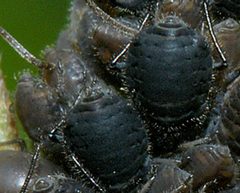
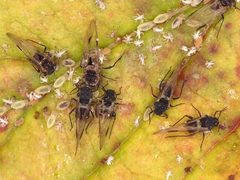
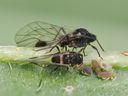
1Anoeciinae is a of root-feeding aphids within Aphididae. Members are obligate subterranean insects that live and feed on plant roots. The subfamily contains four , including two extinct fossil from Baltic amber. Unlike many aphids, anoeciines do not alternate between and remain underground throughout their .
Pronunciation
How to pronounce Anoeciinae: /ænˌiːʃiˈaɪniː/
These audio files are automatically generated. While they are not always 100% accurate, they are a good starting point.
Identification
Anoeciinae can be distinguished from other by their exclusively subterranean habit and association with plant roots. Morphological features include reduced or absent wings in most life stages and adaptations for soil-dwelling. Identification to requires examination of specific morphological characters such as antennal and caudal structures.
Images
Habitat
Strictly subterranean; found in soil associated with plant root systems. Occurs in various soil types supporting plants.
Distribution
Worldwide distribution where plants occur; specific range limited by suitable soil conditions and presence of compatible host roots.
Diet
Feeds on phloem sap of plant roots. plants include various herbaceous and grasses.
Host Associations
- grasses - root-feeding primary
- herbaceous plants - root-feeding various
Behavior
Obligate subterranean existence throughout the . Does not produce aerial forms or alternate between .
Ecological Role
Root-feeding herbivore; may influence plant root physiology and nutrient cycling in soil .
Human Relevance
Potential minor agricultural pest through root feeding on crop plants; generally of limited economic significance compared to above-ground aphids.
Similar Taxa
- EriosomatinaeAlso contains root-feeding aphids; distinguished by different gall-forming on primary and distinct morphological features
- AphidinaeMostly above-ground feeders; distinguished by aerial habit, often with complex alternation
More Details
Fossil record
includes two extinct from Baltic amber: Berendtaphis Heie, 1971 and Bolshayanoecia Heie, 1989, indicating ancient origin of subterranean lineages.
Genera
Extant are Anoecia Koch, 1857 and Krikoanoecia Zhang & Qiao, 1996.