
Aleurodicinae
Quaintance & Baker
whiteflies
Genus Guides
2- Aleurodicus(whiteflies)
- Paraleyrodes(nesting whiteflies)
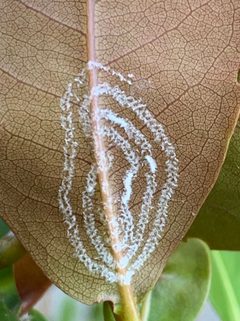
Aleurodicinae is a of whiteflies (Aleyrodidae: Hemiptera) distinguished by morphological features of the pupal case, including the arrangement of setae and pore structures. The subfamily contains over 40 in Belize alone, with substantial diversity throughout the Neotropical region. Members are phloem-feeders on vascular plants, with some species established as pests in introduced ranges including the western Palaearctic, Pacific, Southeast Asia, and Canary Islands. At least one secretes distinctive blue-iridescent wax.


Pronunciation
How to pronounce Aleurodicinae: /əˌlʊəroʊˈdɪsɪni/
These audio files are automatically generated. While they are not always 100% accurate, they are a good starting point.
Identification
Distinguished from the other whitefly Aleyrodinae by pupal case , particularly the arrangement of setae and pore structures. A key to all Neotropical is available in taxonomic literature.
Images
Habitat
Primarily Neotropical forest environments; documented from surveys in the Chiquibul Forest Reserve, Belize.
Distribution
Native to the Neotropical region, with Belize extensively surveyed. Some introduced and established in western Palaearctic, Pacific, Southeast Asia, and Canary Islands.
Diet
Phloem-feeding on vascular plants; specific plant associations documented in taxonomic literature.
Behavior
At least one secretes blue-iridescent wax.
Ecological Role
Some function as pests with documented economic impact in introduced ranges. Associated in the Aphelinidae have been recorded.
Human Relevance
Potential economic pest impact due to ; subject of taxonomic and agricultural research.
Similar Taxa
- AleyrodinaeThe other of Aleyrodidae, distinguished by pupal case setal and pore arrangements.
Sources and further reading
- BugGuide
- iNaturalist taxon
- NCBI Taxonomy
- A new genus of Neotropical whitefly, secreting blue-iridescent wax (Sternorrhyncha, Aleyrodidae, Aleurodicinae), and its parasitoids (Hymenoptera, Aphelinidae)
- Whiteflies of Belize (Hemiptera: Aleyrodidae). Part 1 introduction and account of the subfamily Aleurodicinae Quaintance & Baker