
Aleyrodinae
Westwood, 1840
whiteflies
Genus Guides
14- Aleurocanthus
- Aleurochiton(whiteflies)
- Aleuroparadoxus(whiteflies)
- Aleuroplatus
- Aleuropleurocelus
- Aleurothrixus(woolly whiteflies)
- Aleurotrachelus
- Bemisia
- Dialeurodes
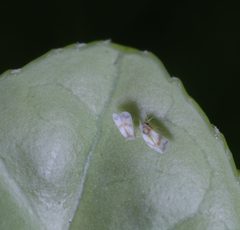
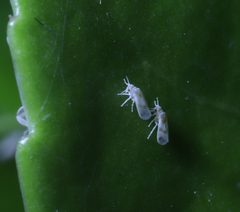
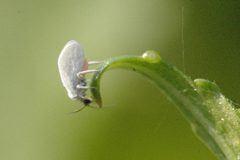
Aleyrodinae is the largest of whiteflies (Hemiptera: Aleyrodidae), containing the majority of described . Members are small, sap-sucking insects with powdery white wax-coated wings in . The subfamily includes economically significant agricultural pests such as Bemisia tabaci and Aleurotrachelus trachoides, which cause damage through direct feeding and virus transmission. A field survey in Belize recorded nearly 200 whitefly species, with all but 40 belonging to Aleyrodinae.
Pronunciation
How to pronounce Aleyrodinae: /ˌælɪˈroʊdɪnaɪ/
These audio files are automatically generated. While they are not always 100% accurate, they are a good starting point.
Images
Habitat
Diverse environments ranging from tropical forests to agricultural systems. Documented from Atlantic Forest fragments in Brazil, Chiquibul Forest Reserve in Belize, and various agricultural and horticultural production systems worldwide.
Distribution
distribution with documented occurrences in Japan, Brazil (Rio de Janeiro state), Belize, and California, USA. within the have been intercepted at U.S. ports of entry on imported plant material.
Diet
Phloem-feeding on vascular plants; extract plant sap from tissues.
Host Associations
- Myrica rubra - original description for Parabemisia myricae
- Morus alba - original description for Parabemisia myricae
- Citrus - agricultural for Parabemisia myricae
- lemon - documented oviposition and survival varies with leaf age
- Caesalpinia pluviosa - first record from Atlantic Forest fragments, Brazil
- Tradescantia zebrina - first record from Atlantic Forest fragments, Brazil
- Impatiens walleriana - first record from Atlantic Forest fragments, Brazil
- Cupania sp. - first record from Atlantic Forest fragments, Brazil
- Talisia esculenta - first record from Atlantic Forest fragments, Brazil
- cotton - agricultural crop for Bemisia tabaci in Brazil since 1923
- soybean - agricultural crop for Bemisia tabaci
- tomato - agricultural crop for Bemisia tabaci
- bean - agricultural crop for Bemisia tabaci
- Solanum spp. - nightshade for Aleurotrachelus trachoides
- Capsicum spp. - pepper for Aleurotrachelus trachoides
- Magnolia - interception at U.S. ports of entry for four Aleyrodinae
Life Cycle
Development includes and multiple nymphal instars. Fourth-instar nymphs are and manually sampled from leaf blades. Nymphs produce waxy secretions. The so-called 'pupal' case () is a taxonomically important stage with diagnostic morphological characters including marginal setae and lingula .
Behavior
Oviposition and survival are functions of leaf age, with distinct probing and oviposition observed between young and mature leaves. show seasonal fluctuation; dry winter periods promote increase while rainfall acts as a natural regulating agent influencing mortality. prefer high-temperature environments.
Ecological Role
Agricultural pests causing economic losses through direct feeding damage and as for plant virus transmission. Occupies both creeping plants and tree in forest environments. Subject to by native .
Human Relevance
Major agricultural pests requiring management in crop production systems. Bemisia tabaci has caused economic losses in Brazil since 1923. are intercepted at ports of entry on imported plant material, indicating biosecurity significance. Management challenges exist in both field and protected agricultural systems.
Sources and further reading
- BugGuide
- Wikipedia
- iNaturalist taxon
- NCBI Taxonomy
- Bayberry Whitefly, Parabemisia myricae (Kuwana) (Insecta: Homoptera: Aleyrodidae: Aleyrodinae)
- Incidence of Bemisia tabaci Gennadius (Aleyrodidae, Aleyrodinae) in four Atlantic Forest fragments
- Solanum Whitefly, Pepper Whitefly (Suggested Common Names) Aleurotrachelus trachoides Back (Insecta: Hemiptera: Aleyrodidae: Aleyrodinae)
- Whiteflies of Belize (Hemiptera: Aleyrodidae)Part 2óa review of the subfamily Aleyrodinae Westwood
- New distribution and host records of four whiteflies (Hemiptera: Aleyrodidae: Aleyrodinae) intercepted onMagnolia(Magnoliaceae) at U.S. ports of entry