
Perillus circumcinctus
Stål, 1862
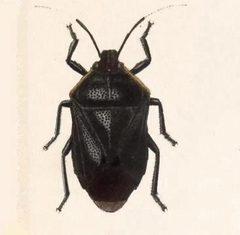
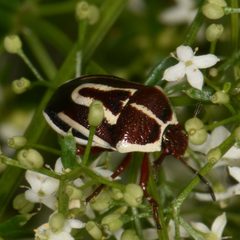
Perillus circumcinctus is a in the Pentatomidae, native to North America. It is one of several predatory in the Perillus, closely related to the well-studied two-spotted (Perillus bioculatus). Like other predatory pentatomids, it hunts insect prey using to inject digestive and consume liquefied tissues. The species has been documented from Vermont and other parts of North America.
Pronunciation
How to pronounce Perillus circumcinctus: //pɛˈɹɪlʊs ˌsɜːkəmˈsɪŋktəs//
These audio files are automatically generated. While they are not always 100% accurate, they are a good starting point.
Identification
Distinguished from similar predatory stink bugs by specific markings and body proportions. Closely resembles Perillus bioculatus but differs in pattern details. As with other Perillus , have the characteristic shield-shaped body typical of Pentatomidae, with a prominent triangular scutellum. Accurate identification requires examination of specific morphological features not detailed in available sources.
Images
Distribution
North America, with confirmed records from Vermont, United States. The occurs in the Nearctic region.
Diet
Specialized of Chrysomelidae beetles, as documented for the . Feeding occurs via piercing-sucking : prey is immobilized with toxic saliva, digestive are injected to liquefy tissues, and nutrient-rich fluids are extracted.
Host Associations
- Chrysomelidae - preySpecialized to prey upon leaf beetles in this
Life Cycle
occurs in early summer. Details of , nymphal, and stages are not specifically documented for this , though related Perillus species produce barrel-shaped eggs in clusters and have multiple nymphal instars.
Behavior
Actively hunts prey rather than waiting in ambush. Has been observed using olfactory cues—specifically volatile compounds released by -damaged plants—to locate prey .
Ecological Role
that contributes to of chrysomelid . As a specialized predator of leaf beetles, it may help regulate herbivore damage to vegetation.
Similar Taxa
- Perillus bioculatusCongeneric with similar predatory and appearance; both are orange-and-black predatory stink bugs that feed on Colorado potato beetle and other chrysomelids. P. bioculatus is more extensively studied and widely distributed.
- Podisus maculiventrisAnother predatory pentatomid with similar hunting and ecological role; spined soldier bug is a rather than chrysomelid .
More Details
Taxonomic note
The Perillus contains several predatory that have been subject to taxonomic confusion. P. circumcinctus is less frequently encountered in entomological literature than P. bioculatus, which has been extensively studied as a agent.
Research context
While detailed studies of P. circumcinctus specifically are sparse, the Perillus has been well studied for its use of plant volatile cues to locate prey. Research on P. bioculatus demonstrates that these detect sesquiterpenoid compounds released by potato plants damaged by , using these as olfactory beacons to find prey.
Sources and further reading
- BugGuide
- Wikipedia
- GBIF taxonomy match
- iNaturalist taxon
- NCBI Taxonomy
- Stink Bugs Suck | Bug Squad
- Bugs in orange and black, predator and prey: Two-spotted stink bug, Perillus bioculatus, and Colorado potato beetle, Leptinotarsa decemlineata — Bug of the Week
- Bugs in orange and black, Part 3 – Trick or treat? Two-spotted stink bug, Perillus bioculatus, has a lethal trick that turns Colorado potato beetle, Leptinotarsa decemlineata, into a tasty treat — Bug of the Week
- Heroes of the true bug clan: Two spotted stink bug, Perillus bioculatus, and spined soldier bug, Podisus maculiventris — Bug of the Week
- Archive — Bug of the Week
- Bug of the Week celebrates ten years! — Bug of the Week