
Megalonotus sabulicola
(Thomson, 1870)
Introduced Dirt-colored Seed Bug
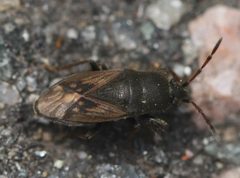
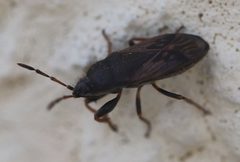
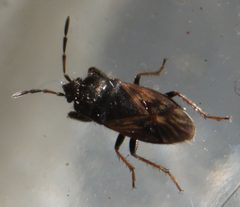
Megalonotus sabulicola is a in the Rhyparochromidae, native to Europe and northern Asia. It has been introduced to North America, where it is established and frequently recorded. The is associated with sandy , as indicated by its specific epithet 'sabulicola' (sand-dwelling). It is one of the more commonly observed dirt-colored seed bugs in its introduced range.
Pronunciation
How to pronounce Megalonotus sabulicola: /mɛˌɡæloʊˈnoʊtəs səˈbjuːlɪˌkoʊlə/
These audio files are automatically generated. While they are not always 100% accurate, they are a good starting point.
Identification
Megalonotus sabulicola can be distinguished from other Megalonotus by its association with sandy substrates. As a member of the tribe Megalonotini, it possesses the enlarged fore characteristic of the group, though specific diagnostic features separating it from require detailed examination. The species is generally larger than many other Rhyparochromidae. In North America, it is distinguished from native Rhyparochromidae by its introduced status and European origin.
Images
Habitat
Sandy , including sand dunes and sandy soils, as indicated by the specific epithet 'sabulicola' (meaning sand-dwelling).
Distribution
Native to Europe and northern Asia (excluding China). Introduced and established in North America, with records from Canada and the United States. Specific country records include Belgium.
Diet
Seed-feeding, typical of Rhyparochromidae.
Ecological Role
As a seed-feeding , it contributes to seed and nutrient cycling in its . Its introduced status in North America represents an addition to the local fauna.
Human Relevance
Frequently recorded by citizen scientists on iNaturalist, with over 1,400 observations. Its introduced status in North America makes it a subject of interest for studies on insect invasions.
Similar Taxa
- Other Megalonotus species share the enlarged fore of tribe Megalonotini; M. sabulicola is distinguished by preference and geographic distribution.
- Native North American RhyparochromidaeM. sabulicola is introduced in North America; native have different geographic origins and evolutionary histories.