
Rhyparochrominae
Amyot & Serville, 1843
dirt-colored seed bugs
Tribe Guides
10- Antillocorini(dirt-colored seed bugs)
- Drymini(dirt-colored seed bugs)
- Gonianotini
- Lethaeini
- Megalonotini
- Myodochini(dirt-colored seed bugs)
- Ozophorini(dirt-colored seed bugs)
- Rhyparochromini(dirt-colored seed bugs)
- Stygnocorini(dirt-colored seed bugs)
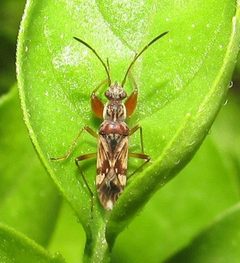
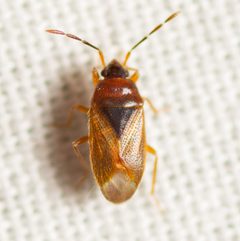
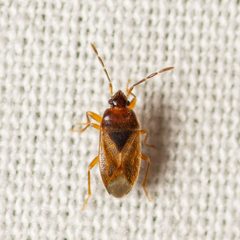
Rhyparochrominae is a large of true bugs within Rhyparochromidae, commonly known as dirt-colored seed bugs. The subfamily contains over 410 and approximately 2,000 described , making it one of the most diverse groups within the . Members are primarily seed-feeders and exhibit considerable morphological diversity, including variation in wing development (brachypterous and forms). The group has a distribution with species documented across multiple continents including North America, South America, Europe, Africa, Asia, Australia, and New Zealand.
Pronunciation
How to pronounce Rhyparochrominae: /ˌrɪpəroʊˈkroʊmɪniː/
These audio files are automatically generated. While they are not always 100% accurate, they are a good starting point.
Identification
Identification to level relies on combination of characters: four-segmented , well-developed bucculae (lateral extensions of the shielding the rostrum), and the typical rhyparochromid structure of male genitalia. Within Rhyparochromidae, Rhyparochrominae can be distinguished from other subfamilies (Plinthisinae, Lethaeinae where recognized) by genitalic and pretarsal characters. Tribe-level identification requires examination of male genitalia, particularly the structure of the and parameres, as well as pretarsal claw structure. -level identification often depends on subtle differences in color pattern, body proportions, and detailed male genitalic . Brachypterous and forms within single species can complicate identification.
Images
Habitat
are diverse and include: coastal areas with driftwood and beach debris; grasslands and pastures; weedy areas with introduced and native vegetation; leaf litter of various plants including Ficus; areas with milkweed (Asclepias) and other plants; and general terrestrial environments where seeds are available. Specific microhabitats vary considerably among and tribes.
Distribution
distribution documented across multiple continents: North America (including Mexico, with records from Baja California Sur, Guerrero, Arizona), South America, Europe, Africa, Asia, Australia (including Queensland, New South Wales, Victoria, Tasmania, Western Australia), and New Zealand (including Auckland and Wellington regions). Some are introduced to new regions (e.g., Oncopeltus sanguineolentus and Raglius alboacuminatus in New Zealand). The shows high diversity in tropical and temperate regions.
Diet
Primarily seed-feeders, feeding on seeds of various plants. Documented associations include: Asclepias fruticosa (milkweed) for Oncopeltus sanguineolentus; Chenopodium album and Urtica dioica for Raglius alboacuminatus; Ficus and Heliocarpus for Paracholula picta; and Ficus palmeri leaf litter for Pulmomerus levatus. The seed-feeding habit has been observed in Dieuches . Specific dietary breadth varies among species from specialized to seed-feeding.
Host Associations
- Asclepias fruticosa - plantmilkweed; for Oncopeltus sanguineolentus
- Chenopodium album - plant for Raglius alboacuminatus
- Urtica dioica - plant for Raglius alboacuminatus
- Ficus - plantmultiple records including Ficus palmeri for Pulmomerus levatus and Ficus for Paracholula picta
- Heliocarpus - plant Tiliaceae; for Paracholula picta
Life Cycle
Development is hemimetabolous with five nymphal instars between and . Egg has been described for multiple , showing features such as sculpturing and aero-micropylar processes. Fifth instar nymphs and eggs have been illustrated for several species. Oviposition occurs on plants or appropriate substrates. Duration of developmental stages has not been quantified for most species. Wing (brachyptery/macroptery) is present in some species and may be developmentally or environmentally determined.
Behavior
One , Pulmomerus levatus, has been found under leaf litter, suggesting ground-dwelling or litter-inhabiting in some . Reduced wing development in some species correlates with reduced ability. No other specific behavioral observations are documented in available sources.
Ecological Role
As seed-feeders, members of this function as primary consumers in terrestrial , potentially influencing plant through seed . They may serve as prey for various including birds, spiders, and other insects. Specific roles are poorly documented for most .
Human Relevance
No direct economic importance is documented. Some are associated with weedy or introduced plants, suggesting potential use as biocontrol agents or incidental presence in agricultural settings. The is primarily of scientific interest for studies of , evolution, and cytogenetics (karyotype variation has been studied in Dieuches species).
Similar Taxa
- PlinthisinaeAlso within Rhyparochromidae; distinguished by different pretarsal and genitalic characters, and generally smaller body size with more compact form
- Lethaeinae (where recognized)Sometimes treated as separate or tribe within Rhyparochromidae; distinguished by pretarsal structure and male genitalia
- LygaeinaeWithin Lygaeidae sensu lato; distinguished by different structure, particularly the bucculae, and different wing venation patterns
- OrsillinaeSeed bugs with similar habits; distinguished by different antennal structure and male genitalia
More Details
Taxonomic history
Rhyparochrominae has undergone significant taxonomic revision, with various tribal classifications proposed. The includes tribes such as Drymini, Stygnocorini, Udeocorini, Myodochini, Lethaeini, Antillocorini, and Ozophorini, though tribal boundaries remain under study.
Cytogenetic variation
Karyotype studies in the Dieuches have revealed extensive heterochromatin redistribution among , with numbers of 2n=12 and 2n=14 documented. C-banding and fluorescent staining show variation in A-T and G-C rich regions that may have evolutionary significance.
Wing polymorphism
Multiple exhibit both brachypterous (short-winged) and (long-winged) forms, including Udeocoris levis. This affects capability and may be environmentally or genetically determined.
Species diversity
The contains exceptional diversity with over 410 and 2,000 described , representing one of the largest radiations within Lygaeoidea. Many species remain undescribed, particularly in tropical regions.
Sources and further reading
- BugGuide
- Wikipedia
- iNaturalist taxon
- NCBI Taxonomy
- Catalogue of Life
- The Genus Austroxestus Woodward (Hemiptera: Lygaeidae: Rhyparochrominae).
- Immature stages of some New Zealand Rhyparochrominae (Hemiptera: Lygaeidae)
- The genus Paracholula (Hemiptera: Heteroptera: Lygaeoidea: Rhyparochromidae: Rhyparochrominae: Myodochini)
- A new species of Xestocoris Van Duzee, with comments on the genus (Hemiptera: Heteroptera: Rhyparochromidae: Rhyparochrominae)
- A new genus of Antiliocorini from Baja California, Mexico (Hemiptera: Heteroptera: Lygaeoidea: Rhyparochromidae: Rhyparochrominae)
- Life cycle of Balboa variabilis Distant (Hemiptera, Heteroptera, Rhyparochromidae, Rhyparochrominae, Ozophorini)
- First report on C‐banding and fluorescent banding in species of Dieuches (Rhyparochrominae: Lygaeidae: Heteroptera)