
Lethaeini
Stål, 1872
Genus Guides
6- Cistalia
- Cryphula(dirt-colored seed bugs)
- Neopetissius
- Paragonatas
- Valtissius
- Xestocoris(dirt-colored seed bugs)
Lethaeini is a tribe of dirt-colored seed bugs in the Rhyparochromidae, established by Stål in 1872. The tribe contains more than 180 described distributed across approximately 41 . Members are found across multiple continents including Asia, the Americas, and other regions. Taxonomic revisions have documented significant diversity in China and Argentina, with ongoing work clarifying genus-level boundaries and species distributions.
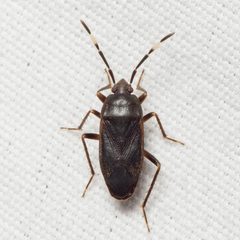
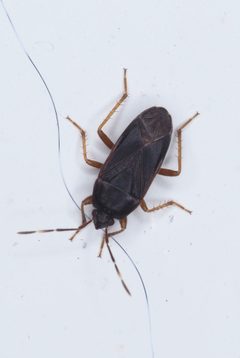
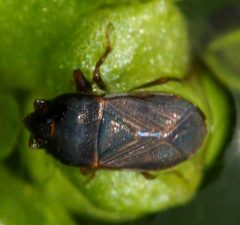
Pronunciation
How to pronounce Lethaeini: //ˈlɛ.θi.aɪˌniː//
These audio files are automatically generated. While they are not always 100% accurate, they are a good starting point.
Identification
Lethaeini can be distinguished from related tribes within Rhyparochromidae by tribal-level characters established in taxonomic revisions. Male genitalia, particularly the parameres and genital capsule, serve as primary diagnostic features for -level identification. Metathoracic has been documented as an additional character for distinguishing such as Bubaces. Keys to genera and species are available for regional faunas including China and Argentina.
Images
Distribution
Lethaeini has a broad geographic distribution spanning multiple continents. In Asia, at least 17 in 7 occur in China. In South America, the tribe is mainly Neotropical with concentration in the Chacoan Subregion of Argentina (Chacoan and Pampean provinces, Parana Forest Province), with some Andean elements in the Monte Province. The genus Bubaces occurs from Rica through multiple Mexican states including Campeche, Chiapas, Guerrero, Oaxaca, Veracruz, Colima, Jalisco, Michoacán, and Quintana Roo.
Similar Taxa
- Other Rhyparochromidae tribesLethaeini shares -level characters with other tribes in Rhyparochromidae; distinguished by tribal diagnostic characters and male genitalia as established in taxonomic revisions.
More Details
Taxonomic instability
Published estimates of and numbers vary considerably. Wikipedia cites approximately 5 genera and 13 species, while a 2025 source indicates 41 genera and more than 180 described species. This discrepancy reflects ongoing taxonomic revisions and differing regional treatments of the tribe.
Research focus
Available literature emphasizes alpha , descriptions, and distribution records. Biological and ecological studies of Lethaeini remain limited in the accessible sources.
Sources and further reading
- BugGuide
- Wikipedia
- iNaturalist taxon
- Catalogue of Life
- Biodiversity and distribution of lethaeine seed bugs (Heteroptera, Rhyparochromidae, Lethaeini) from Argentina
- Review of the tribe Lethaeini Stål (Hemiptera: Heteroptera: Lygaeoidea: Rhyparochromidae) from China, with a key to Chinese genera and species
- Lygaeoidea (Insecta: Hemiptera): taxonomy, diversity and distribution in Brazil, with a review of the tribe Lethaeini in the Neotropics
- Review of the genus Bubaces (Hemiptera: Heteroptera: Rhyparochromidae: Lethaeini) with descriptions of three new species, new distributional records, and key to species