
Trapezonotus
Fieber, 1861
dirt-colored seed bugs
Species Guides
4Trapezonotus is a of dirt-colored seed bugs in the Rhyparochromidae, established by Fieber in 1861. The genus comprises approximately 19-20 described distributed primarily across Europe and parts of Asia. Taxonomic revision has clarified boundaries in some members, notably Trapezonotus dispar, which is divided into European and Caucasian-Asian Minor subspecies. The genus is part of the diverse lygaeoid of true bugs.
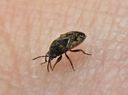
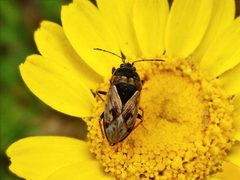
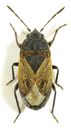
Pronunciation
How to pronounce Trapezonotus: /trəˌpɛzəˈnoʊtəs/
These audio files are automatically generated. While they are not always 100% accurate, they are a good starting point.
Identification
Members of Trapezonotus can be distinguished from related in the tribe Gonianotini by genitalic and external structural characters, though specific diagnostic features vary among . Detailed identification typically requires examination of male genitalia and subtle body proportions. The dirt-colored, generally unmarked or faintly patterned dorsum is consistent with the Rhyparochrominae.
Images
Distribution
Europe, Caucasus, Asia Minor, and parts of northern Asia. Specific distribution varies by : Trapezonotus dispar dispar occurs in Europe, while T. dispar breviceps is found in the Caucasus and Asia Minor. Records from Denmark, Norway, and Sweden are documented in occurrence databases.
Similar Taxa
- Other Gonianotini generaTrapezonotus shares the tribe Gonianotini with several related of dirt-colored seed bugs; differentiation relies on subtle structural characters and male genitalia .
- RhyparochromusBoth occur in Rhyparochrominae and share general body form; Trapezonotus typically differ in pronotal and genitalic structure.
More Details
Taxonomic history
The has undergone taxonomic refinement, with Trapezonotus inglorius Vinokurov, 1990 synonymized with T. desertus Seidenstücker, 1951. classification has been established for T. dispar to reflect geographic variation.
Species count
Sources differ slightly on number: Wikipedia cites about 19 described species, while iNaturalist reports at least 20. This minor discrepancy likely reflects ongoing taxonomic work or differing inclusion criteria for recently described .