Leptoglossus phyllopus
(Linnaeus, 1767)
eastern leaf-footed bug
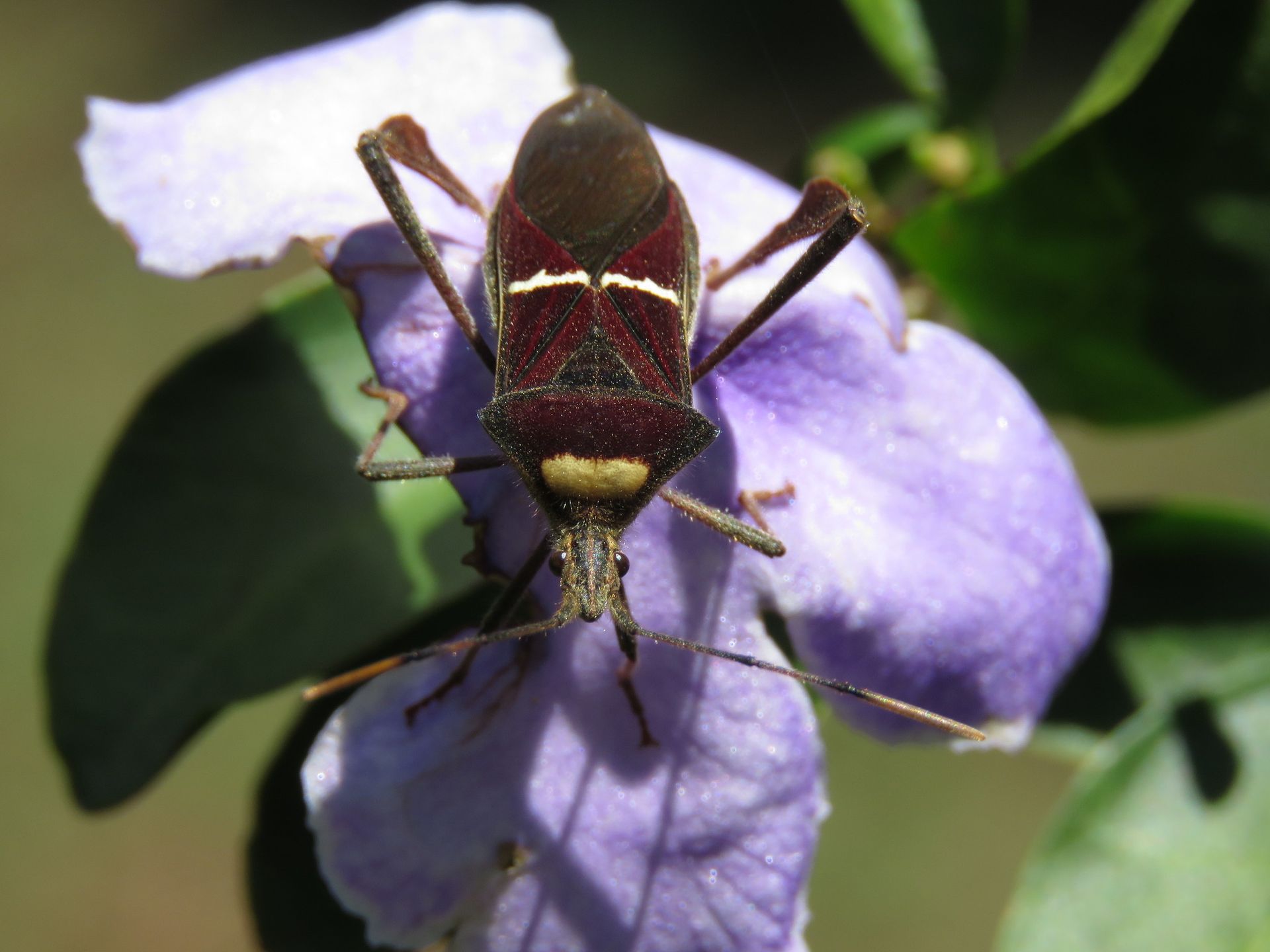
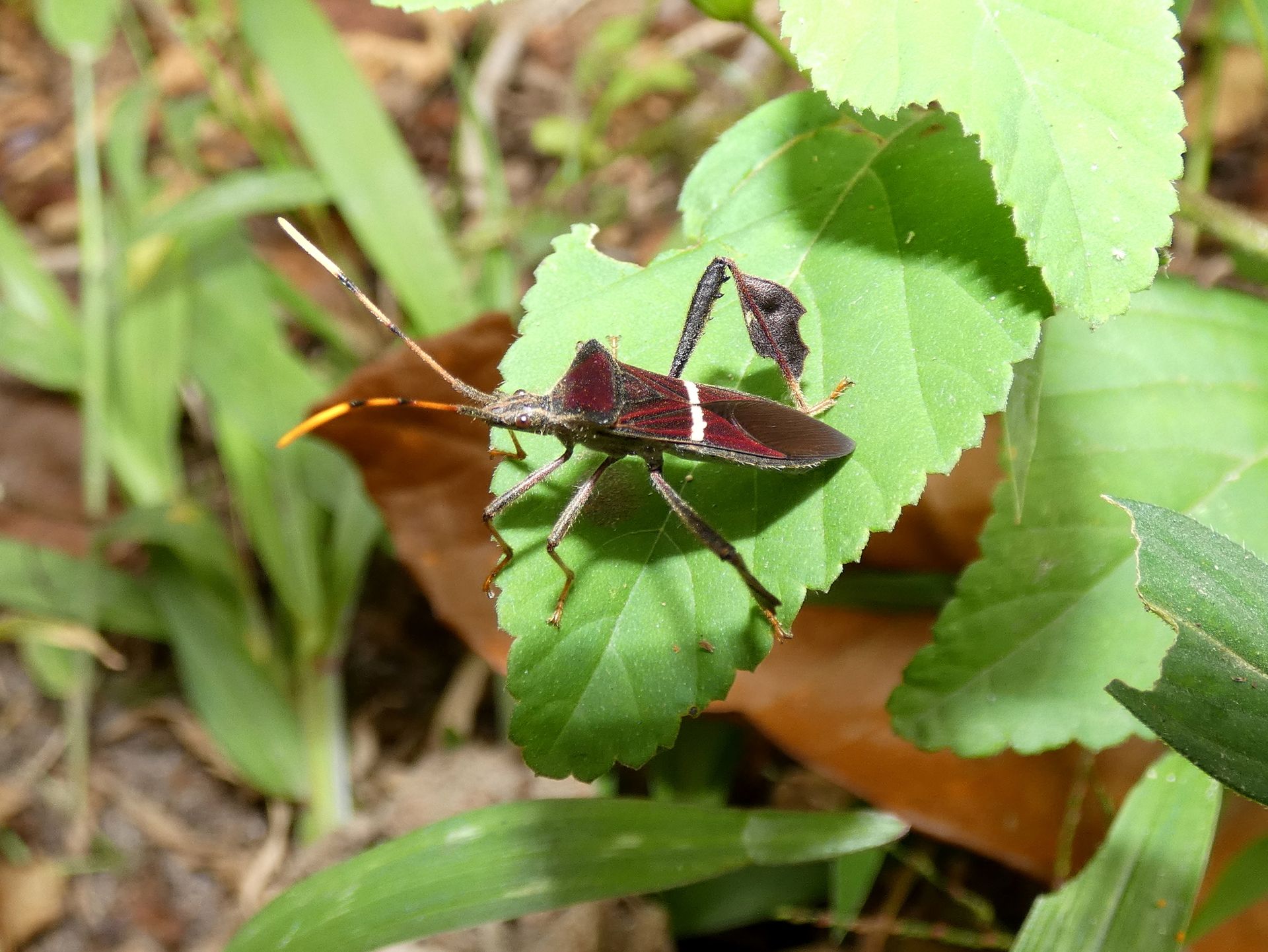
Leptoglossus phyllopus, the eastern , is a true in the Coreidae. It is found throughout the southern United States, Mexico, and Central America. and nymphs feed on developing seeds and fruits using , causing damage to agricultural crops including cotton, citrus, pecans, tomatoes, and sorghum. The is recognized by the leaf-like expansion of the hind tibiae and a white band across the forewings. Males produce acetosyringone as a for mate location, though this also attracts parasitic tachinid flies.
Pronunciation
How to pronounce Leptoglossus phyllopus: //ˌlɛptəˈɡlɒsəs ˈfɪlɪpəs//
These audio files are automatically generated. While they are not always 100% accurate, they are a good starting point.
Identification
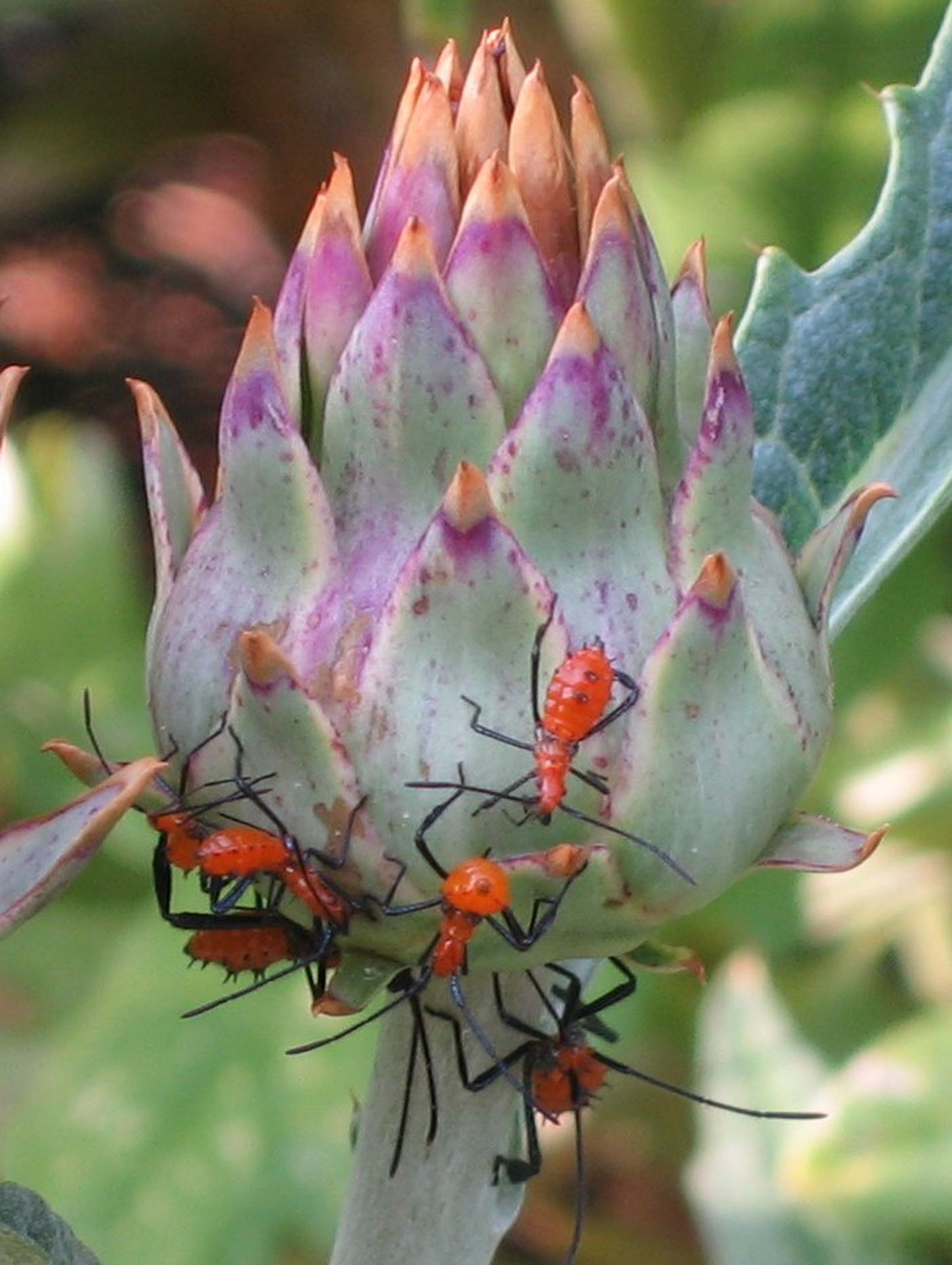
Distinguished from similar coreid by the combination of brown coloration, white band across the forewings, and leaf-like hind tibial expansions. Differs from the western conifer (L. occidentalis) by geographic range and associations. Separated from stink bugs (Pentatomidae) by more elongate body form and expanded hind tibiae rather than shield-shaped body. Nymphs are bright orange-red and black, contrasting with the brown .
Images
Habitat
Agricultural fields, orchards, and gardens. Commonly associated with cover crops in citrus groves. Found in environments with abundant fruiting or seed-bearing plants.
Distribution
Southern United States from Florida to California, extending through Mexico to Rica. Present in Alabama, Arizona, Arkansas, and California.
Diet
Developing seeds and fruits. Probes and feeds on plant tissues using , injecting saliva with digestive and withdrawing plant fluids. Feeding causes seed damage, fruit abscission, discoloration, and hard spots on fruits.
Host Associations
- Gossypium hirsutum - feeds on developing cotton bollsmajor agricultural in southern US
- Citrus - feeds on fruitseconomic impact in citrus groves
- Carya illinoinensis - feeds on nutspecan crops affected
- Sorghum bicolor - feeds on developing grainseed damage and potential of fungal
- Solanum lycopersicum - feeds on fruitstomato crops damaged
- Gossypium spp. - feeds on developing bollscotton generally
- Cannabis sativa - feeds on plant tissuesreported as hemp pest in Florida
Life Cycle
Gradual with , nymph, and stages. Eggs are barrel-shaped, laid in neat rows on leaf surfaces, with a circular escape hatch for emerging nymphs. Nymphs are bright orange-red and black, highly vulnerable to . Adults live for several months. occurs in presence of reproductive structures on plants.
Behavior
Aggregates at feeding sites, commonly feeding in groups on developing plant tissues. Uses plant-produced volatile organic compounds to locate plants. are attracted to herbivore-induced plant volatiles including benzaldehyde and α-pinene individually, but repelled by their combination. Emits a foul odor when handled. Males produce -specific blends (acetosyringone and related compounds) that attract females and also serve as for parasitic tachinid flies, which deposit on the leading to its death.
Ecological Role
Agricultural pest causing direct damage to marketable fruits, seeds, and nuts. Feeding wounds may facilitate secondary by fungi and other . Serves as for parasitic tachinid flies. Member of boll-feeding complex in cotton .
Human Relevance
Significant pest of multiple agricultural crops including cotton, citrus, pecans, tomatoes, and sorghum. established for sorghum: 6 or more per grain during flowering, milk, or soft dough stages; 16 or more per head at hard dough stage. Management includes application (though are highly ), hand-picking in small gardens, , and methyl (E,Z)-2,4-decadienoate-baited traps. Cover crop management important in citrus to prevent buildup.
Similar Taxa
- Leptoglossus occidentalisSame ; western conifer differs in geographic range (western and expanding eastern US, introduced to Europe), association with conifer seeds rather than broad agricultural crops, and lacks the white forewing band
- Nezara viridulaSouthern green stink bug; similar agricultural pest but shield-shaped body, lacks expanded hind tibiae, bright green coloration
- Chlorochroa ligataConchuela stink bug; similar piercing-sucking pest of sorghum but shield-shaped with orange-red lateral bands, no leaf-like leg expansions
More Details
Semiochemical ecology
Males produce acetosyringone and related aromatic compounds that function as and . These compounds attract conspecifics for mating but also attract tachinid , creating a trade-off between and risk.
Pesticide resistance
are highly to ingested due to piercing-sucking feeding mode that bypasses surface treatments. Nymphs are vulnerable to , providing a window for effective chemical control.
First record on hemp
Reported as a pest of hemp (Cannabis sativa) in Florida for the first time in 2023, expanding the known range of this .
Sources and further reading
- BugGuide
- Wikipedia
- GBIF taxonomy match
- iNaturalist taxon
- NCBI Taxonomy
- Catalogue of Life
- Insects that feed on developing grain in the head - AgriLife Extension Entomology
- Inaugural “One-Shot Wednesday” | Beetles In The Bush
- New Guide Outlines Management Strategies to Battle Sorghum Insect Pests
- Hemp Pests Documented in New Guide for Florida Growers
- Leaffooted lovers: Leptoglossus spp. — Bug of the Week
- Bug Eric: True Bug Tuesday: Exporting the Western Conifer Seed Bug
- Leaffooted Bug, Leptoglossus phyllopus (Linnaeus) (Insecta: Hemiptera: Coreidae)
- Leaffooted Bugs, Leptoglossus phyllopus (Hemiptera: Coreidae), Are Attracted to Volatile Emissions from Herbivore-Damaged Cotton Bolls