Leptoglossus oppositus
(Say, 1832)
leaf-footed bug
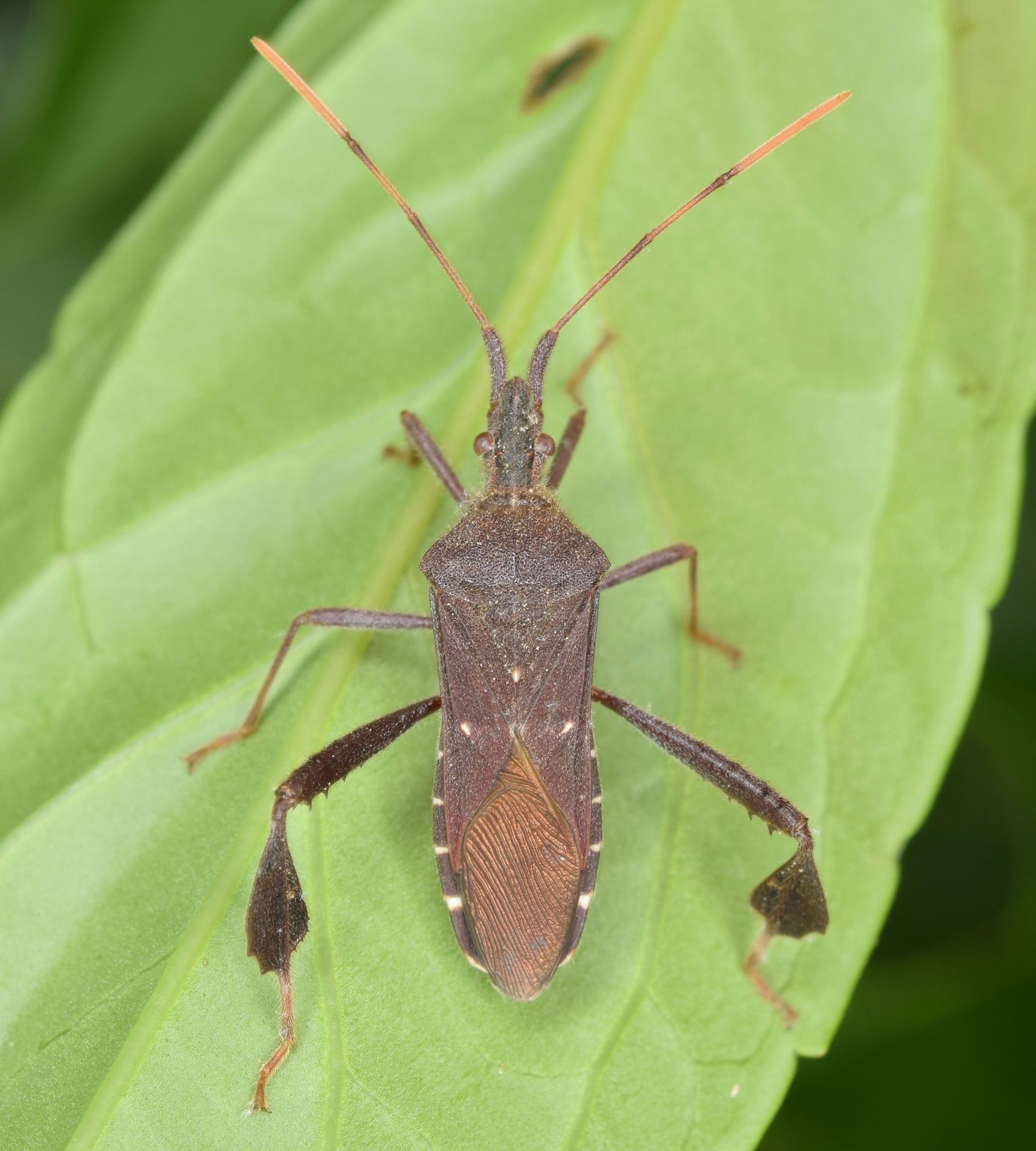
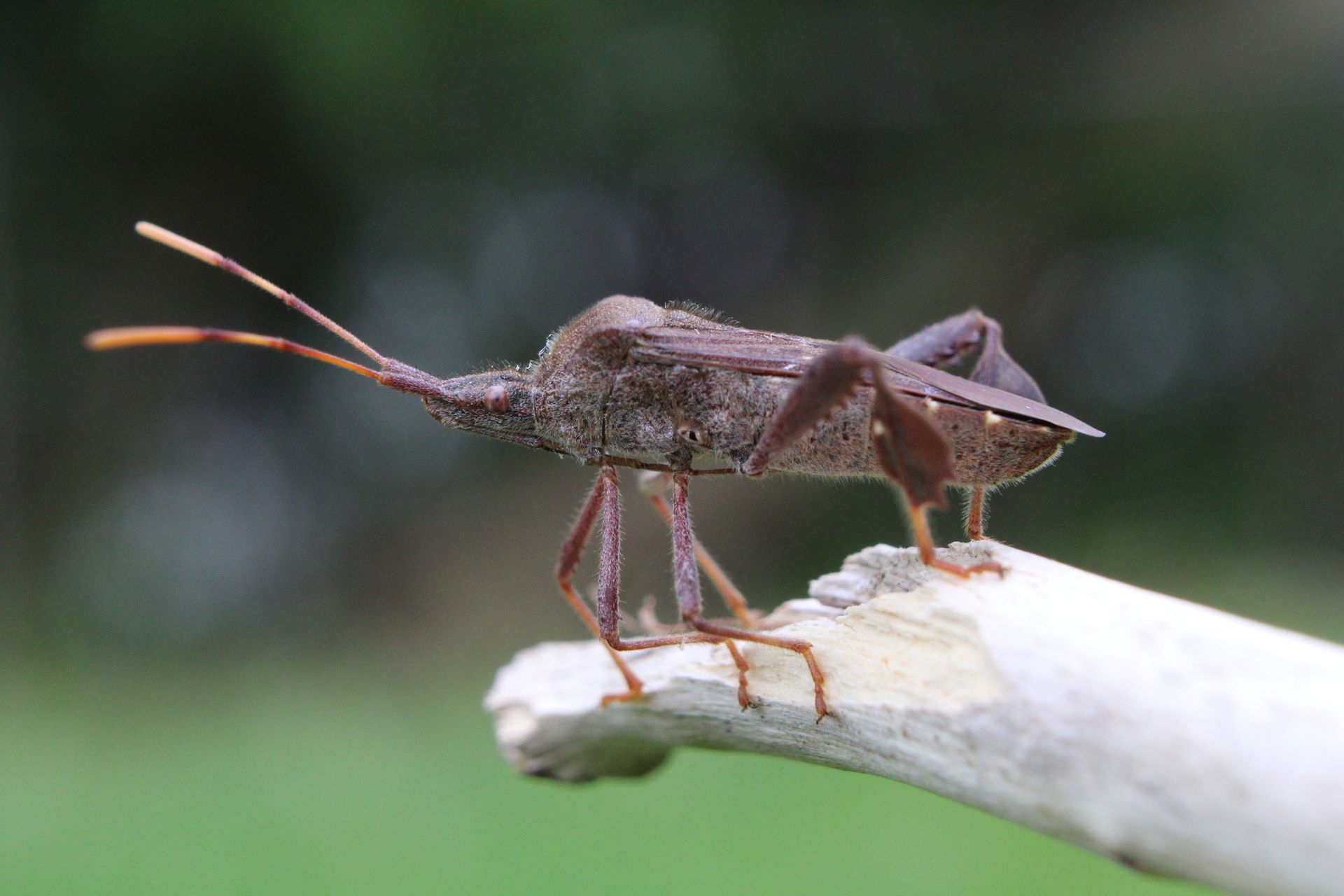
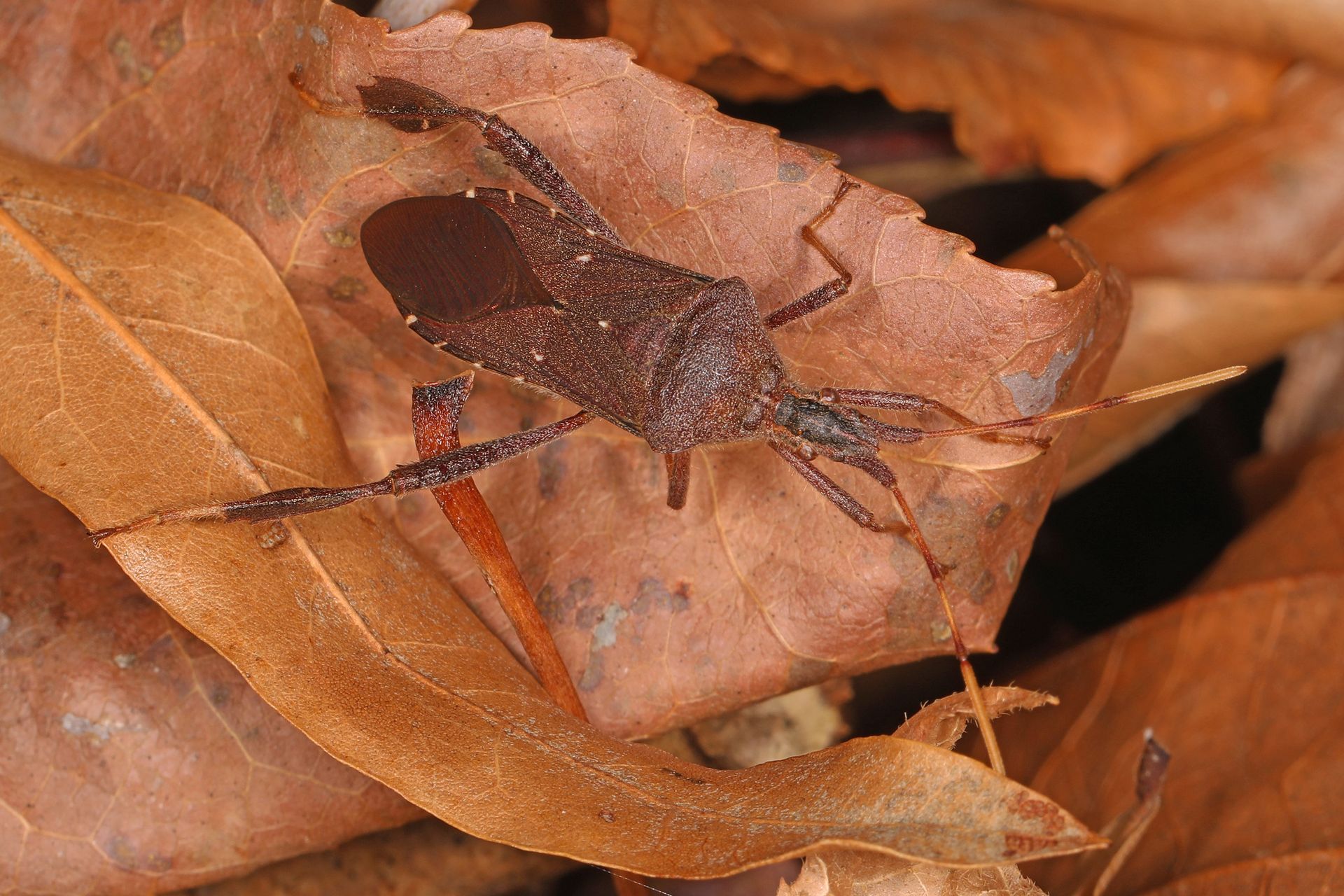
Leptoglossus oppositus is a leaf-footed bug in the Coreidae, distinguished from similar by deeper scallops on the leaf-like hind tibiae and three white spots across the . It is widely distributed across eastern and central North America, from New York south to Florida and west to Iowa, Minnesota, and the southwestern United States into Mexico. The species feeds on a broad range of plants including corn, cotton, squash, tomatoes, oaks, maples, conifers, and other trees, vines, and shrubs.
Pronunciation
How to pronounce Leptoglossus oppositus: //ˌlɛptəˈɡlɒsəs əˈpɒsɪtəs//
These audio files are automatically generated. While they are not always 100% accurate, they are a good starting point.
Identification
Distinguished from the similar Leptoglossus fulvicornis by deeper scallops in the leaf-like expansion of the hind tibia and the presence of three white spots across the . The hind tibial expansions are diagnostic leaf-like structures characteristic of the .
Images
Habitat
Found in diverse environments including agricultural fields, woodlands, and suburban areas. Associated with plants spanning fifteen plant , including crop fields (corn, cotton, squash, tomatoes), deciduous forests (oaks, maples), conifer stands, and various vines and shrubs.
Distribution
Eastern and central North America: New York to Florida, west to Iowa and Minnesota, and throughout the southwestern United States into Mexico. Also recorded from Brazil and Bolivia.
Seasonality
are most conspicuous in late summer and autumn, following the development of nymphs through the growing season. occurs when reproductive structures such as fruits are present on plants.
Diet
Phytophagous; feeds on plant sap using . plants include reproductive structures and seeds of corn, cotton, squash, tomatoes, oaks, maples, conifers, and representatives from at least fifteen plant . Both nymphs and feed on plant tissue.
Host Associations
- Zea mays - feeds onkernels at ear tips and through husks
- Gossypium - feeds oncotton crops
- Cucurbita - feeds onsquash
- Solanum lycopersicum - feeds ontomatoes
- Quercus - feeds onoaks
- Acer - feeds onmaples
- Pinaceae - feeds onconifers
Life Cycle
Hemimetabolous development with gradual . are laid in straight rows on leaf surfaces, each egg barrel-shaped with a circular providing an escape hatch for the nymph. Nymphs pass through multiple instars before becoming winged . Adults live for several months.
Behavior
Females deposit in neat linear arrangements on leaves. and nymphs aggregate on plants to feed. Males produce -specific blends (aromatic compounds with scents of cherries, vanilla, cinnamon, or roses) to attract mates. When disturbed, releases defensive secretions to deter .
Ecological Role
Herbivore that impacts seed production and plant tissue in natural and agricultural . Serves as for tachinid flies, which locate using male as and deposit on the ; developing larvae consume internal tissues and kill the host.
Human Relevance
Agricultural pest causing damage to corn, cotton, squash, tomatoes, and other crops by feeding on seeds and reproductive structures. Economic impact varies by crop and region. Subject of entomological study due to chemistry and interactions.
Similar Taxa
- Leptoglossus fulvicornisClosely resembles L. oppositus but has shallower scallops on the hind tibial leaf-like expansions and lacks the three white spots across the
- Leptoglossus occidentalisCongeneric leaf-footed bug with similar and , but native to western North America and in Europe and South America; not a close look-alike to L. oppositus but frequently confused by non-
Sources and further reading
- BugGuide
- Wikipedia
- GBIF taxonomy match
- iNaturalist taxon
- NCBI Taxonomy
- Catalogue of Life
- Bembicid Holdings | Entomology Research Museum
- Leaffooted lovers: Leptoglossus spp. — Bug of the Week
- Bug Eric: Grand Finale
- Bug Eric: 2024
- Bug Eric: True Bug Tuesday: Exporting the Western Conifer Seed Bug
- Not a Kissing Bug: Invasive Western Conifer-Seed Bug Causes Undue Alarm
- Host Plants of Leptoglossus oppositus (Say) (Hemiptera: Coreidae)