Leptoglossus fulvicornis
(Westwood, 1842)
Magnolia Leaf-footed Bug
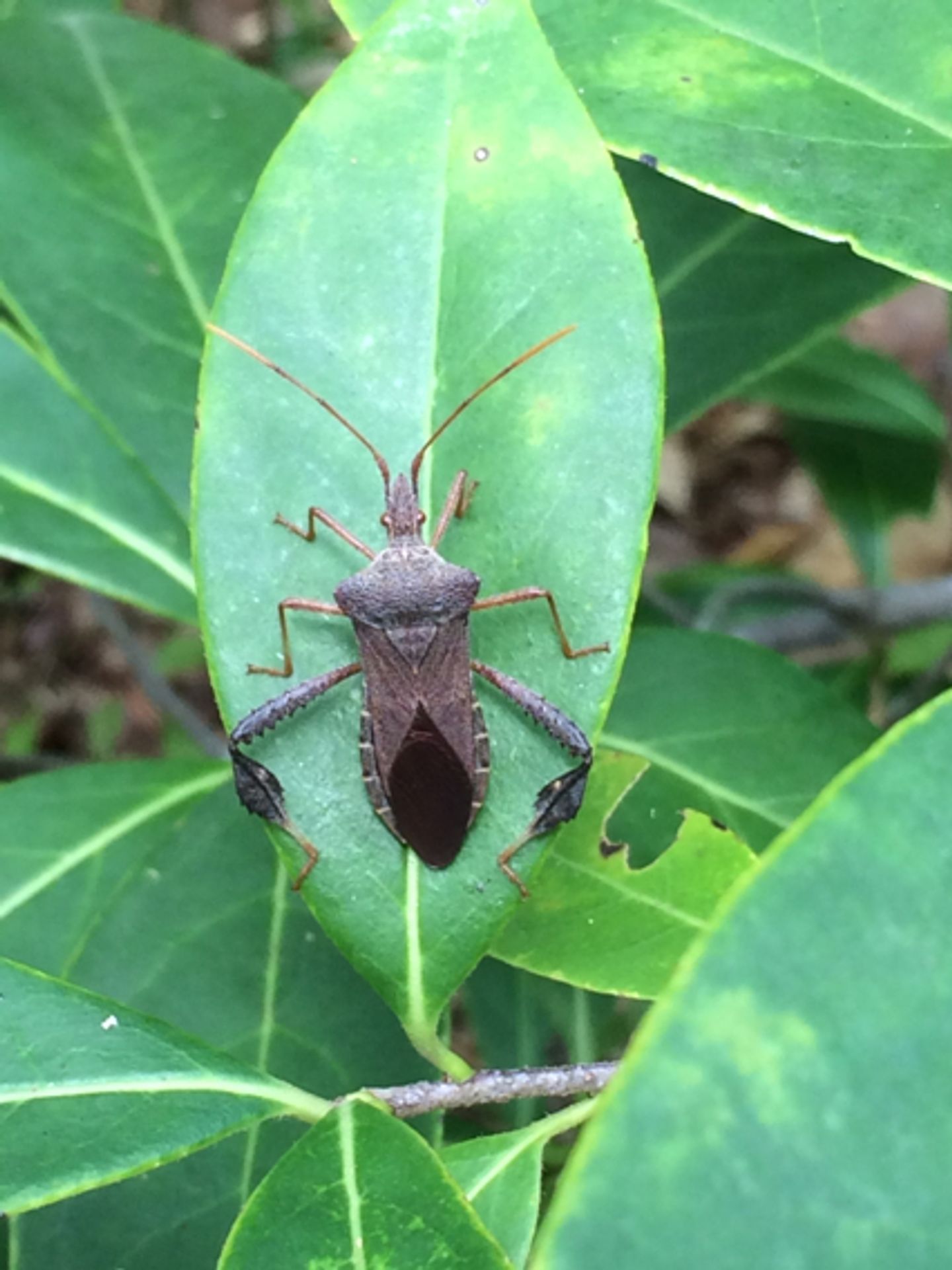
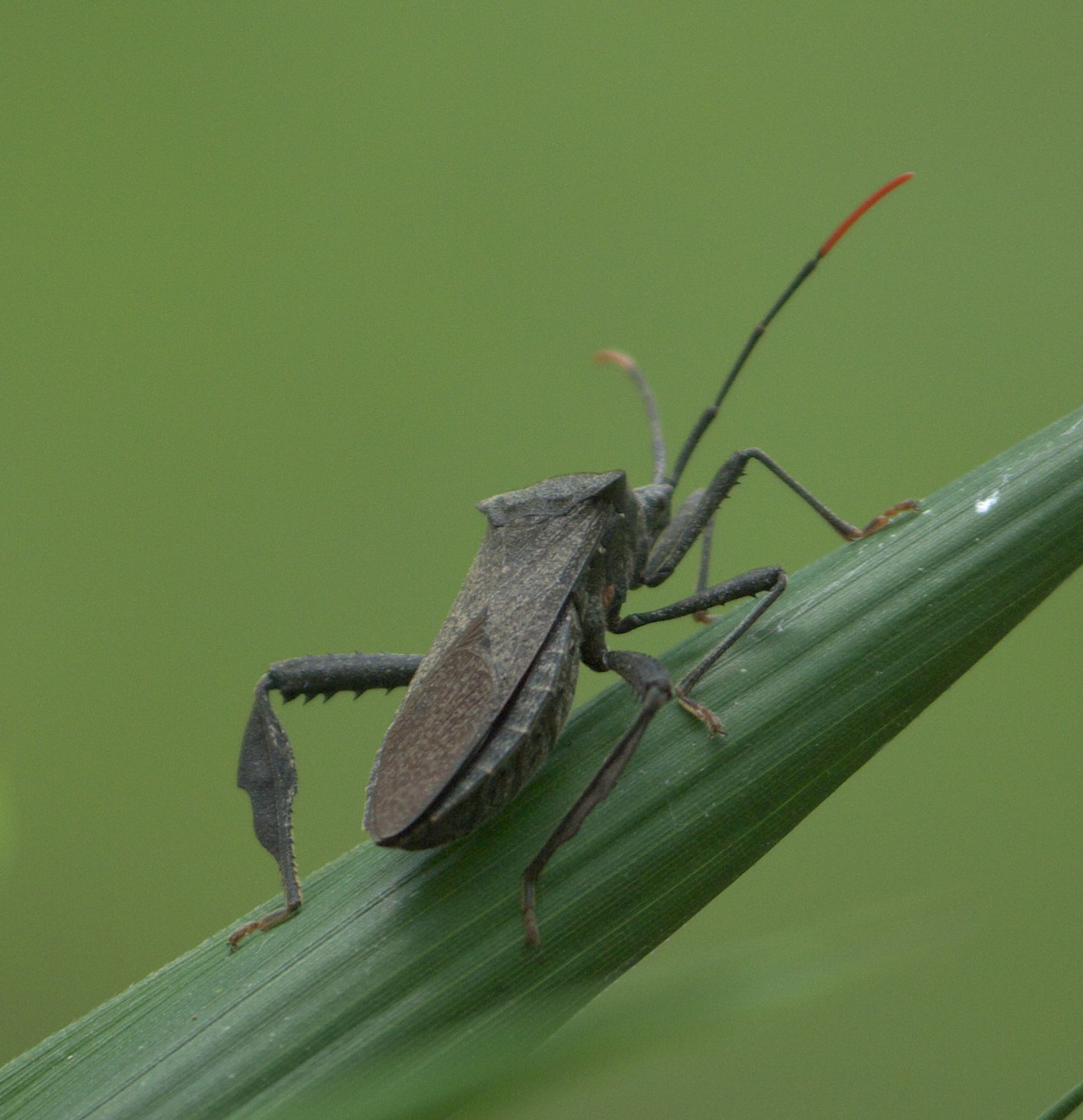
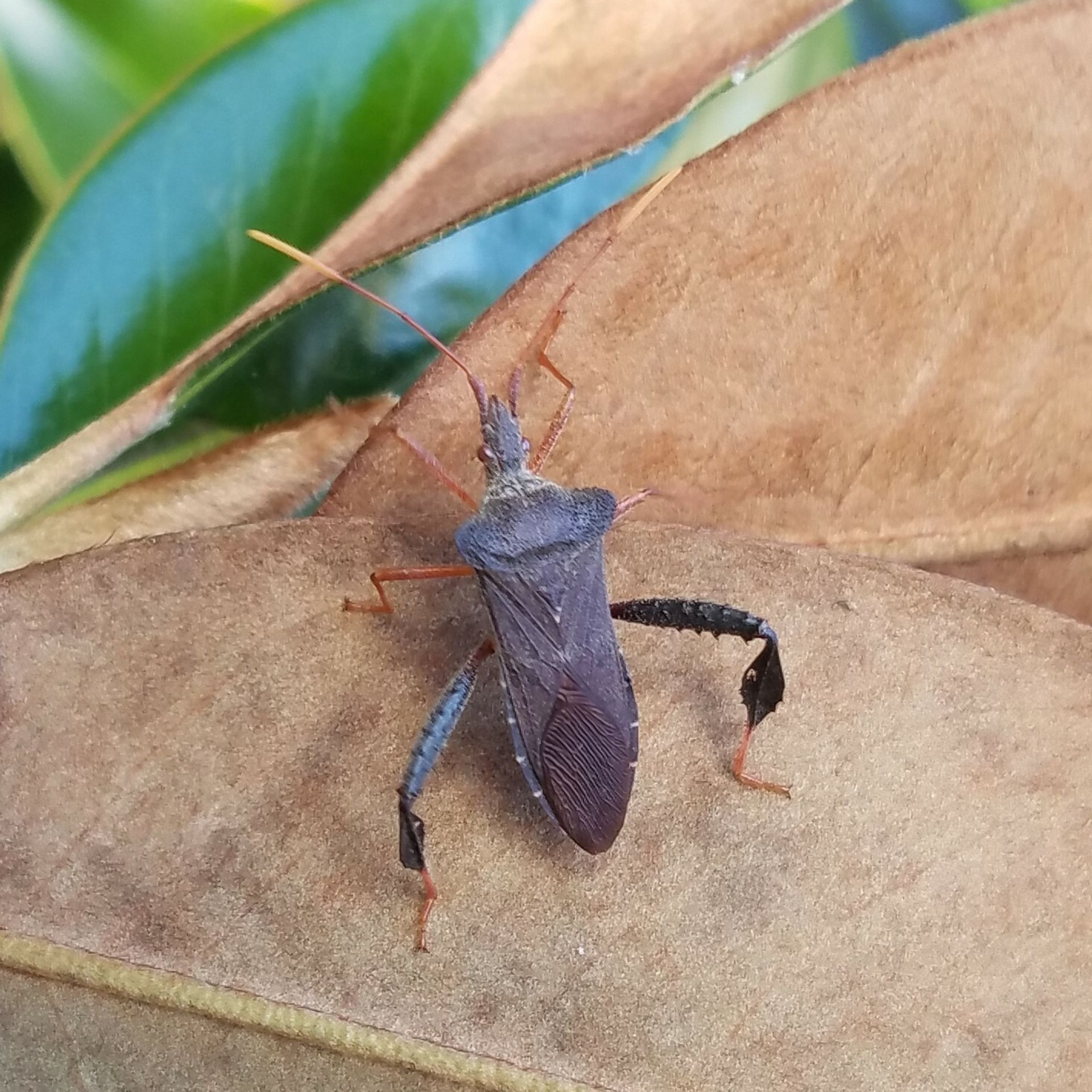
Leptoglossus fulvicornis is a leaf-footed bug in the Coreidae, commonly known as the Magnolia Leaf-footed Bug. It is a North American with a highly specialized diet focused exclusively on magnolia fruit and seeds. The species has been documented in the southeastern and eastern United States, with confirmed records from Alabama, Florida, Georgia, Maryland, and Massachusetts. Its is tightly coupled with magnolia reproductive structures, with laid on leaf undersides and both and stages feeding on developing fruit.
Pronunciation
How to pronounce Leptoglossus fulvicornis: //ˌlɛptəˈɡlɒsəs ˌfʊlvɪˈkɔːrnɪs//
These audio files are automatically generated. While they are not always 100% accurate, they are a good starting point.
Identification
As a member of Leptoglossus, this possesses the characteristic leaf-like expansions on the hind tibiae that give the group its . The specific epithet "fulvicornis" (tawny-horned) suggests yellowish or tawny coloration of the , which may aid in distinguishing it from . Positive identification to species level requires examination of genitalic structures and comparison with similar Leptoglossus species, particularly L. oppositus and L. phyllopus which overlap in range. The specialized association with magnolia can provide a strong contextual clue for field identification.
Images
Habitat
Associated with magnolia trees (Magnolia spp.), particularly in wooded areas, suburban landscapes, and natural stands where plants occur. The requires access to developing magnolia fruit for and feeding.
Distribution
Documented in North America with confirmed records from Alabama, Florida, Georgia, Maryland, and Massachusetts. The distribution appears centered in the southeastern United States with some northward extension along the Atlantic coast.
Diet
feeder on magnolia fruit and seeds. are laid on the undersides of magnolia leaves, and both nymphal instars and feed on developing magnolia fruit and seeds.
Host Associations
- Magnolia - Required for and feeding; laid on leaf undersides, immatures and feed on fruit and seeds
Life Cycle
are laid in rows on the undersides of magnolia leaves. Nymphs progress through multiple instars, feeding alongside on magnolia fruit. Adults are long-lived and continue feeding on plants.
Ecological Role
Seed of magnolias, potentially impacting seed set and recruitment of . Based on observations of , may serve as host for parasitic tachinid flies ( Trichopoda), though this specific association has not been documented for L. fulvicornis.
Human Relevance
Minimal direct impact on humans. Unlike the L. occidentalis, this is not known to enter homes or cause structural damage. Its specialized diet limits it to areas with magnolia .
Similar Taxa
- Leptoglossus occidentalisSimilar body plan and leaf-footed hind legs, but L. occidentalis is a on conifers, has expanded its range dramatically, and is known for entering homes to overwinter— not associated with L. fulvicornis.
- Leptoglossus oppositusOverlaps in eastern North American range and general appearance, but L. oppositus has a broader range including corn, squash, and tomatoes rather than magnolia specialization.
- Leptoglossus phyllopusSimilar size and leaf-footed , but L. phyllopus occurs in more western and central regions and feeds on a variety of crops and plants rather than specializing on magnolia.
More Details
Host specificity
The extreme specialization on magnolia is unusual within the Leptoglossus, which generally includes feeders. This specificity may reflect a long evolutionary association with magnolias, which are among the most ancient lineages of flowering plants.
Sources and further reading
- BugGuide
- Wikipedia
- GBIF taxonomy match
- iNaturalist taxon
- NCBI Taxonomy
- Catalogue of Life
- Leaffooted lovers: Leptoglossus spp. — Bug of the Week
- Bug Eric: True Bug Tuesday: Exporting the Western Conifer Seed Bug
- Not a Kissing Bug: Invasive Western Conifer-Seed Bug Causes Undue Alarm
- Inaugural “One-Shot Wednesday” | Beetles In The Bush
- Bug Eric: Indoor Insects of Autumn (part 1 of 4)
- Bug Eric: November 2024