
Platyvelia
J. Polhemus & D. Polhemus, 1993
smaller water striders
Species Guides
3- Platyvelia beameri
- Platyvelia brachialis(smaller water strider)
- Platyvelia summersi
Platyvelia is a of smaller water striders in the Veliidae, established by J. Polhemus and D. Polhemus in 1993. The genus contains seven described distributed in the Americas. These insects are small semiaquatic true bugs that inhabit the surface film of water bodies.
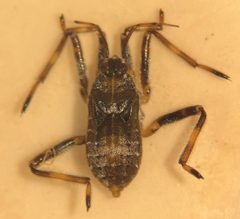
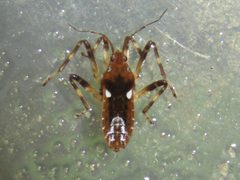
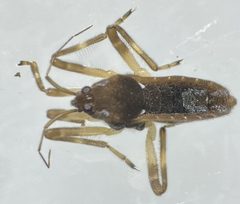
Pronunciation
How to pronounce Platyvelia: //plæ.tiˈviː.li.ə//
These audio files are automatically generated. While they are not always 100% accurate, they are a good starting point.
Identification
Members of Platyvelia can be distinguished from other veliid by their relatively broad, flattened body form compared to the more elongate Microvelia. The genus name itself references this platy- (broad/flat) . Specific diagnostic features require examination of genitalic structures and detailed body proportions best assessed by .
Images
Habitat
Semiaquatic environments including the surface of streams, rivers, and other freshwater bodies. Specific microhabitat preferences vary by .
Distribution
Recorded from Colombia (CO) and distributed more broadly in the Americas based on -level distributions including Mexico and Central America.
Similar Taxa
- MicroveliaBoth are small veliid water striders, but Microvelia have more slender, elongate bodies while Platyvelia has a broader, flatter form.
- RhagoveliaRhagovelia is another veliid with modified middle legs used as paddles for locomotion on flowing water; Platyvelia lacks these specialized leg modifications.
More Details
Species diversity
The contains seven described : P. alvaradana, P. annulipes, P. beameri, P. brachialis, P. maritima, P. summersi, and P. verana. Some sources have reported approximately nine species, suggesting potential taxonomic revisions or undescribed species.