
Microvelia signata
Uhler, 1894
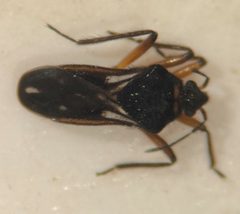
Microvelia signata is a small water strider in the Veliidae, found in aquatic and semi-aquatic across North and Middle America. Like other members of the Microvelia, it is adapted for life on the water surface, using surface tension to skate across ponds, streams, and other freshwater bodies. The was described by Philip Uhler in 1894 and is recognized as a valid in current classifications.
Pronunciation
How to pronounce Microvelia signata: //maɪˈkroʊˌviːliə sɪɡˈneɪtə//
These audio files are automatically generated. While they are not always 100% accurate, they are a good starting point.
Identification
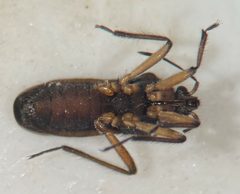
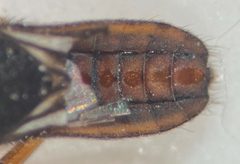
Distinguished from larger water striders in Gerridae by smaller body size and relatively shorter legs. Separated from other Microvelia by specific pattern of dark markings on the body; precise identification requires examination of genitalic structures and comparison with . The species epithet 'signata' refers to these distinctive markings.
Images
Habitat
Freshwater including ponds, slow-moving streams, and vegetated wetlands. Found on water surfaces and along margins where surface film is intact. Occupies both open water and areas with emergent vegetation.
Distribution
Recorded from North America and Middle America (Mexico and Central America). Present in both regions according to distribution records.
Behavior
Skates on water surface using middle and hind legs for propulsion, front legs for prey capture. Like other veliids, likely preys on small trapped in surface film.
Ecological Role
in surface film , feeding on small . Serves as prey for larger aquatic and terrestrial predators. Contributes to energy transfer between aquatic and terrestrial .
Human Relevance
No significant direct economic importance. May serve as for water quality in freshwater . Not known to be a pest or beneficial in human contexts.
Similar Taxa
- Microvelia americanaSimilar small size and preferences; distinguished by specific body markings and genitalic structures
- Gerridae (larger water striders)Share aquatic surface-dwelling habit but distinguished by larger size, longer legs relative to body, and different body proportions
More Details
Taxonomic History
Described by Philip Uhler in 1894, a prominent American entomologist known for his work on Hemiptera. The has remained in the Microvelia since description, with no recorded synonymy.
Observation Records
iNaturalist records indicate 13 observations, suggesting it is infrequently encountered or underreported relative to more conspicuous aquatic insects.
Sources and further reading
- BugGuide
- GBIF taxonomy match
- iNaturalist taxon
- Meloidae Holdings | Entomology Research Museum
- Monarda marauder: Raspberry pyrausta, Pyrausta signatalis — Bug of the Week
- Return of the monarda marauder: Raspberry pyrausta, Pyrausta signatalis — Bug of the Week
- Bug Eric: Blodgett Peak Bioblitz Report
- Archive — Bug of the Week