
Microtomus purcis
(Drury, 1782)
Eastern White-winged Assassin, bark assassin bug
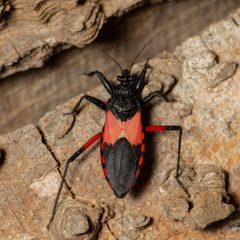
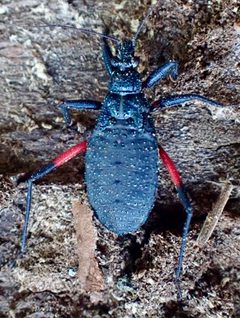
Microtomus purcis is a strikingly colored assassin bug in the Reduviidae, found in North America. The is notable for its aposematic coloration—black body with creamy-white wing bases and bright red abdominal segments and hind legs. Despite its conspicuous appearance, it is primarily and spends daylight hours concealed under loose bark of dead trees. The species has been documented from the Ozark Highlands and surrounding regions, with activity recorded from September through March and nymphs found in late autumn.
Pronunciation
How to pronounce Microtomus purcis: //maɪˈkroʊtəˌmʊs ˈpɜrsɪs//
These audio files are automatically generated. While they are not always 100% accurate, they are a good starting point.
Identification
Distinguished from other North American assassin bugs by the combination of black body, creamy-white wing bases, and red abdominal/hind leg markings. The wheel bug (Arilus cristatus) is larger and has a distinctive wheel-like crest. Other Microtomus may overlap in range but differ in color pattern details. The 'bark assassin bug' reflects its association, aiding field identification.
Images
Habitat
Dry-mesic woodlands, oak-hickory forests, and dolomite glades. Specifically associated with dead standing trees with loose, sloughing bark—particularly chinquapin oak (Quercus muehlenbergii) and shortleaf pine (Pinus echinata). Found under bark of large, dead trees where it shelters during daylight hours.
Distribution
North America; documented from the Ozark Highlands of Missouri and Arkansas, with records from southwestern Missouri (Barry County, Roaring River State Park area) and adjacent regions. Froeschner (1944) reported it as 'not uncommon' in Missouri south of the Missouri River, apparently confined to the Ozark Highlands.
Seasonality
active from September through March; nymphs recorded during November and December. BugGuide records suggest summer activity also occurs. has been observed under bark during winter months.
Life Cycle
(hemimetabolous). Nymphs present in late autumn (November–December), suggesting extended breeding season or overlapping . and nymphs found together under bark in some records.
Behavior
Primarily ; hides under loose bark of dead trees during daylight. Sometimes attracted to lights at night. When disturbed under bark, drops immediately and attempts to hide in leaf litter. Defensive bite reported as powerfully painful; one observer noted the could pierce a fingernail, causing searing pain and subungual bleeding.
Ecological Role
; specific prey items not documented in available sources. Aposematic coloration suggests chemical defense and warning signaling to potential predators.
Human Relevance
Bite considered medically significant due to intense pain; capable of penetrating human skin and fingernails. Occasionally encountered by entomologists and naturalists investigating dead wood . Not a significant pest or beneficial in economic contexts.
Similar Taxa
- Arilus cristatus (wheel bug)Larger size; distinguished by prominent wheel-like crest rather than white wing bases and red
- Other Microtomus speciesMay require examination of color pattern details; M. purcis specifically identified by combination of creamy-white wing bases and red abdominal/hind leg markings
More Details
Historical taxonomy
Originally described as Hammacerus purcis by Froeschner (1944); current combination in Microtomus reflects subsequent taxonomic revision
Field encounter notes
Despite conspicuous coloration, is rarely encountered due to cryptic daytime ; most records come from deliberate bark peeling or light trapping rather than visual detection in open