
Microtomus
Illiger, 1807
Species Guides
2- Microtomus luctuosus(Tamaulipan White-winged Assassin)
- Microtomus purcis(Eastern White-winged Assassin)
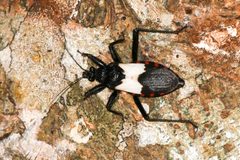
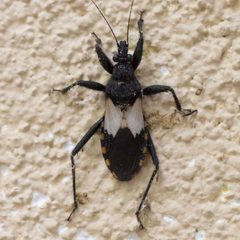
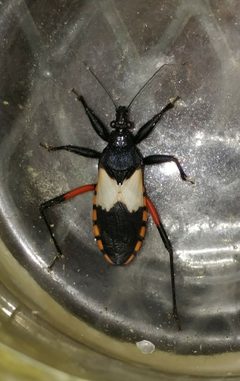
Microtomus is a of assassin bugs ( Reduviidae, Hammacerinae) containing approximately 10 described distributed in the Americas. The genus includes notably large and colorful predatory true bugs, with Microtomus purcis being particularly well-documented in North America for its striking black, white, and red coloration. Species in this genus are primarily that shelter under loose bark during daylight hours.
Pronunciation
How to pronounce Microtomus: //maɪˈkrɒtəməs//
These audio files are automatically generated. While they are not always 100% accurate, they are a good starting point.
Identification
Microtomus are distinguished from other Reduviidae by their large size, robust body form, and often bold color patterns combining black with contrasting white, red, or creamy markings. Microtomus purcis specifically shows black body with creamy-white bases on the wings and bright red abdominal segments and hind legs. The can be separated from the superficially similar wheel bug (Arilus cristatus) by the absence of a wheel-like crest on the pronotum.
Images
Habitat
occur in dry-mesic woodlands and forests, particularly in areas with standing dead trees. Microtomus purcis has been documented specifically under loose bark of dead chinquapin oak (Quercus muehlenbergii) and shortleaf pine (Pinus echinata). The occupies microhabitats that provide shelter during inactivity.
Distribution
The has a New World distribution spanning North, Central, and South America. Microtomus purcis occurs in the Ozark Highlands of Missouri and Arkansas, with records south of the Missouri River. Microtomus tibialis has been documented in Pernambuco state, Brazil, in Seasonal Dry Tropical Forest (Caatinga) biome. Other are distributed across Central and South America.
Seasonality
Microtomus purcis has been recorded from September through March in Missouri, with nymphs found during November and December. BugGuide records indicate activity during summer months as well. Observations suggest year-round presence with peak detectability during cooler months when individuals shelter under bark.
Diet
Predatory on other arthropods. Microtomus tibialis has been documented preying on the Physoctonus debilis, representing intraguild . Microtomus purcis is presumed to be a given its size and the typical feeding habits of large reduviids.
Behavior
Primarily , hiding under loose bark during daylight. Microtomus purcis is attracted to lights at night. When disturbed from shelter, individuals drop and rapidly seek cover in leaf litter. The has been observed in defensive postures and delivers a powerfully painful bite when handled. One observation describes an M. tibialis holding prey with and body facing downwards while grasping with mouthparts under vegetation.
Ecological Role
functioning as an intraguild predator that coexists with and preys upon other predatory arthropods in shared microhabitats. The documented on scorpions indicates complex trophic interactions within predator .
Human Relevance
Microtomus purcis is sometimes called the "bark assassin bug." The bite is reported as searingly painful, with one account describing penetration of a fingernail by the resulting in a blood stain under the nail. The is sought by insect collectors due to its striking appearance.
Similar Taxa
- Arilus cristatusBoth are large, colorful North American reduviids with bold markings. Arilus cristatus possesses a distinctive wheel-like crest on the pronotum, which Microtomus lacks.
- ApiomerusBoth are large, colorful New World reduviid . Apiomerus are typically associated with flowers and have different leg modifications for prey capture, while Microtomus is associated with bark and lacks the specialized leg structures.
More Details
Taxonomic note
The Microtomus was formerly placed under the name Hammacerus, as reflected in older literature (e.g., Froeschner 1944 referring to Hammacerus purcis).
Sources and further reading
- BugGuide
- Wikipedia
- GBIF taxonomy match
- iNaturalist taxon
- NCBI Taxonomy
- Catalogue of Life
- Alydidae | Beetles In The Bush
- Reduviidae | Beetles In The Bush | Page 2
- Report of intraguild predation of the scorpion Physoctonus debilis (C. L. Koch, 1840) (Scorpiones: Buthidae) by the assassin bug Microtomus tibialis Stichel, 1926 (Hemiptera: Reduviidae)