
Nabis vanduzeei
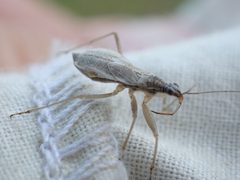
Nabis vanduzeei is a of damsel bug in the Nabidae, a group of small predatory true bugs. Like other members of the Nabis, this species is a that subdues insects often larger than itself using forelegs. The species is documented from limited observations, with 14 records on iNaturalist. Damsel bugs in this genus are economically significant as agents in agricultural systems.
Pronunciation
How to pronounce Nabis vanduzeei: //ˈneɪ.bɪs vænˈduː.zi.aɪ//
These audio files are automatically generated. While they are not always 100% accurate, they are a good starting point.
Identification
Members of Nabis are distinguished from similar true bugs by the absence of a —a pronounced wrinkle or notch in the forewing margin present in plant bugs (Miridae). The fore is typically muscular and swollen, armed with teeth on the underside for securing prey. Nabis vanduzeei may be separated from by specific features of the male genitalia and body proportions, though detailed diagnostic characters for this require examination. Winged and wingless forms occur in some Nabis species; the condition in N. vanduzeei is not well documented.
Images
Distribution
Documented from western North America. The specific distribution of Nabis vanduzeei is poorly characterized due to limited collection records, though the Nabis occurs across North America north of Mexico.
Behavior
. Like other damsel bugs, likely attracted to artificial lights at night, possibly to exploit other insects drawn to illumination. Solitary rather than swarming.
Ecological Role
of other insects, including agricultural pests. Damsel bugs as a group are among the most abundant small predators in many and contribute to of pest .
Human Relevance
Damsel bugs in the Nabis are valued as natural enemies of crop pests. Their presence in agricultural fields can reduce reliance on chemical . No specific economic importance has been documented for N. vanduzeei individually.
Similar Taxa
- Nabis roseipennisSimilar size and general appearance; distinguished by male genitalia and subtle differences in coloration and body proportions.
- Pagasa speciesGround-dwelling damsel bugs with similar predatory habits, but Pagasa often appear more -like and possess a specialized fossa spongiosa (pad of hairs) on the front tibia for gripping prey, absent in Nabis.
- Miridae (plant bugs)Similar body shape but possess a on the forewing and feed on plants rather than preying on insects.
- Reduviidae (assassin bugs)Also predatory true bugs with short rostrum, but typically larger and with distinctively different and leg structure.