
Pseudatomoscelis
Poppius, 1911
Species Guides
1- Pseudatomoscelis seriatus(cotton fleahopper)
Pseudatomoscelis is a of plant bugs in the Miridae, established by Poppius in 1911. The genus contains at least four described , with P. seriatus (cotton fleahopper) being the most economically significant due to its status as a major pest of cotton in the southern United States. Species in this genus are associated with diverse plants, including both agricultural crops and native wild plants.
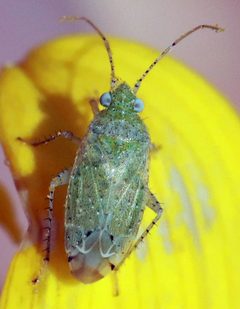
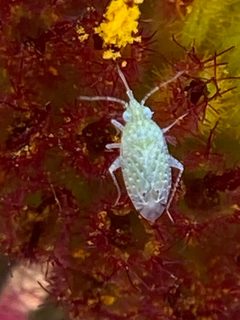
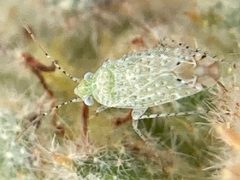
Pronunciation
How to pronounce Pseudatomoscelis: //suˌdætəmoʊˈsɛlɪs//
These audio files are automatically generated. While they are not always 100% accurate, they are a good starting point.
Images
Habitat
Members of this inhabit agricultural and semi-natural environments. The cotton fleahopper (P. seriatus) occupies cotton agroecosystems and adjacent semi-natural , with densities typically higher near field edges. Seasonal use patterns involve on woolly croton (Croton capitatus) and movement to cotton and other hosts during the growing season.
Distribution
The occurs in North America. Pseudatomoscelis seriatus is distributed across cotton-growing regions of the southern United States, particularly Texas and Oklahoma. Other have more restricted ranges: P. insularis is known from island , and P. flora and P. nubila have localized distributions.
Seasonality
Pseudatomoscelis seriatus exhibits distinct seasonal use. hatch from hosts (woolly croton) in spring. peak during the cotton squaring period (pre-floral stage). return to woolly croton at season end to oviposit, completing the cycle.
Diet
Phloem-feeding on plants. Pseudatomoscelis seriatus feeds on pre-floral cotton buds (squares), causing abscission and yield loss.
Host Associations
- cotton - primary agricultural Gossypium hirsutum; main economic , attacked during squaring stage
- woolly croton - and oviposition siteCroton capitatus; critical for seasonal and
- horsemint - wild Monarda punctata; native in some regions
- various Malvaceae - wild Native relatives of cotton used seasonally
Life Cycle
, nymph, and stages. Eggs are deposited in plant stems. Nymphs develop through five instars. Multiple occur annually in southern regions. occurs as eggs in plant stems.
Behavior
Pseudatomoscelis seriatus exhibits -associated differentiation with geographic patterning; genetic structure varies by location and correlates with precipitation differences. show higher densities near field edges, declining linearly into field interiors. and nymphs engage in rupturing and ingestion feeding on cotton squares.
Ecological Role
Agricultural pest causing direct damage to reproductive structures of cotton. Acts as a driving plant defense evolution and transgenic crop development. Serves as a model for studying -associated differentiation and in herbivores.
Human Relevance
Pseudatomoscelis seriatus is a highly economically damaging pest of cotton in Texas and Oklahoma. Management relies heavily on foliar , though transgenic cotton expressing Mpp51Aa2 protein has shown promise for reducing feeding damage and improving square retention. The has been the focus of extensive research on -associated differentiation, genetics, and insect resistance management.
Similar Taxa
- Creontiades signatus (verde plant bug)Co-occurs in cotton agroecosystems and exhibits similar edge-concentrated distribution patterns; both are mirid pests requiring similar scouting and management approaches
- Other Miridae genera (Lygus, Adelphocoris)Share piercing-sucking feeding habits and cotton pest status; distinguished by size, coloration, and specific associations
Sources and further reading
- BugGuide
- Wikipedia
- GBIF taxonomy match
- iNaturalist taxon
- NCBI Taxonomy
- Catalogue of Life
- Microorganisms Associated with Cotton Fleahopper, Pseudatomoscelis seriatus (Heteroptera: Miridae)
- Geographic Variation of Bacterial Communities Associated with Cotton Fleahopper, Pseudatomoscelis seriatus1
- Geographic pattern of host‐associated differentiation in the cotton fleahopper, Pseudatomoscelis seriatus
- Field Evaluation of Cotton Expressing Mpp51Aa2 as a Management Tool for Cotton Fleahoppers, Pseudatomoscelis seriatus (Reuter)
- A CONSTANT DISTRIBUTION EXHIBITED BY THE COTTON FLEAHOPPER (PSEUDATOMOSCELIS SERIATUS (HEMIPTERA: MIRIDAE)) ON COTTON
- Ovipositional Preference of the Cotton Fleahopper, Pseudatomoscelis seriatus 1 , and Distribution of Eggs Among Host Plant Species 2
- Development, Survival, and Fecundity of the Cotton Fleahopper, Pseudatomoscelis seriatus (Reuter), on Several Host Plants 1
- Host Preference of Cotton Fleahopper, Pseudatomoscelis seriatus (Reuter) is not Labile to Geographic Origin and Prior Experience
- Field Edge and Field-to-Field Ecotone-Type Influences on Two Cotton Herbivores: Cotton Fleahopper, Pseudatomoscelis seriatus (Hemiptera: Miridae), and Verde Plant Bug, Creontiades signatus
- Evaluation of Cotton Fleahopper (Pseudatomoscelis seriatus (Reuter)) Feeding on Mpp51Aa2-Traited Cotton Utilizing Electrical Penetration Graph (EPG) Waveforms
- Genome‐wide markers reveal temporal instability of local population genetic structure in the cotton fleahopper, Pseudatomoscelis seriatus (Hemiptera: Miridae)
- Effect of Transgenic Cotton with Bt Event Mpp51Aa2 on Cotton Fleahopper (Pseudatomoscelis seriatus) During Early Cotton Growth and Resulting Plant Injury.