
Collaria
Provancher, 1872
grass bugs
Species Guides
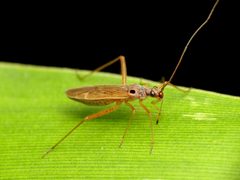
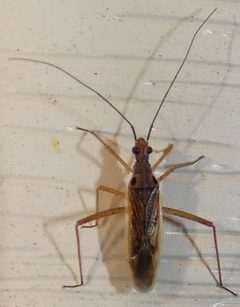
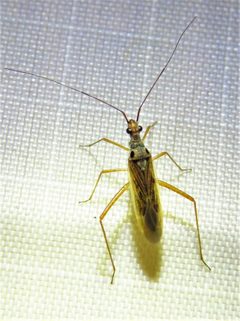
2Collaria is a of grass-feeding plant bugs (Miridae: Mirinae: Stenodemini) established by Provancher in 1872. The genus comprises 14 recognized distributed across the Neotropical and Afrotropical regions, with several species documented as agricultural pests of forage grasses and wheat. Species such as C. scenica and C. columbiensis have been studied extensively in Colombia, where they impact dairy production in the Bogotá plateau region. The genus is characterized by its association with Poaceae (grasses) and its potential for significant increases under favorable climatic conditions, particularly during El Niño events.
Pronunciation
How to pronounce Collaria: /kɔˈlaɹiə/
These audio files are automatically generated. While they are not always 100% accurate, they are a good starting point.
Identification
Collaria are distinguished from related mirid by genitalic characters, particularly structures of the male and female genitalia. The 2016 taxonomic revision by Zootaxa provides a key to all 14 species and illustrations of male and female genitalia for nearly all species. Specific diagnostic features include details of the parameres, , and sclerotized structures of the female genital tract; first descriptions of female genitalia for C. boliviana and C. villiersi, and both male and female genitalia for C. improvisa and C. obscuricornis were provided in this revision.
Images
Habitat
Associated with grassland environments, particularly pastures and agricultural systems dominated by Poaceae. In the Bogotá plateau, Colombia, occupy dairy farm pastures in the Altiplano Cundiboyacense region at mid-elevation. The shows a strong ecological association with grasses, including forage species such as Brachiaria ruziziensis and Pennisetum purpureum, as well as wheat (Triticum).
Distribution
Neotropical region (primary distribution) with new distributional records documented in taxonomic revisions; Afrotropical region (Central and Eastern Africa) represented by C. schwartzi described in 2016. Specific documented locations include the Bogotá plateau (Sabana de Bogotá) and Altiplano Cundiboyacense region of Colombia for C. scenica and C. columbiensis.
Seasonality
closely tied to rainfall patterns and temperature regimes. In the Bogotá plateau, peak growth occurs during March–May (MAM) and September–November (SON), primarily in the season following the dry December–February (DJF) quarter. Activity and development are favored by higher daily thermal amplitude and abundant but not excessive precipitation.
Diet
Phytophagous; feeds on grasses (Poaceae). Documented plants include Brachiaria ruziziensis, Pennisetum purpureum, and Triticum (wheat). Feeding on wheat has been characterized using electrical penetration graph (EPG) waveform analysis.
Host Associations
- Brachiaria ruziziensis - plantforage grass
- Pennisetum purpureum - plantelephant grass, forage
- Triticum - plantwheat, agricultural crop
- Poaceae - plantgrass , general association
Life Cycle
Development includes nymphal and stages. modeling indicates significant climatic variables affecting nymph and adult presence include maximum and minimum temperature, precipitation, and evapotranspiration. Optimal growth and development conditions involve higher daily thermal amplitude combined with high but not excessive rainfall. Specific details on stage duration, number of nymphal instars, and developmental thresholds are not documented in available sources.
Behavior
are strongly influenced by climate variability, particularly El Niño-Southern Oscillation (ENSO) events. During El Niño conditions, increase significantly due to greater accumulation of heat units from elevated air temperatures. The exhibits an aggregated spatial distribution pattern in pasture ; Iwao's model provides the best fit for observed distribution data, with a minimum of 39 random per hectare recommended for population monitoring.
Ecological Role
Agricultural pest in grassland and pasture . Poses threat to dairy production in Colombia through damage to forage grasses. Potential pest of wheat in agricultural systems. Economic significance documented for C. oleosa and C. scenica.
Human Relevance
Negative economic impact as a pest of forage grasses and wheat in agricultural systems. In the Bogotá plateau, recognized as a significant pest of pastures dedicated to milk production. No control measures have been developed for C. columbiensis as of the time of published research. monitoring requires specific sampling protocols due to aggregated spatial distribution.
Similar Taxa
- other Stenodemini generaCollaria belongs to the tribe Stenodemini and shares grass-feeding habits with related ; distinguished by genitalic , particularly paramere and structure
- other Miridae in pasture habitatsmay co-occur in grassland environments; identification requires examination of male and female genitalia as provided in taxonomic keys
Sources and further reading
- BugGuide
- Wikipedia
- iNaturalist taxon
- NCBI Taxonomy
- Catalogue of Life
- Effect of climate variability on Collaria scenica (Hemiptera: Miridae) on the Bogotá plateau
- Taxonomic revision of Collaria Provancher, 1872 (Hemiptera: Miridae) with the description of a new species from the Afrotropical region
- The breeding biology of Black-billed Parrot Amazona agilis and Yellow-billed Parrot Amazona collaria in Cockpit Country, Jamaica
- Spatial Distribution Pattern of Collaria Columbiensis (Hemiptera:miridae) in the Sabana of Bogota
- Feeding Behavior of Collaria scenica (Stål) (Hemiptera: Miridae) on Wheat Plants: an EPG Waveform Characterization