
Diphleps
Bergroth, 1924
jumping tree bugs
Species Guides
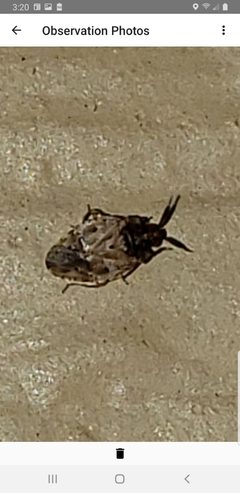
1- Diphleps unica(jumping tree bug)
Diphleps is a of jumping tree bugs in the Miridae, established by Bergroth in 1924. The genus contains five described distributed in the New World tropics. Species in this genus are arboreal and possess enlarged hind adapted for jumping. The genus is relatively poorly studied compared to other mirid genera.

Pronunciation
How to pronounce Diphleps: /ˈdɪf.lɛps/
These audio files are automatically generated. While they are not always 100% accurate, they are a good starting point.
Identification
Diphleps can be distinguished from other mirid by the combination of arboreal habits, enlarged hind for jumping, and specific genitalic structures. The five described differ primarily in male genitalia and subtle coloration patterns. Close examination of the parameres and is required for species-level identification.
Images
Habitat
Arboreal; associated with trees in tropical forest . Specific plant associations are not well documented for most .
Distribution
New World tropics. Diphleps unica is known from Puerto Rico; Diphleps maldonadoi and D. similaris from the Virgin Islands; D. henryi from Mexico; D. yenli from Dominican amber (fossil).
Behavior
Jumping locomotion using enlarged hind legs, a trait reflected in the 'jumping tree bugs'. Arboreal movement among tree branches and foliage.
Similar Taxa
- Other Miridae generaDiphleps is distinguished from most other mirids by the combination of arboreal , jumping ability with enlarged hind , and specific male genitalic . Some other mirid also jump, but differ in body proportions and genitalic structure.
More Details
Species list
The five described are: Diphleps henryi Hernandez, 1998 (Mexico); Diphleps maldonadoi T.Henry, 1977 (Virgin Islands); Diphleps similaris T.Henry, 1977 (Virgin Islands); Diphleps unica Bergroth, 1924 (Puerto Rico); Diphleps yenli Santiago-Blay & Poinar, 1993 (Dominican amber, fossil).
Taxonomic history
The was established by Bergroth in 1924 with Diphleps unica as the type . Most species were described by T. Henry in 1977, with additional species described in 1993 (fossil) and 1998.