
Flatinae
Spinola, 1839
Tribe Guides
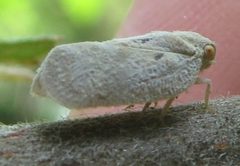
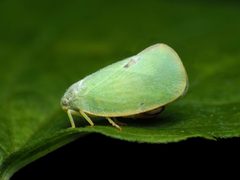
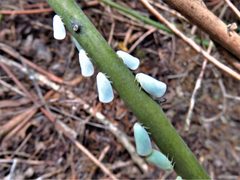
3Flatinae is a of planthoppers within the Flatidae, erected by Maximilian Spinola in 1839. are distinguished by bodies that are flattened laterally and tegmina held in a tent-like posture, unlike the related Flatoidinae. The subfamily is in tropical and subtropical regions, with records from all continents except Antarctica.
Pronunciation
How to pronounce Flatinae: //ˈflætɪniː//
These audio files are automatically generated. While they are not always 100% accurate, they are a good starting point.
Identification
Distinguished from Flatoidinae (the other in Flatidae) by lateral body compression and tent-like tegmina posture; Flatoidinae have bodies that are not laterally compressed and hold their tegmina more horizontally. Within Flatidae, presence of parallel cross- along the costal margin of forewings separates Flatinae from Acanaloniidae, which have reticulate forewing venation without parallel cross-veins.
Images
Appearance
have bodies that are distinctly flattened laterally. The tegmina (forewings) are held in a tent-like configuration over the body. are small, with the second segment elongated, ending in a bulge from which the arises. Two ocelli are present. Nymphs possess a tail of waxy filaments.
Habitat
Tropical and subtropical regions; associated with vegetation where plants occur. Specific microhabitat preferences vary by and .
Distribution
in tropical and subtropical regions. Recorded from all continents except Antarctica. Particularly diverse in tropical regions.
Diet
Phloem-feeding; and nymphs suck phloem sap from plants. Some are , feeding on multiple plant species across different .
Host Associations
- Coccoloba uvifera - seagrape
- Coffea arabica - coffee
- Chrysobalanus icaco - coco-plum
- Jasminum spp. - jasmine
- Avicennia germinans - black mangrove
Life Cycle
Nymphs produce waxy filaments from the tail. Development includes , nymph, and stages; specific details of instar number and duration vary by and are not well documented for many .
Behavior
Ecological Role
Phloem feeders that excrete honeydew, supporting growth and associations. Some have become agricultural pests through direct feeding damage and sooty mold development on crop plants.
Human Relevance
Similar Taxa
- FlatoidinaeOther in Flatidae; distinguished by lack of lateral body compression and more horizontal tegmina posture
- Acanaloniidae in Fulgoroidea with similar general form; distinguished by reticulate forewing venation without parallel cross- along costal margin
More Details
Taxonomic history
Eight tribes are recognized by Fulgoromorpha Lists on The Web (FLOW) and BioLib: Ceryniini, Flatini, Nephesini, Phantiini, Phromniini, Poekillopterini, Selizini, and Sisciini. The tribe Flatini contains the nominate subtribe Flatina with the Flata, the type genus of the .
Notable genera
Includes Petrusa (containing P. epilepsis, a West Indian pest), Metcalfa (containing M. pruinosa, the citrus flatid ), and Lawana (containing of economic concern in Asia).