
Achilini
Stål, 1866
Genus Guides
2Achilini is a tribe of planthoppers within the Achilidae, characterized by their flattened, often cryptically colored bodies and association with fungal substrates. Members of this tribe are distinguished from other achilid tribes by specific wing venation patterns and genitalia structures. The group is primarily tropical and subtropical in distribution, with many exhibiting complex relationships with fungi. Achilini represents one of the more species-rich tribes within Achilidae.
Pronunciation
How to pronounce Achilini: /əˈkɪlɪni/
These audio files are automatically generated. While they are not always 100% accurate, they are a good starting point.
Identification
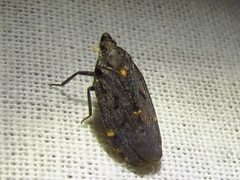
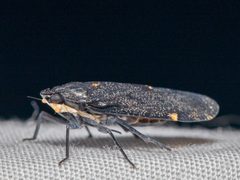
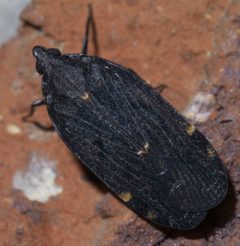
Achilini can be distinguished from other achilid tribes (such as Plectoderini and Cixiini) by the combination of: forewing venation with a distinct pattern of crossveins; hind tibiae bearing two lateral spines plus an pair; and male genitalia with specific configurations of the pygofer and . The pronotum is typically flattened and expanded laterally, often concealing the . Many exhibit mottled brown or gray coloration that provides camouflage against bark or decaying wood.
Images
Habitat
within Achilini are primarily associated with forested environments, particularly tropical and subtropical forests. They are strongly tied to woody substrates, especially dead or decaying wood, bark, and bracket fungi. Many species have been observed in association with polypore fungi (Basidiomycota), which appear to serve as both food source and microhabitat. The group shows preference for humid, shaded conditions where fungal growth is abundant.
Distribution
Achilini has a predominantly tropical and subtropical distribution, with greatest diversity in the Neotropical, Afrotropical, and Indo-Malayan regions. The tribe is present but less diverse in the Palearctic and Nearctic regions, where it reaches northern distributional limits. Specific records exist from Central and South America, sub-Saharan Africa, Madagascar, Southeast Asia, and parts of Australia.
Diet
Feeding habits are poorly documented for most Achilini . Available evidence suggests association with fungal and spores, particularly from wood-decaying Basidiomycota. Some species have been observed feeding on bracket fungi, though the exact nutritional mechanism remains unclear. The typical of Hemiptera are present, but specific records are sparse.
Host Associations
- Polyporaceae (Basidiomycota) - food source and microhabitatobserved association with bracket fungi on decaying wood
- dead or decaying wood - substrateprimary microhabitat for many
Behavior
Members of Achilini are generally slow-moving and cryptic, relying on camouflage against bark and fungal substrates. When disturbed, they may hop short distances but do not exhibit the strong capabilities seen in some related planthopper groups. Many aggregate on fungal fruiting bodies, particularly during reproductive periods. Mating has been rarely observed but appears to involve prolonged pair contact.
Ecological Role
Achilini likely function as decomposer-associated herbivores or mycophages in forest , facilitating nutrient cycling through their association with wood-decay fungi. Their specific role in fungal spore remains unstudied. As prey items, they probably serve as food for various forest-dwelling , though documentation is lacking.
Human Relevance
No direct economic importance has been documented for Achilini. The tribe is of interest primarily to in planthopper and tropical forest . No are known agricultural pests or . Some species may serve as indicators of old-growth forest conditions due to their dependence on decaying wood and established fungal .
Similar Taxa
- PlectoderiniAnother tribe within Achilidae; distinguished by differences in wing venation, particularly the arrangement of crossveins in the forewing, and in male genitalia structure. Plectoderini often exhibit more pronounced processes.
- CixiiniTribe in Cixiidae, often confused due to similar body form; distinguished by Achilini having the claval of the forewing visible and different wing venation patterns, plus Achilini lack the wax filament production common in many cixiids.
- Derbidae of planthoppers with similar flattened body forms; distinguished by Derbidae having wings held in a roof-like position at rest and different structure, with Achilini holding wings flat or slightly tented.
More Details
Taxonomic History
The tribal classification of Achilidae has undergone significant revision. Stål's original 1866 concept of Achilini has been refined through modern phylogenetic studies, with some former members transferred to other tribes based on genitalic and wing venation characters.
Fungal Associations
The relationship between Achilini and fungi appears more obligate than previously recognized. Recent observations suggest that many complete their entire in association with specific fungal , though experimental verification is needed.