
Colladonus
Ball, 1936
Species Guides
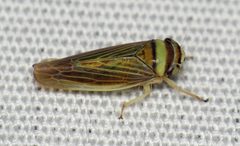
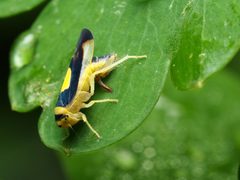
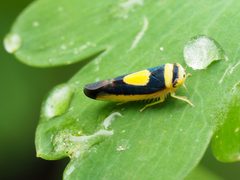
23Colladonus is a of leafhoppers in the Cicadellidae, established by Ball in 1936. in this genus are native to North America and are economically significant as of X- phytoplasma (Candidatus Phytoplasma pruni), which affects stone fruit crops including cherries, peaches, and nectarines. The genus includes notable species such as Colladonus clitellarius (saddled leafhopper) and C. montanus, both documented as important disease vectors.
Pronunciation
How to pronounce Colladonus: //kɔlˈlædoʊnəs//
These audio files are automatically generated. While they are not always 100% accurate, they are a good starting point.
Images
Habitat
in this occupy diverse environments including forested areas, agricultural orchards, and areas with broadleaf vegetation. Colladonus clitellarius occurs primarily in forested environments of the northeastern United States and southeastern Canada. Colladonus montanus and related western species are associated with cherry orchards and feed on various broadleaf perennials including mallow, alfalfa, and clover.
Distribution
North America. Eastern North America for C. clitellarius (northeastern United States, southeastern Canada). Western United States for C. montanus, C. mendicus (Central California), and C. geminatus (Oregon). Records also indicate presence in northern Europe (Denmark, Norway, Sweden) and Vermont, USA, though these may represent introduced or misidentifications requiring verification.
Seasonality
activity varies by and region. Colladonus clitellarius adults occur from May to November. Western species such as C. montanus show three periods of adult activity: May–June, late July–August, and October. Peak transmission in western likely occurs during late summer and fall activity periods.
Diet
Phloem-feeding herbivores. Specific plants documented for C. clitellarius include willows (Salix), honey locust (Gleditsia triacanthos), and mile-a-minute vine (Persicaria perfoliata). Western Colladonus feed and oviposit on broadleaf perennials including mallow, alfalfa, and clover.
Host Associations
- Prunus spp. - X- phytoplasma transmission to cherry, peach, nectarine
- Salix - plantC. clitellarius
- Gleditsia triacanthos - plantC. clitellarius ; honey locust
- Persicaria perfoliata - plantC. clitellarius ; mile-a-minute vine
- Malva - plantWestern ; mallow
- Medicago sativa - plantWestern ; alfalfa
- Trifolium - plantWestern ; clover
Life Cycle
with , nymph, and stages. C. clitellarius overwinters as adults in New York State, with collections documented from early June to late October. Nymphs share adult coloration but are paler with mottled patterns. Western show multiple with three distinct adult activity periods annually.
Behavior
occurs within and between plant patches and orchards. are attracted to lights. Western demonstrate seasonal movement patterns correlated with host plant and transmission dynamics.
Ecological Role
Primary of X- phytoplasma (Candidatus Phytoplasma pruni) in stone fruit production. The phytoplasma causes unmarketable, bitter, misshapen fruit and eventual tree death. Colladonus are the most important vectors in the western United States. The also serves as prey for predatory including Clitemnestra bipunctata.
Human Relevance
Major agricultural pest due to X- transmission in cherry, peach, and nectarine industries. Ongoing since 2010 has caused devastating economic impacts. Management strategies include monitoring during known activity periods, removal of infected trees, and control of ground-cover plants.
Similar Taxa
- IdiodonusBoth are leafhopper in tribe Platymetopiini with similar body plans; Idiodonus kennicotti co-occurs with Colladonus in some and requires examination of and wing venation for separation
- MacrostelesBoth are Deltocephalinae leafhoppers and X- ; Macrosteles fascifrons is smaller and has distinct wing markings
- JapananusBoth documented as prey of Clitemnestra bipunctata; Japananus hyalinus has different coloration and associations
Sources and further reading
- BugGuide
- Wikipedia
- GBIF taxonomy match
- iNaturalist taxon
- NCBI Taxonomy
- Catalogue of Life
- Bug Eric: Home Bioblitz, Ongoing
- Bug Eric: Wasp Wednesday: Clitemnestra bipunctata
- Bug Eric: 2021
- Biology of Colladonus mendicus (Ball) 1 in Central California
- Dispersal Behavior of Colladonus montanus (Homoptera: Cicadellidae) in Cherry Orchards
- Biology of the Geminate Leafhopper, Colladonus geminatus,1 in Oregon23
- Notes on Life-History and Rearing of Colladonus clitellarius (Say) (Homoptera: Cicadellidae)
- Effect of Benzothiadiazole on Transmission of X-Disease Phytoplasma by the Vector Colladonus montanus to Arabidopsis thaliana, a New Experimental Host Plant
- Colladonus spp. (Hemiptera: Cicadellidae) vectors of X-disease: biology and management in Western United States