Oncometopia nigricans
(Walker, 1851)
Black-winged Sharpshooter
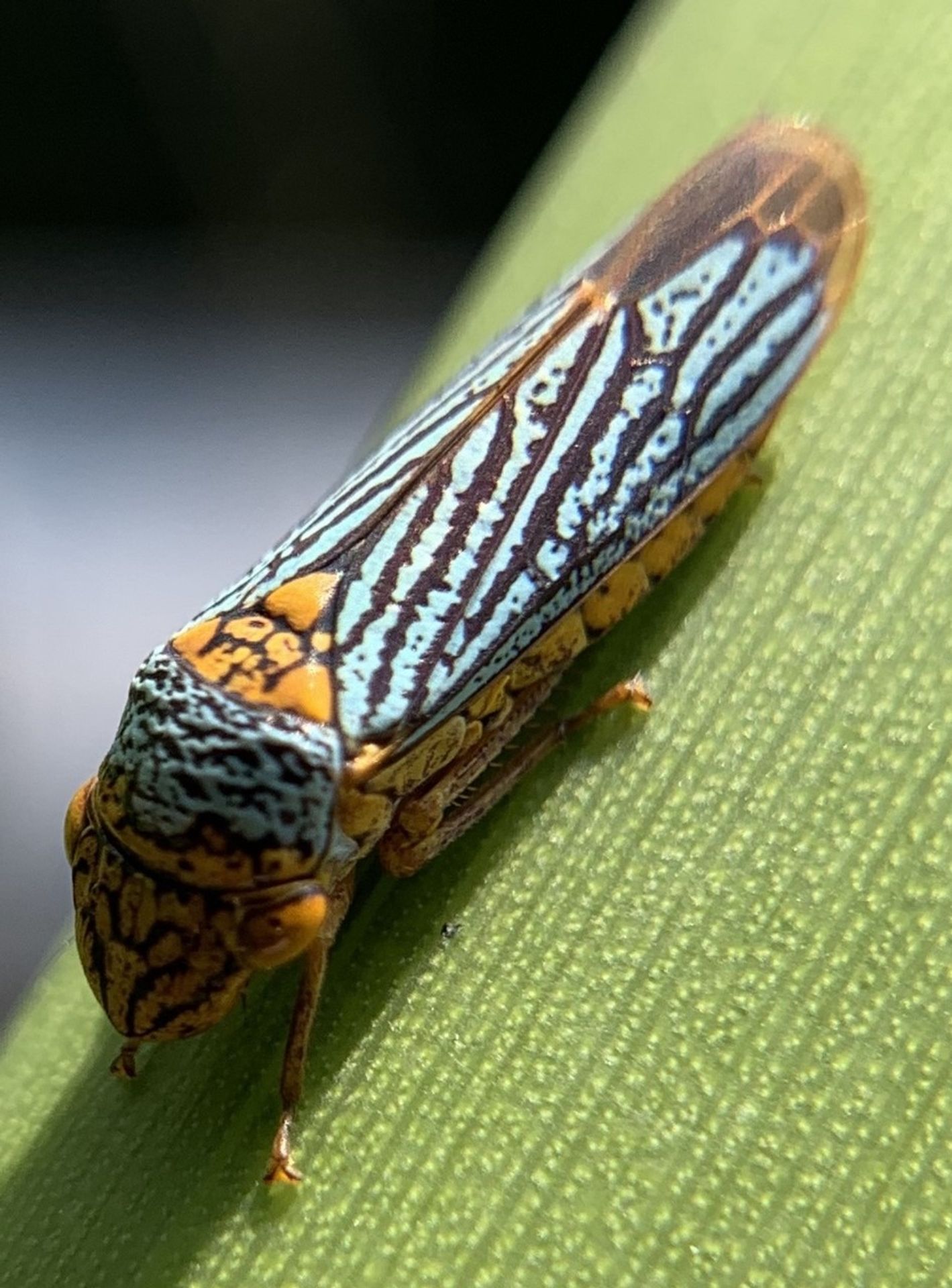
Oncometopia nigricans, commonly known as the Black-winged , is a leafhopper in the Cicadellidae, tribe Proconiini. It is a suspected of lethal yellowing of coconut palms, a devastating phytoplasma disease affecting coconut production. The species has been documented in Florida and Brazil (Bahia), with studies focusing on its molting patterns and longevity across various plants.
Pronunciation
How to pronounce Oncometopia nigricans: /ˌɒnkəˈmɛtɔpiə ˈnɪɡrɪkænz/
These audio files are automatically generated. While they are not always 100% accurate, they are a good starting point.
Identification
As a member of the Proconiini tribe (sharpshooters), O. nigricans can be distinguished from other leafhopper tribes by its relatively large size, robust body, and enlarged hind adapted for jumping. Within the Oncometopia, identification to level requires examination of genitalia and wing coloration patterns. The specific epithet 'nigricans' (meaning blackish) likely refers to dark wing markings. Accurate identification typically requires comparison with described specimens or expert taxonomic review.
Images
Habitat
Associated with coconut palms and potentially other plants in tropical and subtropical environments. Specific microhabitat preferences are not well documented in available sources.
Distribution
Documented from Florida, USA and Bahia, Brazil. The disjunct distribution suggests either a wider natural range or human-mediated , though detailed distribution records are limited.
Diet
Feeding habits not explicitly documented in available sources. As a (Proconiini), it likely feeds on xylem sap of plants.
Host Associations
- Cocos nucifera - Coconut palm; primary of concern due to suspected relationship with lethal yellowing
Life Cycle
Molting patterns have been documented in laboratory studies on various plants. Longevity varies depending on host plant . Specific details of developmental stages and time are not available in the reviewed sources.
Ecological Role
Suspected of lethal yellowing of coconut palms, caused by a phytoplasma. This potential role is significant for agricultural and economic reasons, though its vector status remains unconfirmed.
Human Relevance
Of concern to coconut agriculture due to suspected role in transmitting lethal yellowing , which can devastate coconut plantations. The economic impact of this potential relationship motivates research interest, though confirmed vector status and control measures are not established in available literature.
Similar Taxa
- Oncometopia orbonaCongeneric with similar and ; both have been studied in the context of Pierce's and glassy-winged sharpshooter programs
- Homalodisca vitripennisGlassy-winged sharpshooter, another Proconiini with similar xylem-feeding habits and agricultural significance as a ; much more extensively studied than O. nigricans
More Details
Research context
Most available information on O. nigricans comes from a single study examining its molting and longevity on various plants in relation to its suspected role as a of lethal yellowing . The has received limited research attention compared to other Proconiini sharpshooters such as Homalodisca vitripennis.
Taxonomic note
Originally described as Proconia undata nigricans by Walker in 1851, later transferred to the Oncometopia. The basionym reflects historical classification within a broader concept of Proconia.
Sources and further reading
- BugGuide
- GBIF taxonomy match
- iNaturalist taxon
- NCBI Taxonomy
- Publications | Entomology Research Museum
- A chalcidid jewel beetle parasitoid wasp | Beetles In The Bush
- Bug Eric: December 2010
- Let’s make a deal! | Beetles In The Bush
- Archive — Bug of the Week
- Molting and Longevity of Oncometopia nigricans (Homoptera: Cicadellidae), a Suspected Vector of Lethal Yellowing of Coconut Palms, on Various Host Plants