Neotibicen tibicen
(Linnaeus, 1758)
Swamp Cicada, Morning Cicada
Species Guides
2- Neotibicen tibicen australis(Southern Dusky-winged Cicada)
- Neotibicen tibicen tibicen(Common Swamp Cicada)
Neotibicen tibicen is an in the Cicadidae, known for its morning activity pattern and distinctive song. It is the most frequently encountered Neotibicen species in North America, often perching on low vegetation where it is easily observed. The species was formerly classified as Tibicen chloromerus and Tibicen tibicen before being moved to Neotibicen in 2015. Two are recognized: N. t. tibicen and N. t. australis.
Pronunciation
How to pronounce Neotibicen tibicen: /ˌniː.oʊˈtɪbɪsɛn ˈtɪbɪsɛn/
These audio files are automatically generated. While they are not always 100% accurate, they are a good starting point.
Identification
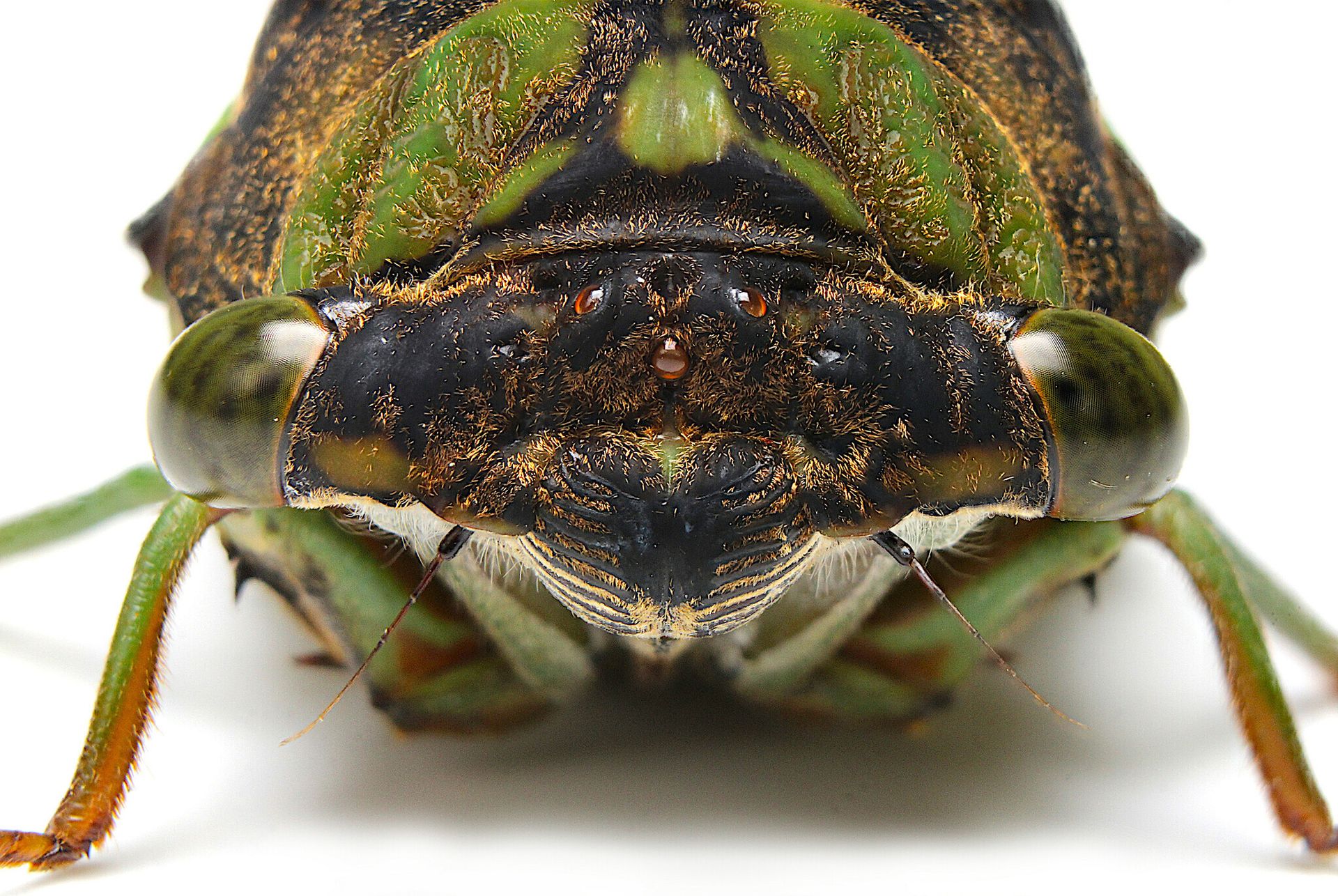
Distinguished from other Neotibicen by its morning activity peak—males begin singing after basking in sunlight to raise body temperature, unlike other cicadas that sing later in the day. Most easily observed Neotibicen due to habit of perching on low vegetation rather than high in . Song is a distinctive droning buzz. N. t. australis replaces nominate subspecies in portions of Florida, Georgia, and Alabama.
Images
Appearance
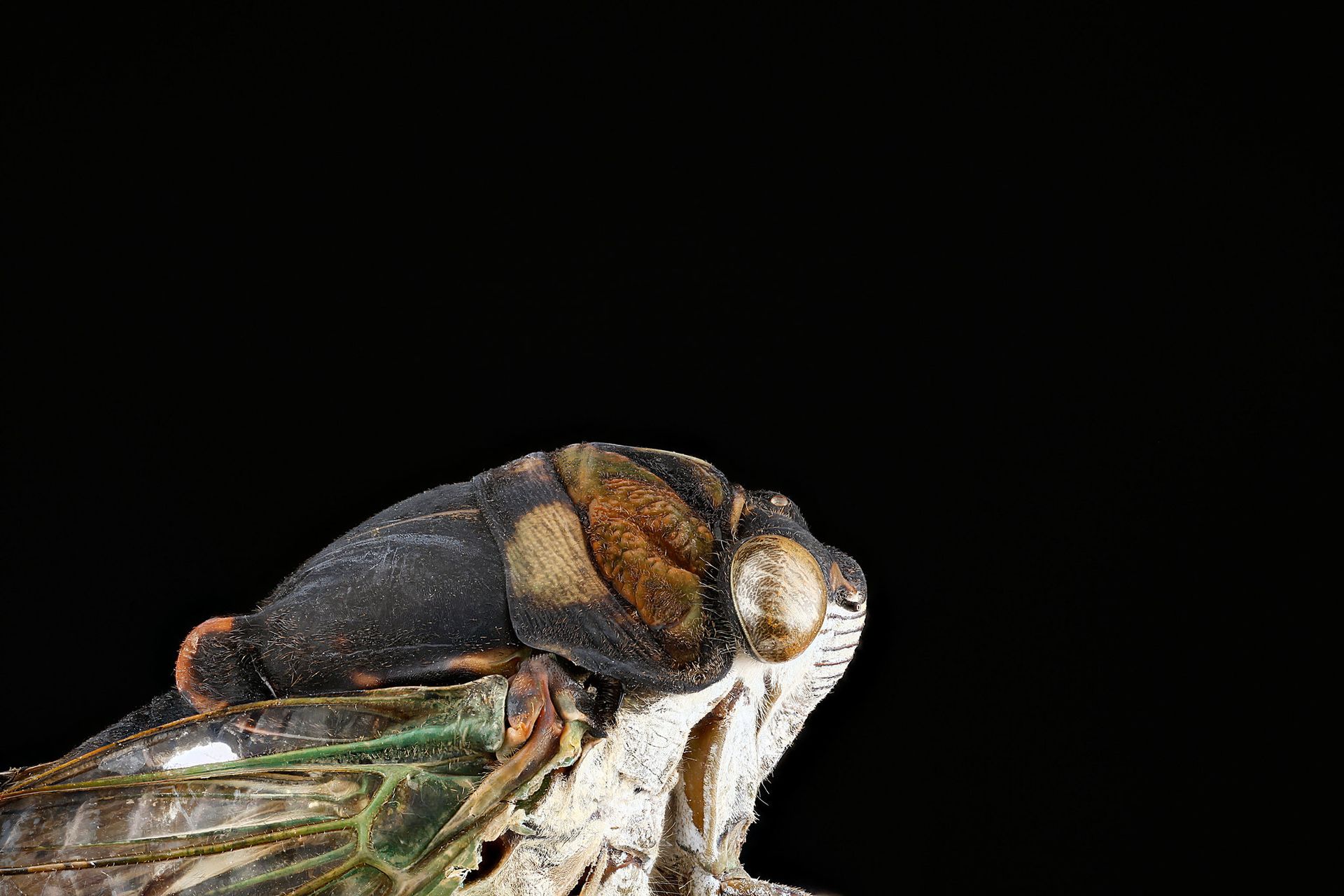
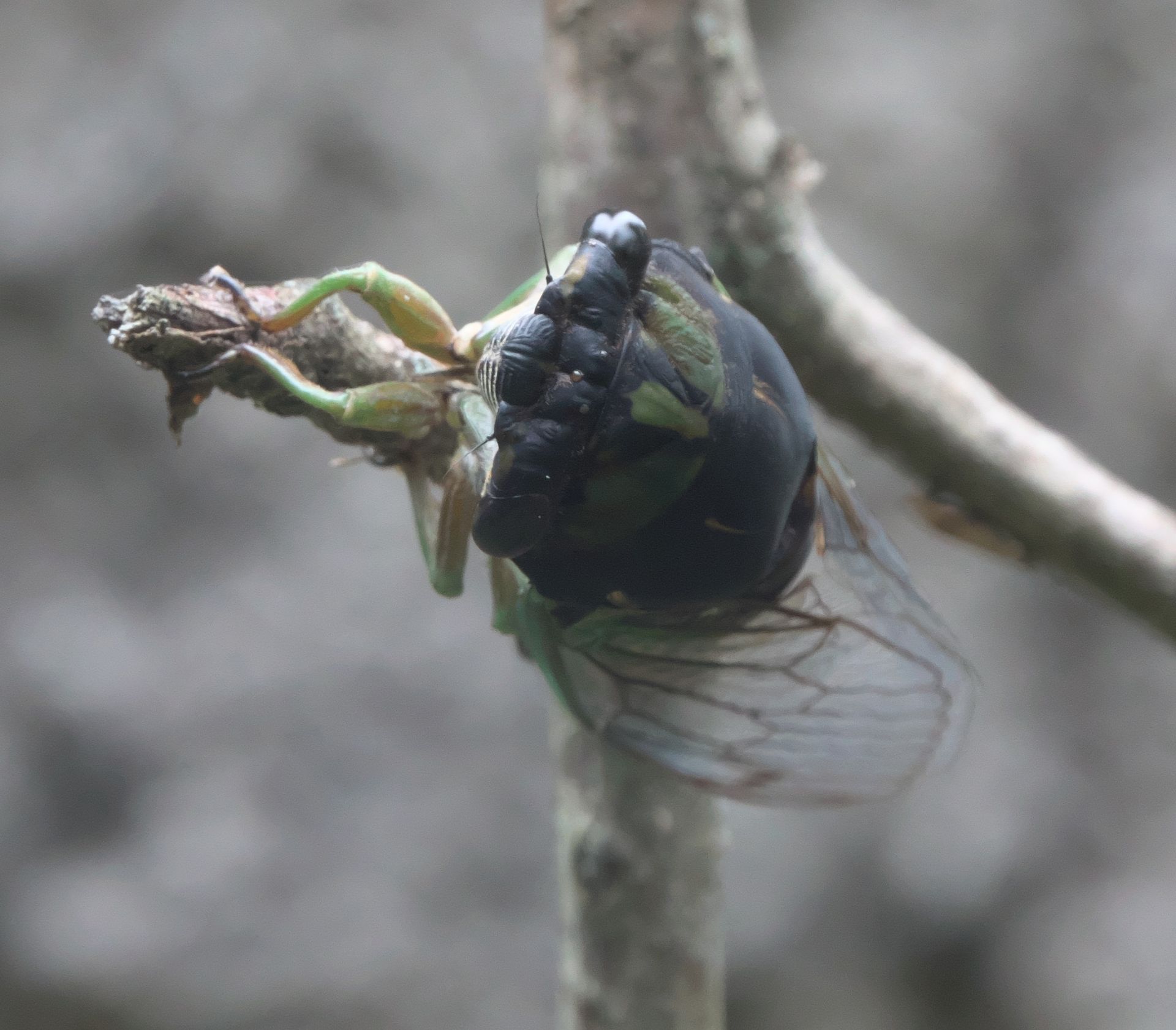
Medium to large with green and black coloration providing arboreal camouflage. have prominent bulging and transparent membranous wings held roof-like over the body. Newly emerged adults are pale and soft, darkening and hardening over several hours. Nymphal (shed skins) remain attached to vertical surfaces, showing the large forelegs adapted for digging.
Habitat
Associated with wooded areas and swampy environments. found in trees and shrubs; nymphs live underground feeding on tree roots. Often observed in suburban and urban settings where trees are present. Dolomite glades and post oak savannas in parts of range.
Distribution
Widespread across eastern and central United States, extending into portions of southeastern Canada. N. t. australis occurs in Florida, Georgia, and Alabama, replacing the nominate subspecies in those areas.
Seasonality
active from mid- to late-summer during 'dog days' of July and August. Peak activity in morning hours after basking. Nymphs emerge from soil at night to into adults.
Diet
Nymphs feed on xylem sap from roots of trees and shrubs using . feed on plant sap.
Life Cycle
with overlapping —some emerge every summer despite individual development taking multiple years. Nymphs live subterranean existence for at least 5–7 years, feeding on tree roots. Mature nymphs emerge from soil at night, climb vertical surfaces, and split along midline of back to emerge as soft, pale adults. Exoskeleton hardens over several hours; adults ready to fly by sunrise. Females insert into small tree branches; nymphs hatch, drop to ground, and burrow to begin underground feeding stage.
Behavior
Strictly ectothermic; requires morning basking to elevate body temperature before becoming active. Males vibrate tymbal to produce -specific song for mate attraction. When threatened, males produce startling 'squawk' call. Excellent eyesight and rapid, evasive when disturbed. Nymphs exhibit to avoid during vulnerable molting period.
Ecological Role
Nymphs act as root-feeding herbivores, though rarely causing significant tree damage. serve as prey for specialized including cicada killer (Sphecius speciosus). Contributes to nutrient cycling through deposition. Males form choruses that structure acoustic environment of summer forests.
Human Relevance
Frequently encountered due to low perching habit, making it a common subject of public curiosity. Loud songs can be perceived as nuisance in residential areas. often mistaken for living insects or 'strange ' by general public. Subject of citizen science observation and photography. Historical taxonomic confusion (Tibicen chloromerus vs. T. tibicen) illustrates challenges in .
Similar Taxa
- Neotibicen lyricen (Lyric Cicada)Overlapping range and ; distinguished by different song pattern and later daily activity peak
- Neotibicen pruinosus (Scissor Grinder Cicada)Similar size and ; distinguished by different song quality and less approachable
- Neotibicen superbus (Superb Cicada)Southwestern Missouri specialty with distinctive lime-green and white coloration; much less widespread
- Magicicada spp. (Periodical Cicadas)Synchronous 13- or 17-year pattern vs. overlapping ; earlier spring emergence
More Details
Taxonomic History
originally described by Linnaeus in 1758. Long known as Tibicen chloromerus, but changed to Tibicen tibicen in 2008 when determined to have been described first under this epithet. Moved to Neotibicen in 2015 as part of broader revision.
Subspecies
Two recognized: N. t. tibicen (nominate, widespread) and N. t. australis (southeastern United States, replacing nominate subspecies in Florida, Georgia, and Alabama).
Sources and further reading
- BugGuide
- Wikipedia
- GBIF taxonomy match
- iNaturalist taxon
- NCBI Taxonomy
- Catalogue of Life
- Dog days and their cicadas, Neotibicen (formerly Tibicen) species — Bug of the Week
- A “superb” southwestern Missouri cicada | Beetles In The Bush
- Bug Eric: Cicada shells
- Bug Eric: September 2009
- Megalopygidae | Beetles In The Bush
- To kill a cicada - Dog day cicadas, Tibicen spp., and their killer wasps, Sphecius speciosus (MISSING 2 VIDS) — Bug of the Week