Hexagenia bilineata
(Say, 1824)
Emergent Mayfly
Hexagenia bilineata is a burrowing native to the Upper Mississippi Valley of North America. The aquatic nymphs construct U-shaped burrows in mud and silt, filtering organic detritus for food. emerge synchronously in enormous numbers during summer evenings, creating spectacular swarms that have caused documented traffic hazards and infrastructure damage. The exhibits mixed voltinism, with some completing development in one year while others require two years.
Pronunciation
How to pronounce Hexagenia bilineata: /hɛk.səˈdʒɛ.ni.ə ˌbaɪ.lɪˈneɪ.tə/
These audio files are automatically generated. While they are not always 100% accurate, they are a good starting point.
Identification
Distinguished from the closely related Hexagenia limbata by geographic distribution—H. bilineata is generally more abundant south of Keokuk, Iowa, while H. limbata becomes predominant northwards. Males in swarming do not bob up and down as H. limbata males do. Subimagos can be separated from imagos by wing transparency, leg proportions, and cercal bristling.
Images
Appearance
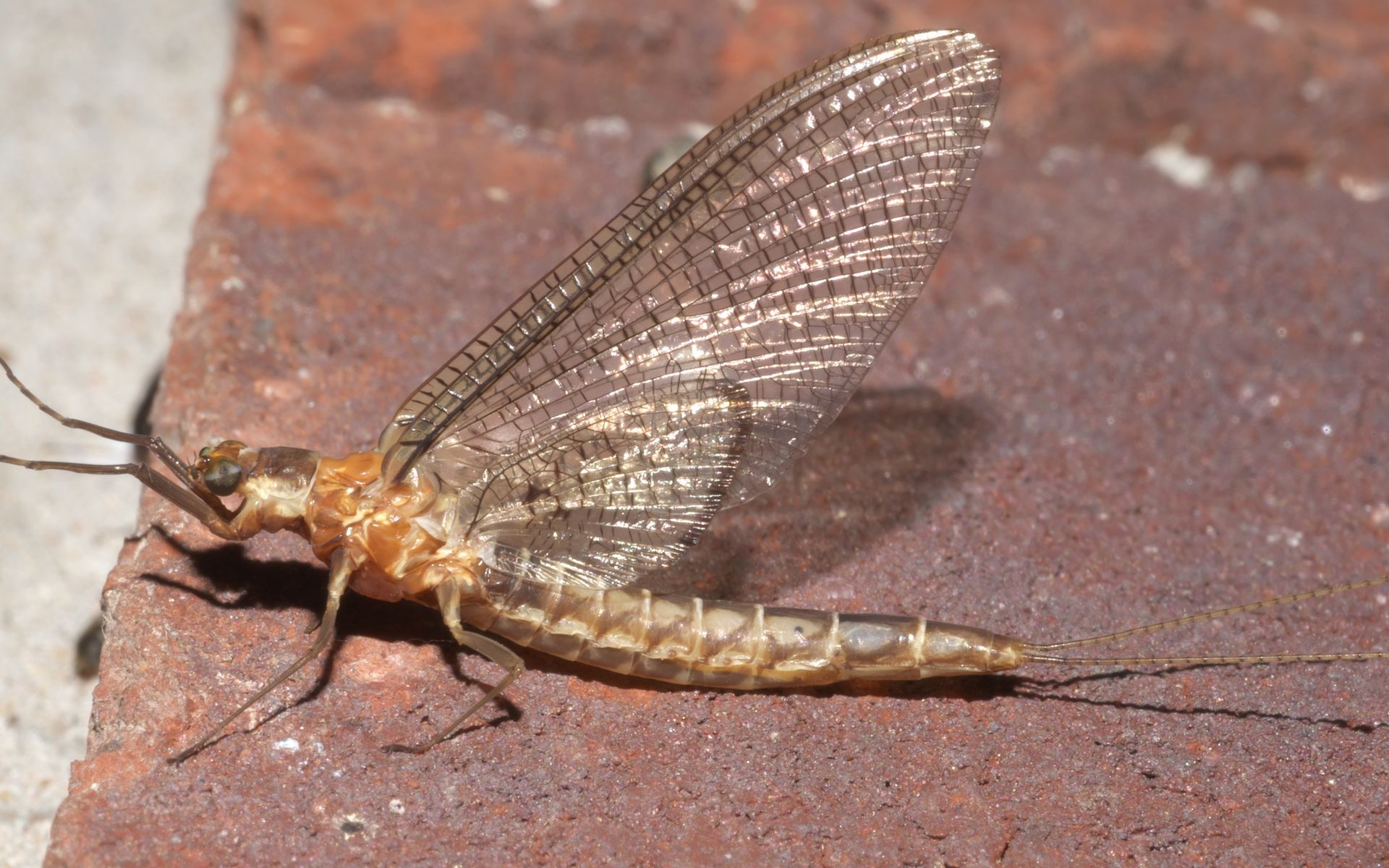
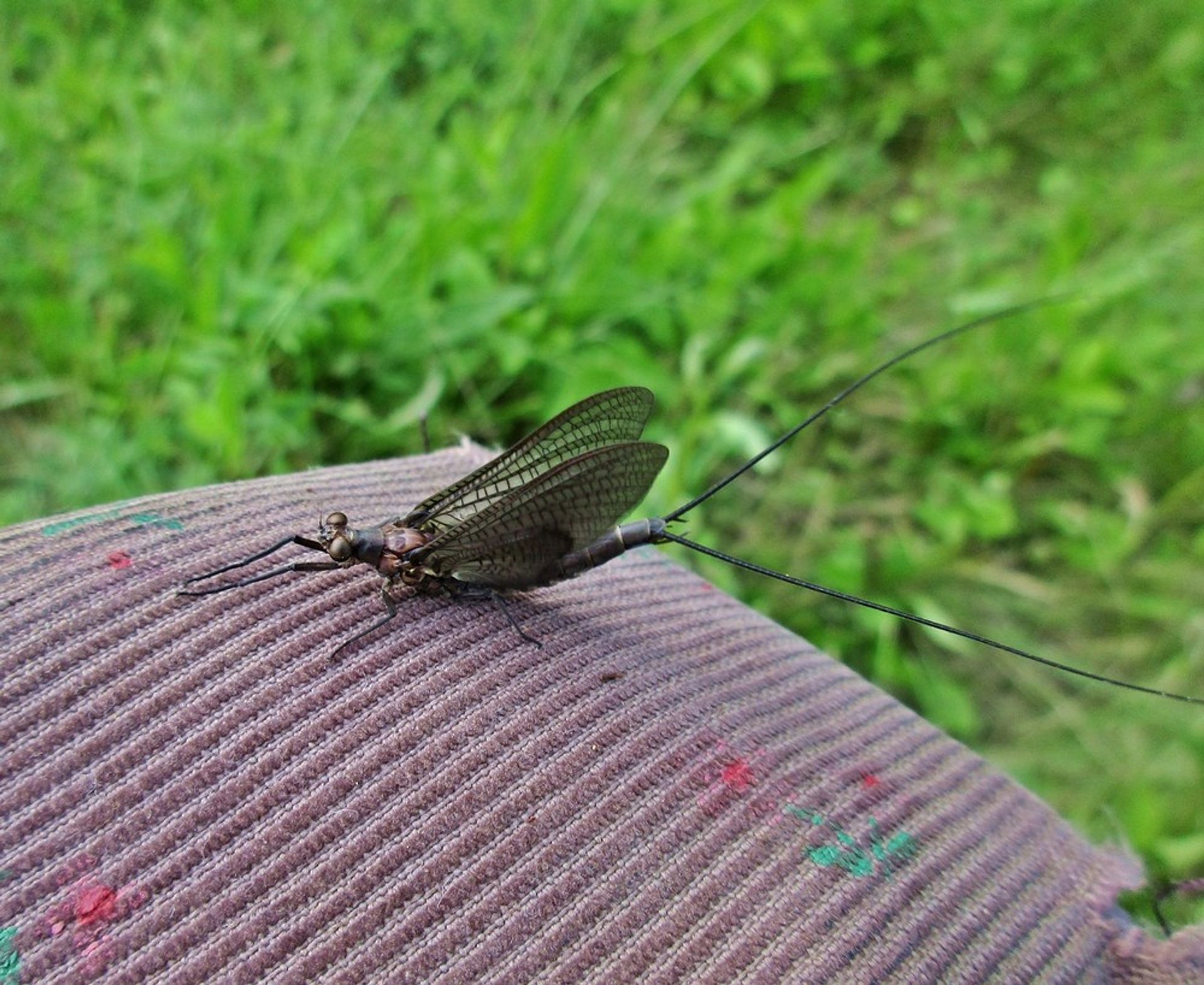
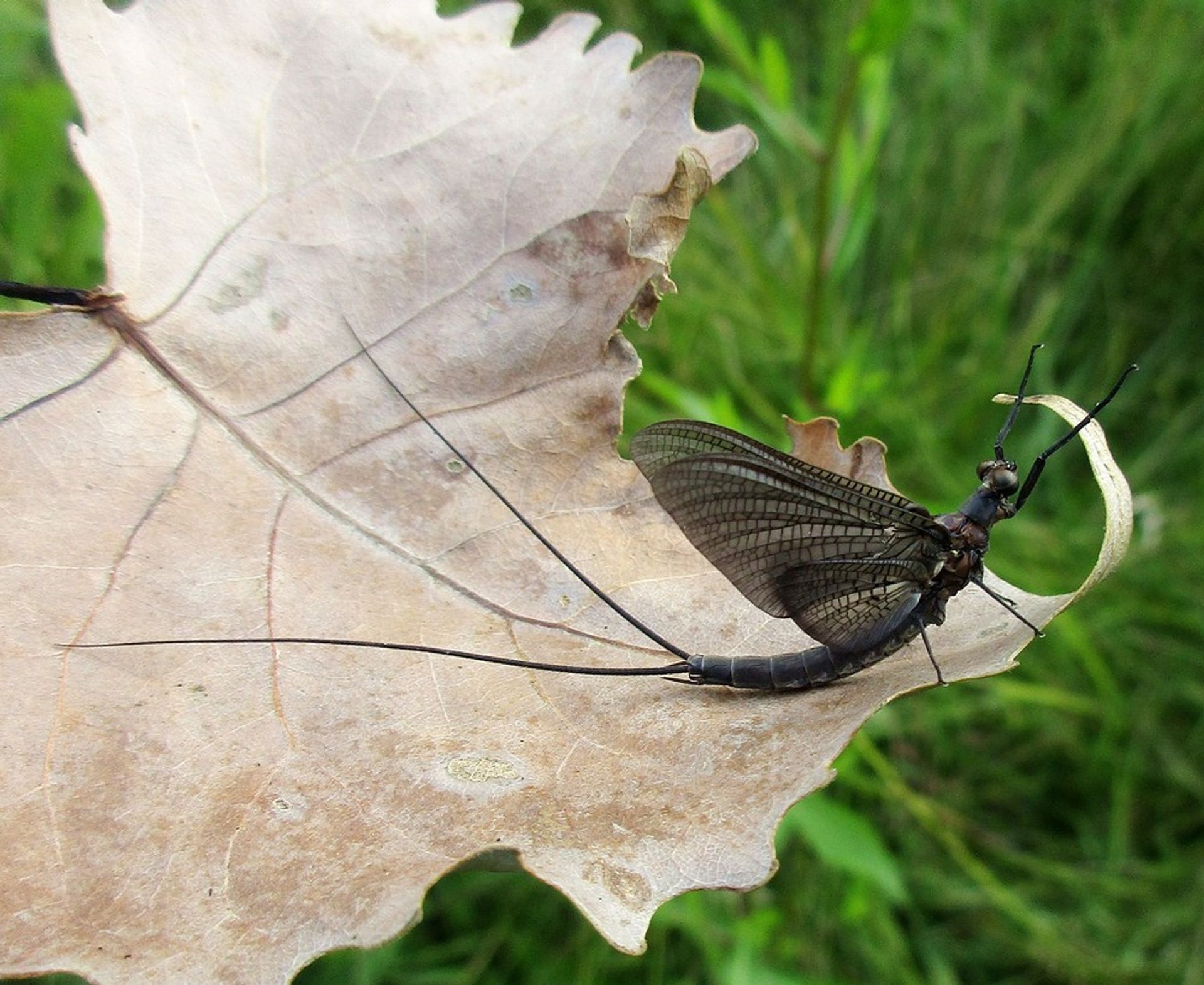
display pronounced in size, with females substantially larger than males. Subimagos (duns) are dull gray with short, coarse legs, bristly , and cloudy grayish wings. Imagos (spinners) are more delicate with transparent wings, longer slender legs, smooth cerci, larger , and brown-and-cream body patterning. Nymphs are adapted for burrowing in soft sediments.
Habitat
Nymphs burrow in mud and silt of shallow lakes and slow-moving streams and rivers. are found near still and slow-moving water bodies. A single square meter of sediment near Keokuk, Iowa yielded 344 nymphs, indicating high densities in suitable substrates.
Distribution
Native to North America, restricted to the Upper Mississippi Valley. Present in the Nearctic region.
Seasonality
emerge in summer, with mass emergences typically occurring around dusk. Specific timing varies by location and water temperature.
Diet
Nymphs filter organic detritus from water currents pumped through their U-shaped burrows. lack functional mouthparts and do not feed.
Life Cycle
are deposited in packets of several thousand into water, sinking to the bottom and adhering to mud. Hatching occurs within a few weeks. Nymphs construct U-shaped burrows and remain submerged until . Development time varies: laboratory rearing at warm temperatures achieved adulthood in 13 weeks, but field in Kentucky Lake show mixed voltinism with some emerging at 14 months and others at 22 months. The Keokuk area appears to have primarily a single per year. Nymphs emerge at night, to subimagos within a minute, rest 8–18 hours, then molt again to sexually mature imagos.
Behavior
Nymphs create water currents through their burrows using undulating body movements. Male imagos form lekking swarms around dusk, often aggregating in the lee of structures or encircling them in calm conditions. Each male maintains a fixed position approximately 30 cm from neighbors, facing into the wind and stabilizing with . Females entering swarms are pursued aerially until copulation occurs; males then return to the swarm. Both sexes die before morning. Mass emergences can produce swarms dense enough to register on weather radar.
Ecological Role
Nymphs contribute to secondary production in aquatic as . Their burrowing activity oxygenates sediments and mixes organic material. serve as a concentrated food source for fish, birds, and other during events. The serves as an indicator of water quality in the EPT (Ephemeroptera-Plecoptera-Trichoptera) biological index.
Human Relevance
Mass emergences create significant nuisances: pile up on roadways creating slippery conditions from crushed bodies, reduce visibility, damage tree branches from sheer weight of roosting insects, and cause traffic accidents. A 1958 at Dubuque, Iowa blocked a bridge for 40 minutes. A 2014 emergence in La Crosse, Wisconsin was detected on weather radar. Attracted to artificial lights, they accumulate on buildings and infrastructure. Riverboat crews historically referred to them as "those big, black bastards."
Similar Taxa
- Hexagenia limbataClosely related with overlapping range; distinguished by geographic abundance pattern (H. limbata more common north of Keokuk, Iowa), and male swarming (H. limbata males bob up and down, H. bilineata males do not)
More Details
Population density
Exceptionally high densities have been documented, with 344 nymphs per square meter recorded in sediment near Keokuk, Iowa in 1958.
Voltinism variation
The shows flexible development timing, with laboratory-reared individuals completing development in 13 weeks under warm conditions, while field exhibit both and depending on location and thermal regime.
Sources and further reading
- BugGuide
- Wikipedia
- GBIF taxonomy match
- iNaturalist taxon
- NCBI Taxonomy
- Catalogue of Life
- Meloidae Holdings | Entomology Research Museum
- Midget male meloid mates with mega mama | Beetles In The Bush
- Bug Eric: October 2014
- Bug Eric: New Mexico Dragonfly Blitz - Day 1
- Bug Eric: City Nature Challenge 2023 Recap
- Bug Eric: January 2021
- Life history and secondary production ofHexagenia bilineata(Say) in an embayment of Kentucky Lake