
Stictomyia longicornis
Bigot, 1885
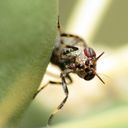
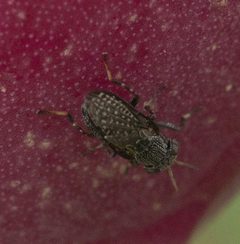
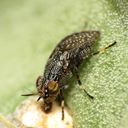
Stictomyia longicornis is a small picture-winged fly in the Ulidiidae. measure approximately 4 millimeters in length and are found almost exclusively on prickly-pear cacti in the southwestern United States. The has been reared from rotting cactus pads, indicating larval development in decaying cactus tissue. Adults are morphologically unusual among flies, with short wings plastered to the back and a -like or true -like appearance.
Pronunciation
How to pronounce Stictomyia longicornis: /ˌstɪktoʊˈmaɪə ˌlɒŋɡɪˈkɔrnɪs/
These audio files are automatically generated. While they are not always 100% accurate, they are a good starting point.
Identification
Distinguished from other Ulidiidae by its extremely short wings held flat against the body, rather than spread or patterned in display. The -like or -like silhouette contrasts with the more typical fly-like appearance of relatives. Found specifically on prickly-pear cacti, whereas similar-sized ulidiids such as Ceroxys occur on different and have longer wings with bold patterns. The Stictomyia is recognized by this distinctive wing reduction and body form.
Images
Appearance
Habitat
Associated with prickly-pear cacti (Opuntia ) in arid and semi-arid regions. Larval consists of rotting cactus pads. habitat includes the surfaces and spines of living cactus plants, where they move between bundles of spines.
Distribution
Southwestern United States. Documented from Colorado Springs, Colorado. Distribution corresponds with prickly-pear cactus range, and the likely occurs wherever suitable cacti are present.
Diet
Larvae develop in rotting prickly-pear cactus pads. feeding habits are not documented.
Host Associations
- Opuntia - larval developmentprickly-pear cactus; larvae in rotting pads
Life Cycle
Larval stage develops within rotting pads of prickly-pear cactus. emerge and remain associated with cactus plants. Specific details of deposition, , and developmental duration are not documented.
Behavior
rarely fly. Movement consists primarily of and dodging between bundles of cactus spines. This , combined with the flattened wing posture, represents an unusual locomotory strategy among Diptera.
Ecological Role
Contributes to decomposition of cactus tissue through larval feeding in rotting pads. Role in nutrient cycling within cactus-dominated .
Human Relevance
No documented economic or medical importance. Not known to be a pest of cultivated cacti or to enter human structures.
Similar Taxa
- Ceroxys latiusculusAnother small ulidiid, but has longer patterned wings held in typical fly posture, and occurs on Senecio plants rather than cacti
- Delphinia pictaCommon eastern ulidiid of similar size but with bold wing patterns and association with decaying organic matter and compost rather than cacti
- Tephritidae (fruit flies)Some fruit flies share small size and patterned wings, but have fully developed wings and different body proportions; not associated with cacti
More Details
Taxonomic note
Ulidiidae was formerly treated as in older literature. The Stictomyia is characterized by reduced, appressed wings that depart dramatically from the typical wing display of most picture-winged flies.
Morphological adaptation
The short, plastered wings and cryptic movement among cactus spines suggest for avoidance in an exposed, spiny environment where may be disadvantageous.
Sources and further reading
- BugGuide
- Wikipedia
- GBIF taxonomy match
- iNaturalist taxon
- Catalogue of Life
- Bug Eric: Picture-winged Flies
- Lab Study Shows Asian Longhorned Tick Can Spread Rocky Mountain Spotted Fever
- Be On the Lookout: There's a New Tick in Town
- Invasive Tick Persists in New Jersey
- Invasive Tick Has Been Present in New York Longer Than Previously Known, Study Shows
- Different Tick, Same Repellents: CDC Study Shows How to Avoid Asian Longhorned Tick