
Toxotrypana
Gerstaecker, 1860
papaya fruit fly
Species Guides
1- Toxotrypana curvicauda(papaya fruit fly)
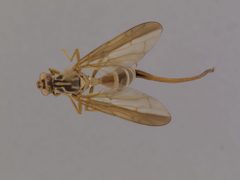
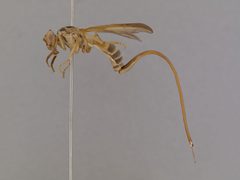
Toxotrypana is an obsolete of tephritid fruit flies now synonymized with Anastrepha. The genus was historically recognized for associated with papaya and related Caricaceae, with Toxotrypana curvicauda (now Anastrepha curvicauda) being the most studied species. These flies are significant agricultural pests in tropical and subtropical regions where papaya is cultivated.
Pronunciation
How to pronounce Toxotrypana: /tɒksəˈtrɪpənə/
These audio files are automatically generated. While they are not always 100% accurate, they are a good starting point.
Identification
Toxotrypana is no longer recognized as a valid ; specimens historically assigned here should be identified as Anastrepha. The historical genus was characterized by elongated body form and wing patterns typical of Trypetinae, but modern places these within the larger Anastrepha radiation. Identification to species requires examination of terminalia and wing pattern details.
Images
Distribution
South Florida and south Texas of the United States through much of Central America and northern South America, including Caribbean islands. This range corresponds to the native and cultivated distribution of papaya (Carica papaya) and related Caricaceae .
Diet
Larvae feed internally in fruit of Caricaceae, primarily papaya (Carica papaya). feed on young papaya seeds and other plant exudates. One has been documented feeding on Morrenia odorata (Asclepiadaceae) and Jacaratia mexicana (Caricaceae) as alternative .
Host Associations
- Carica papaya - primary principal ; larvae develop in fruit, feed on seeds
- Jacaratia mexicana - alternative documented alternative for T. curvicauda
- Morrenia odorata - alternative Asclepiadaceae; unusual record
Life Cycle
Complete with , larval, pupal, and stages. Larvae develop internally within fruit, feeding on seeds and pulp. occurs in soil.
Behavior
Males produce to attract females; release is influenced by presence of fruit and conspecifics. Females exhibit age-dependent and mating-status-dependent responses to male pheromones. Activity patterns vary with time of day.
Ecological Role
Primary seed of Caricaceae in native range. Serves as for including Doryctobracon toxotrypanae (Braconidae).
Human Relevance
Major economic pest of papaya throughout its range. Infested fruit becomes unmarketable. Subject to extensive research on -based monitoring and control methods.
Similar Taxa
- AnastrephaToxotrypana is now synonymized with Anastrepha; historical distinction based on subtle morphological characters not supported by modern phylogenetic analysis
- BactroceraOther major papaya pest ; distinguished by wing pattern, male chemistry, and geographic distribution (primarily Old World vs. New World)
Misconceptions
Toxotrypana is sometimes still referenced in older literature and agricultural contexts, but it is not a valid under current . The name persists in applied entomology literature despite formal synonymy with Anastrepha.
More Details
Taxonomic status
Catalogue of Life and GBIF list Toxotrypana as a synonym of Anastrepha (status: DOUBTFUL/HIGHERRANK in GBIF). The type Toxotrypana curvicauda Gerstaecker, 1860 is now Anastrepha curvicauda.
Research history
Extensive behavioral research on T. curvicauda conducted in 1980s-1990s established this as a model for tephritid chemical and mating studies, particularly regarding male-produced .
Sources and further reading
- BugGuide
- Wikipedia
- GBIF taxonomy match
- iNaturalist taxon
- Catalogue of Life
- Behavior of Flies in the Genus Toxotrypana (Trypetinae: Toxotrypanini)
- Behavior of Flies in the Genus Toxotrypana (Trypetinae
- Biology of the papaya fruit fly, Toxotrypana curvicauda, in Florida /
- New Host Plant Record for Toxotrypana curvicauda (Diptera: Tephritidae)
- Reproductive Behavior of the Papaya Fruit Fly, Toxotrypana curvicauda Gerstaecker (Diptera: Tephritidae)
- Feeding Behavior of Toxotrypana curvicauda (Diptera: Tephritidae) on Young Papaya Seeds
- Fruit of Morrenia odorata (Asclepiadaceae) as a Host for the Papaya Fruit Fly, Toxotrypana curvicauda (Diptera: Tephritidae)
- Behavioral Responses of Female Papaya Fruit Flies, Toxotrypana curvicauda (Diptera: Tephritidae), to Male-produced Sex Pheromone1
- Effects of Age, Mating, and Time of Day on Behavioral Responses of Female Papaya Fruit Fly, Toxotrypana curvicauda Gerstaecker (Diptera: Tephritidae), to Synthetic Sex Pheromone1
- Fecundity and Mating Propensity ofToxotrypana curvicauda(Diptera: Tephritidae) on an Alternative Host,Jacaratia mexicana(Caricaceae)
- Influence of Host Fruit and Conspecifics on the Release of the Sex Pheromone By <I>Toxotrypana curvicauda</I> Males (Diptera: Tephritidae)