
Pangoniini
horse flies
Genus Guides
4- Apatolestes
- Esenbeckia(horse-fly)
- Pegasomyia
- Stonemyia
Pangoniini is a tribe of horse flies (Tabanidae) within the Pangoniinae, containing some of the most morphologically primitive members of the . exhibit diverse feeding strategies: some females are haematophagous (blood-feeding) while males and certain species are nectarophagous (nectar-feeding), as determined by mouthpart . The tribe shows progressive evolutionary reduction in female and structural modifications of antennal and tibial characters. Australian members are predominantly low-flying insects that do not suck blood, contrasting with Chilean species that include both blood-feeding and non-blood-feeding forms.
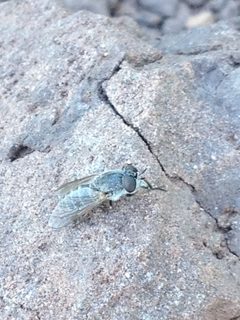
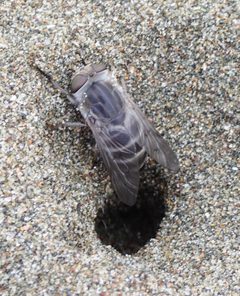
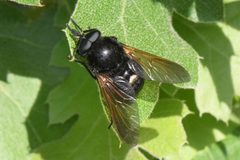
Pronunciation
How to pronounce Pangoniini: //pænˈɡoʊni.aɪˌni//
These audio files are automatically generated. While they are not always 100% accurate, they are a good starting point.
Identification
Members can be distinguished from other Tabanidae by progressive reduction in female , divisions of the third antennal segment, and hind tibial spurs. in mouthparts is pronounced in some : haematophagous females possess teeth and microteeth on mouthparts, while nectarophagous males and species exhibit abundant micropilosity without teeth. Australian species are characterized by low and reduced blood-feeding adaptations compared to other horse fly tribes.
Images
Distribution
Australia (east coastal from Torres Strait to southern New South Wales, with secondary center in Western Australia; absent from Tasmania); Chile (at least three : Esenbeckia, Protodasyapha, Veprius).
Diet
Variable: female Esenbeckia (Pseudopangonia) fascipennis is haematophagous (blood-feeding); male E. (P.) fascipennis and both sexes of Protodasyapha (Pseudopangonia) hirtuosa and Veprius presbiter are nectarophagous (nectar-feeding). Australian are predominantly non-haematophagous.
Behavior
Australian are low-flying insects. Feeding varies by sex and species: some females actively seek blood meals while males and certain species feed on nectar.
Similar Taxa
- Scaptia (Pseudoscione)Female Esenbeckia (Pseudopangonia) fascipennis shares similar haematophagous mouthpart with this , making identification challenging without examination of other tribal characters (antennal segmentation, tibial spurs).
- Other Tabanidae tribesPangoniini differs from more derived horse fly tribes in showing primitive character states including reduction and specific antennal segment divisions; most Australian Pangoniini are non-blood-feeding unlike the majority of Tabanidae.